Palmetto is a Charlotte-based clean energy platform serving 100,000 residential customers across the United States
Palmetto
There is a moment most homeowners know. You open the utility bill, scan the rows of kilowatt hours and demand charges and fuel adjustments, and feel the particular helplessness of a system designed to confuse you. You don’t understand it. You were never supposed to. And so you close it, pay it, and wait for next month to do the same thing again. That paralysis — the sense that energy is too expensive to fix and too complex to navigate — is exactly why, despite decades of falling costs and improving technology, most Americans have never seriously considered making the switch to solar.
Loren Padelford finds impossible problems irresistible.
The veteran technology executive spent years at Shopify — where skeptics swore ordinary people would never build their own e-commerce stores — before leading the turnaround of pizza-tech company Slice, where the complexity hiding inside a neighborhood pizza shop turned out to be a solvable, scalable challenge. He is someone who looks at markets that have failed consumers and sees not a wall, but a door left ajar. Now, as the new President of Consumer Energy of Palmetto, a Charlotte-based clean energy platform serving 100,000 residential customers across the United States, he has found the hardest challenge of his career: how do you make energy affordable for consumers in a world where the cost of energy will never come down?
“I’m attracted to what seem like impossible problems,” he says. “They’re the most fun to solve. But they’re also the hardest.”
Loren Padelford, President of Consumer Energy at Palmetto
Palmetto
The Paradox Nobody Fixed
It is, he admits, a counterintuitive premise. “The energy producers are not going to make it cheaper. They have no incentive to do that, and the world is increasing its demand for energy. So the cost of energy goes up. Consumers cannot bear that weight. And so you have a conflict.”
That conflict sits at the heart of one of climate’s most maddening paradoxes. Solar technology has been transformed over the last decade — today’s panels are barely comparable to those from 2015 — and yet residential solar adoption in the United States sits at roughly 5%. The technology got better. The prices came down. Consumers still didn’t come.
The reason, Padelford argues, isn’t financial. It isn’t philosophical. It’s experiential.
“There’s never been a consumer market that’s ever mass adopted a confusing product. Ever,” he says. “The market has just made it confusing for everybody.”
The Brutal Truth About Going Green
He would know. Before taking the Palmetto role, Padelford built a net-zero home complete with solar panels and batteries and drives an electric car. He did everything the high-intent consumer is supposed to do. The process, he says plainly, “was brutal.” Months of contractor conversations, technology evaluations, capital outlays, and post-installation apps that required their own learning curve. He muscled through it — because that is what high-intent people do. But the average consumer, he is quick to point out, doesn’t muscle through anything. They need it to be seamless, or they walk away.
This is precisely the gap Palmetto was built to close. Founded sixteen years ago, the company has spent that time assembling the infrastructure for a different kind of energy experience: a lease model that removes the upfront capital barrier to solar, a network of vetted installers integrated directly into the platform, and monitoring tools that track home energy consumption over time. The leasing structure alone reshaped who could participate. Solar and HVAC systems have historically required significant capital investment, limiting serious adoption to the wealthiest homeowners. Palmetto’s 25-year lease model — with maintenance included — changed that math.
“It created an access point that never existed before,” Padelford says.
Palmetto solar panels installation
Palmetto
The Uber Moment Energy Has Been Waiting For
But access is only the first problem. Padelford’s broader mandate is to transform Palmetto from a solar company into a unified consumer energy platform — something that looks less like a utility and more like the apps people already love. The analogy he reaches for is Uber. “That’s an insane idea,” he says, recalling the early pitch. “Get in a stranger’s car and they’re going to drive you somewhere.” And yet once the experience was made frictionless and trustworthy, the market didn’t just accept it — it couldn’t imagine life without it. “The back end is wildly complicated,” he says. “But it’s a really great example of taking a consumer and creating an experience that allows them to do a thing they, on its surface, would have never done.”
Shopify did it for commerce. Energy, Padelford believes, is simply twenty years behind. “How we acquire, pay for, use, consume, lower cost of energy — it’s analog at this point. It needs to become digital.”
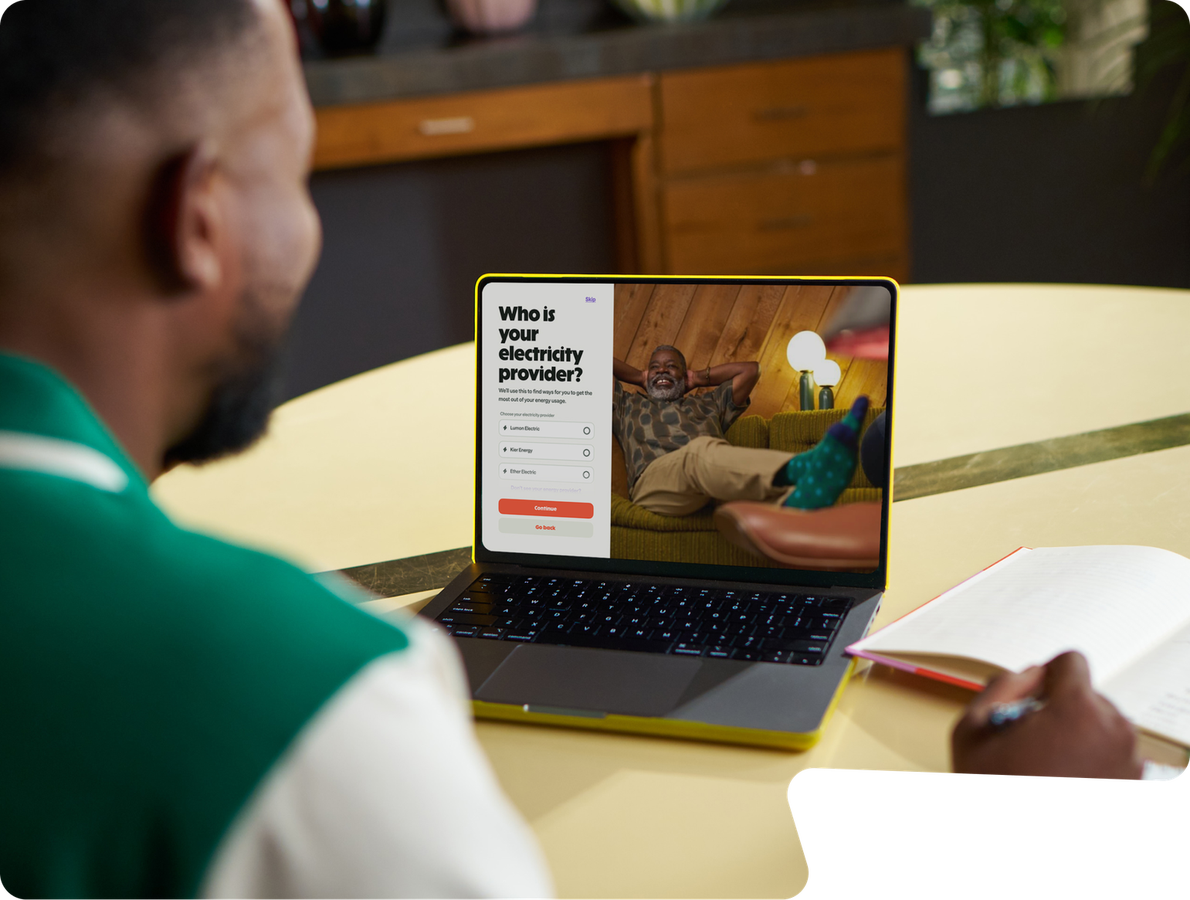
The platform he is building would allow a homeowner to enter their address and receive, in real time, a precise picture of their current consumption, a menu of options — solar, heat pumps, smart thermostats, better windows — and a clear projection of how each would affect their monthly bill. The data already exists. Palmetto has sixteen years of it. “A consumer does not have to know a lot of information,” Padelford says. “They just have to provide a basic set of information to us. And we can turn that around and tell them with a high degree of accuracy what their future will look like.”
No contractor calls. No confusing line items. No seven months of waiting.
The Window Is Open
The timing is not incidental. Rolling blackouts, record utility bills, and a wave of consolidation wiping out the first generation of energy companies — those that spent three decades optimizing for their own margins — are opening a window that Padelford is clear-eyed about. “The first-gen companies who chose their own margins over their customers are failing at a record rate,” he says. “That gives us an opportunity to do it properly for the first time.”
What his track record at Shopify and Slice suggests is that mass adoption has never been a product problem. It has always been a trust problem. Consumers don’t adopt complicated things. They adopt things that feel obvious. The job of a great platform is not to educate people into compliance — it’s to make the right decision feel like no decision at all.
“I fundamentally believe that Palmetto is a trillion-dollar company,” Padelford says, “because no one’s even tried to be good for the consumer yet.”
If Palmetto can do that for energy — meet people in the moment they open that baffling utility bill, offer them a clear and simple path forward, and actually deliver on the savings it promises — it won’t just be a clean energy company. It will be infrastructure. The kind people forget they can live without.
The goal, as Padelford puts it, is simple: make starting your energy transformation “as easy to do as it is to order an Uber.”
For the millions of Americans still staring at bills they don’t understand, that moment can’t come soon enough.