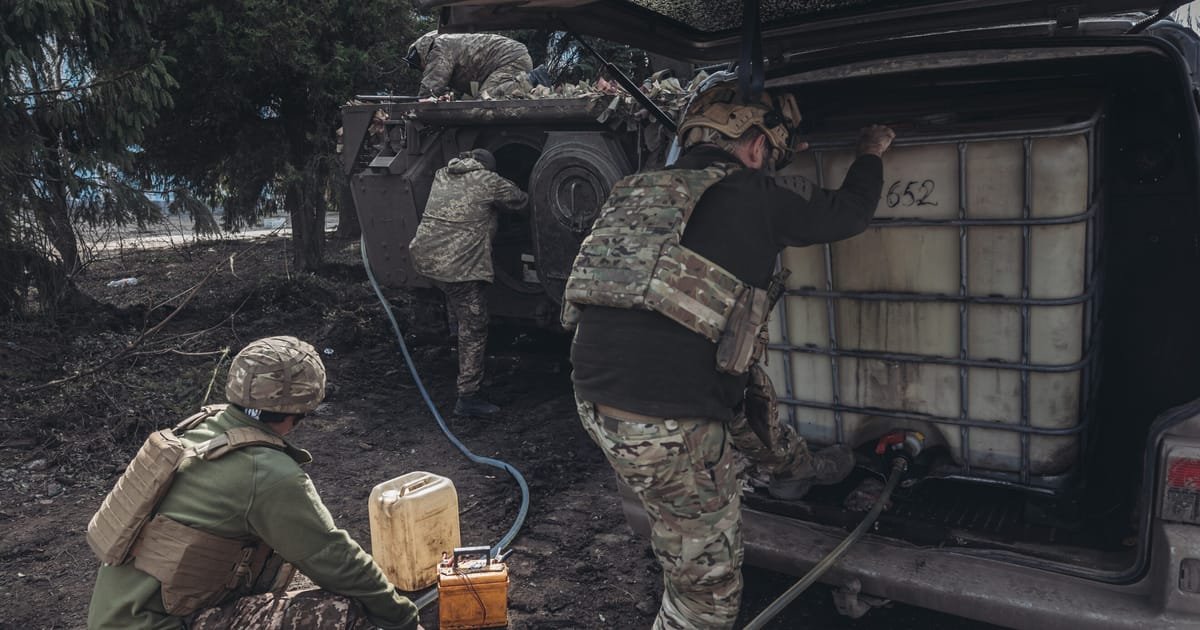
The ministry explained its “first priority is uninterrupted supply for the Armed Forces and emergency services,” then the agricultural sector. The “general public” and other businesses are given supplies last, they said, reiterating that the “situation remains under control.”
John Helin, an analyst and founder at private intelligence organization Black Bird Group, said while Kyiv is guarded in its public statements on fossil fuel reserves for its military, since the Iran war began there have been reasons to worry.
“Public information is limited, and more precise information is, naturally, not available,” said Helin, stressing that the longer the Iran war continues, the more “rising energy prices would be felt in Ukraine’s budget.”

Lately, Ukraine’s public coffers have been suffering from the strains of war and a regional spat.
President Volodymyr Zelenskyy has been sparring with Hungary and Slovakia over their demand that Kyiv fix the Soviet-era Druzhba pipeline, which until it was bombed in January had pumped Russian oil across Ukraine to both neighboring countries. Until Ukraine fixes the breach, Hungarian Prime Minister Viktor Orbán has vowed to continue using his veto in Brussels to thwart a €90 billion EU loan to Ukraine to meet its financial and military needs.
New allegations that Hungary’s foreign minister leaked information to Russia during an EU meeting of ministers have also rattled the bloc. The senior Ukrainian soldier cited above said it feels as if Orbán “is doing his best to let us run out of [money].”