By Goddy Ikeh
ENERGY experts have called on African countries to pool their resources, strengthen regional cooperation and develop integrated energy infrastructure to address the continent’s energy challenges.
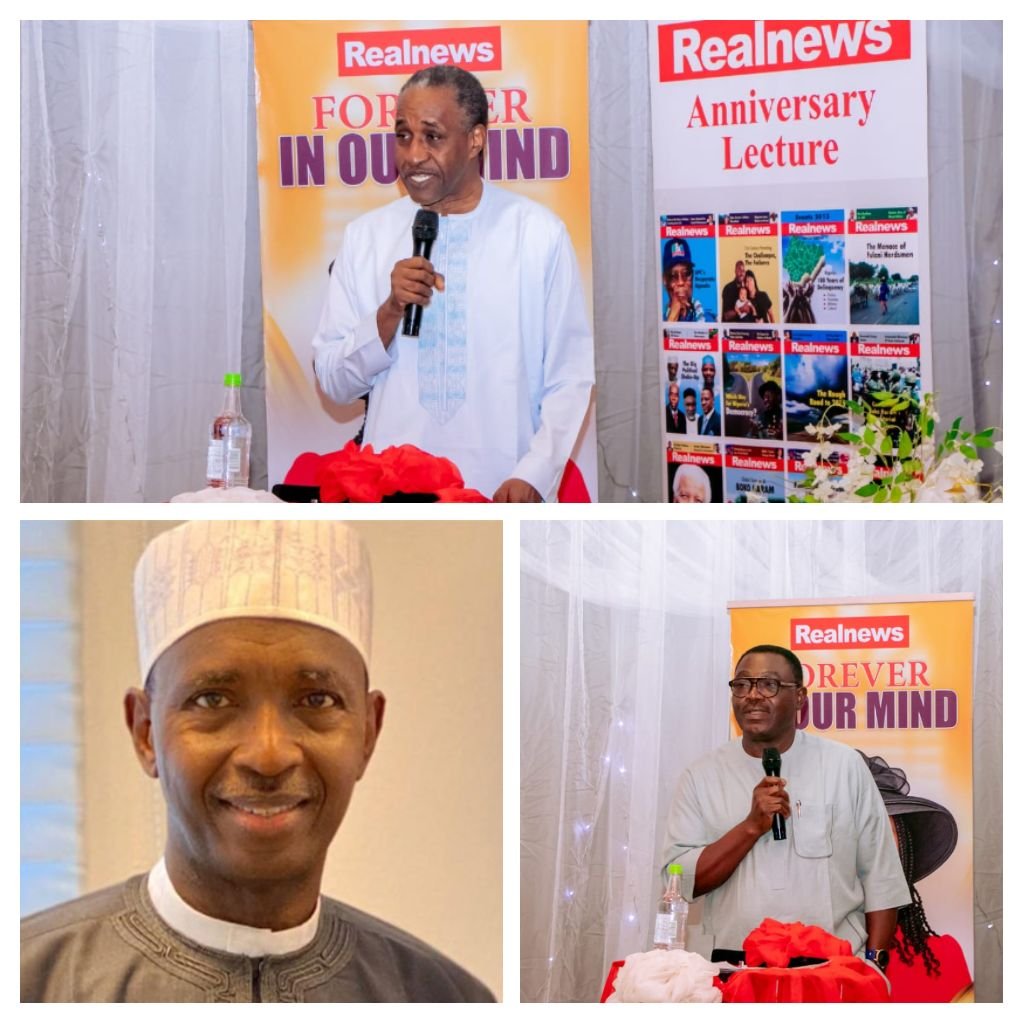
They made the call at the 14th Anniversary Lecture of Realnews Magazine in Lagos, where they identified inadequate financing, technological limitations and fragmented energy markets as major obstacles to Africa’s energy security and development.
The lead speaker, Dr Omar Farouk Ibrahim, Chair for Africa at the World Energy Council, said Africa must take responsibility for its energy future by strengthening financing, developing indigenous technology and building regional energy infrastructure.
Presenting a paper titled: “Geopolitical Turbulence and Energy Security: Forging Strategic Opportunities for Africa”, Ibrahim said the continent’s energy insecurity was not fundamentally caused by a shortage of resources.
He identified inadequate financial capacity, technological capabilities and market infrastructure as the major constraints preventing Africa from harnessing its abundant energy resources.
According to him, Africa possesses substantial oil and gas reserves, enormous solar resources, hydropower potential, wind and geothermal energy, as well as critical minerals.
He, however, said the continent continued to experience the world’s greatest energy-access deficit despite its resource endowment.
Citing the 2026 Tracking SDG 7 Report, which drew on 2024 data, Ibrahim said more than 560 million people in sub-Saharan Africa lacked access to electricity.
He added that approximately 970 million people lacked access to clean cooking.
The former Secretary-General of the African Petroleum Producers’ Organisation (APPO) said geopolitical tensions, armed conflicts, supply-chain disruptions and the global energy transition had made energy a critical instrument of national security and economic resilience.
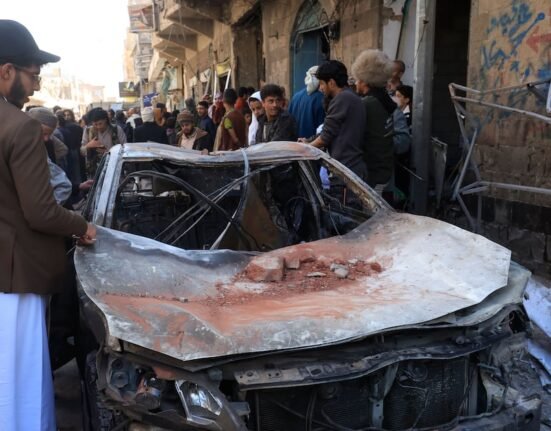
He cited the Russia-Ukraine conflict and the 2026 Middle East crisis as developments exposing the vulnerability of international energy markets.
Ibrahim said about 20 million barrels of crude oil and petroleum products transited the Strait of Hormuz daily in 2025, alongside a significant share of global liquefied natural gas trade.
He explained that disruptions along strategic energy corridors could affect prices, freight and insurance costs, trade balances and investment decisions worldwide.
According to him, rising crude oil prices could increase export earnings for African oil-producing countries but also raise the costs of imported fuel, food, equipment and transportation.
He said oil-producing countries remained vulnerable when they depended on imported refined products or lacked adequate domestic storage and distribution systems.
On the energy transition, Ibrahim advocated a balanced approach that recognised Africa’s development needs and circumstances, which differed from those of industrialised economies.
He said African countries should expand renewable energy, improve efficiency and reduce emissions while responsibly utilising oil and gas for electricity, fertiliser production, petrochemicals and industrial development.
“Our energy transition must be a transition from energy poverty to energy prosperity, not from energy poverty to deeper deprivation,” he said.
Ibrahim said the International Energy Agency’s World Energy Investment 2026 projected global energy investment of approximately 3.4 trillion dollars.
He said about 2.2 trillion dollars would be directed towards clean energy technologies and infrastructure, while Africa’s share of the projected investment stood at only 110 billion dollars, representing 3.3 per cent.
He said the financing deficit affected electricity generation, transmission networks, oil and gas production, refineries, pipelines, storage facilities and clean cooking infrastructure.
According to him, achieving universal access to clean cooking in Africa would require approximately four billion dollars annually.
The energy expert identified three initiatives conceived by APPO to address the continent’s financing, technology and infrastructure challenges.
They include the Africa Energy Bank, the Central Africa Pipeline System (CAPS) and regional centres of excellence in oil and gas research and technology.
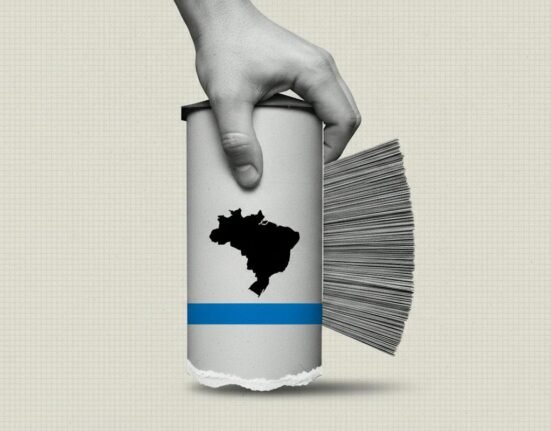
On the Africa Energy Bank, Ibrahim said it was conceived by APPO in partnership with the African Export-Import Bank (Afreximbank) to mobilise African and partner capital for energy development.
He said the two organisations signed a memorandum of understanding for its establishment in April 2022, while its establishment agreement and charter were completed in June 2024.
Nigeria was selected to host the bank in July 2024, while its headquarters building and furnishing were completed in February 2026.
He said the minimum equity capital required for the bank’s take-off, amounting to five billion dollars, was raised by June 2026.
According to him, the bank was formally launched on Oct. 31, 2026, with the inauguration of its General Assembly of Shareholders, appointment of its first president and Board of Directors, and appointment of external auditors.
Ibrahim described the development as an important institutional achievement but stressed that its success would depend on sound governance, transparency, professional management and financial sustainability.
“The bank’s success will not ultimately be measured by the ceremony of its establishment. It will be measured by the projects it finances, the infrastructure it enables and the jobs it supports,” he said.
On technology, he said Africa had relied heavily on externally developed equipment, software, technical services and expertise throughout its oil and gas production history.
He proposed regional centres of excellence to promote research, technology development and collaboration among African scientists, engineers and researchers.
On infrastructure, Ibrahim said APPO conceived CAPS to facilitate the movement of oil, gas and petroleum products among 11 Central African countries.
He said the project was intended to connect producers with consumers and support regional industrial development.
He added that the initiative remained under development and required political commitment, financing, commercial arrangements, harmonised regulations and cooperation among governments and investors.
Ibrahim said the African Continental Free Trade Area provided an important framework for regional energy trade but required reliable cross-border infrastructure to realise its potential.
He urged African countries to strengthen strategic petroleum reserves, diversify supply sources and transportation routes, improve domestic refining and processing, and invest in electricity grids and cross-border energy links.
He also advocated emergency supply coordination, improved energy data and forecasting, predictable regulatory environments and targeted support for vulnerable households during energy price shocks.
In his contribution, Paul Dozie, Chief Executive Officer of Pedestal Africa Ltd., called for increased investment in the energy sector, saying energy poverty was undermining development across critical sectors.
Dozie, who said he had spent about 25 years in the oil and gas industry, described energy as a strategic resource essential for education, food security, healthcare and economic growth.
“Energy is not a commodity. It is a strategic resource. It is a resource that touches on every other aspect of our life,” he said.
He said inadequate energy access could undermine educational outcomes, food security and healthcare delivery because essential institutions required reliable power to function effectively.
Dozie said Africa accounted for about 20 per cent of the world’s energy resources but attracted only about one per cent of global energy investment.
He also said the continent’s per capita energy consumption was about one-fifth of the global average, while Nigeria’s was approximately one-tenth.
He urged African governments, energy producers, academics and business leaders to collaborate in addressing the continent’s energy deficit.
Dozie also called for greater participation of young people in discussions on Africa’s development, suggesting that Realnews collaborate with universities to involve students in subsequent editions of the lecture.
He further urged the organisers to transform the annual lecture into a continental platform, saying energy development required cooperation beyond national boundaries.
“Without doing it continentally, energy does not respect borders. In fact, for you to develop energy, you need resources at scale,” he said.
Also speaking, Adama Gaye, Chief Executive Officer of NewForce Africa, called on African countries to strengthen cooperation and pool their resources, ideas and talents to accelerate development.
Gaye said African countries needed to move beyond working in silos and embrace collective action in energy, education, innovation and other critical sectors.
He commended Ibrahim for projecting Africa’s interests in the global energy industry, particularly amid growing debates about the future of fossil fuels.
Gaye also praised the initiative to establish the five-billion-dollar Africa Energy Bank, describing it as an impressive undertaking.
He said Africa, with its 54 countries and population of more than 1.2 billion people, had enormous collective strength but had failed to fully harness its potential because of fragmentation.
“Let’s get out of the silos and try to work in tandem together because united we stand, divided we fall,” he said.
Earlier, Debo Fagbami, Managing Director of NEDO Gas Development Company and chairman of the occasion, described the lecture theme as timely, particularly as Nigeria and other countries grappled with complex challenges and emerging opportunities.
He said the subject required governments, the private sector, civil society and the media to reflect on choices needed to build a resilient and prosperous future.
Fagbami said platforms such as the Realnews anniversary lecture provided opportunities for evidence-based discussions capable of inspiring practical actions and meaningful reforms.
He commended the publisher of Realnews, Maureen Chigbo, for sustaining the publication and its commitment to journalism despite personal challenges.
Fagbami urged participants to contribute constructively to discussions that would advance national development.
He subsequently declared the 14th anniversary lecture open, expressing hope that it would further strengthen public enlightenment and professional journalism.
Tags: Realnews magazine