An environmental disaster is looming, thanks to so-called renewable energy sources.
The massive push in this century for alternatives to fossil fuels—mainly windmills and solar panels—has been one of the greatest follies in human history. The cost of these alleged renewables in the last 25 years exceeds $10 trillion, and the results politically and economically have been appalling.
The money spent and the regulations imposed have wreaked havoc on European economies. German and British energy costs, for instance, are two to four times those of the U.S. These artificially imposed burdens are a key factor for the miserable growth rates in the EU. Stagnant economies have fueled the ominous rise of extremist political parties in Germany and elsewhere.
The Iran war has graphically exposed how ludicrous this whole renewal push has been. Despite all those solar panels and wind turbines, global oil use has risen by almost one-third, and per capita consumption has remained about the same since the turn of the 21st century. Incisive energy expert and technologist, Mark Mills, recently observed, “The world is more dependent on oil now than when the grand and expensive energy-transition experiment began.”
Ponder for a moment the immense opportunity cost this folly has imposed. Imagine if those trillions had gone into new products, new services, new medical devices, new cures for diseases and, of course, more oil and natural gas production and the development of nuclear power, which is the ultimate clean energy source. Thankfully, Uncle Sam never bought into this foolishness on the scale that so many other nations did.
Another cost of this foolishness that will be coming due can be summed up in the title of a report from the National Center for Energy Analytics (NCEA), a nonprofit founded and headed by Mark Mills: “Who Pays When Wind Turbines and Solar Panels Wear Out? A Hidden Energy Liability.”
What has largely been ignored with these renewables is that they aren’t immortal and will need to be replaced. That’s easier said than done, and the environmental implications aren’t pleasant. The foundation of a typical wind turbine is deep, as much as 30 feet. Each turbine is encased in 2,500 tons of reinforced concrete. Imagine trying to deal with that.
Among other challenges are those blades, made of unrecyclable plastic. In fact, a couple of typical wind farms have more unrecyclable plastic than all the plastic straws and plastic cups in the world put together.
Typically, governments have been ostriches with their heads in the sand. With coal mines that are closed and oil-and-gas drilling sites that are shut down, governments have some form of decommissioning requirements.
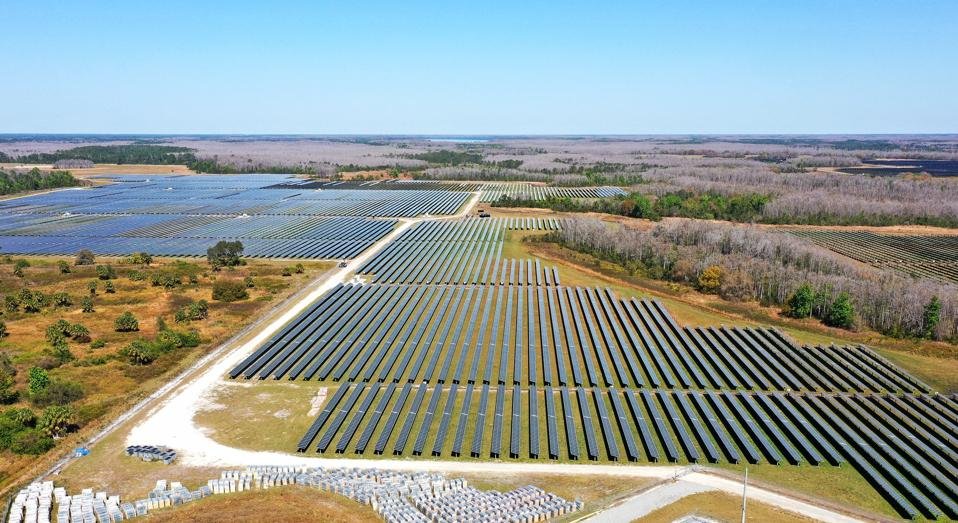
To find out the state of things in the U.S., the NCEA, brought on Curtis Schube, executive director of the Council to Modernize Governance, to conduct a survey to see what rules and regulations each state has on the books concerning the decommissioning of wind and solar facilities. Grades were given. It’s no surprise that nearly two-thirds of the states flunked. This is in sharp contrast to the processes most states have involving fossil fuel facilities.
Another non-surprise: The federal government, which has jurisdiction for offshore wind installations, also gets a failing grade.
Cleaning up worn-out renewable sites will also cost tens of billions of dollars.
From start to finish, these renewables not only are not replacing fossil fuels but also are turning out to have done no overall good for the environment.
https://www.forbes.com/video/a2dedc80-d0fa-40bc-8e40-52688b83e0bb/
This article was originally published on Forbes.com