The U.N. climate summit COP31 ended in Antalya on Nov. 22 without an overarching political pact, leaving open the question of how to move away from fossil fuels when national revenues and jobs depend on them. The U.N. described a deadlock between governments seeking a firmer commitment to that shift and those defending economies that rely on fossil fuel exports. The EU rejected a proposed text that left out fossil fuels, while climate-vulnerable countries pressed for stronger action.
Trade sharpened the disagreement. An early U.N. climate draft called for eliminating unilateral climate-related trade restrictions. The EU’s carbon border levy shows what is at stake. The European Commission says the levy prices the emissions embedded in imports; the draft warned that such measures shift costs onto developing countries and harm their exports. EU climate commissioner Wopke Hoekstra objected to the trade provisions and to the broad role proposed for carbon capture. At bottom, these arguments are about who pays for cleaner production and how governments protect their industries.
Those weeks of negotiation still laid useful groundwork. U.N. climate chief Simon Stiell pointed to a decision on a just transition and to initiatives to speed up electrification. The work negotiators did to identify national constraints, compare proposals and keep cooperation alive retains its value, even though they failed to agree on a joint political text. How much it is worth will depend on whether governments use that knowledge to finance and deliver practical change.
A growing pile of equipment
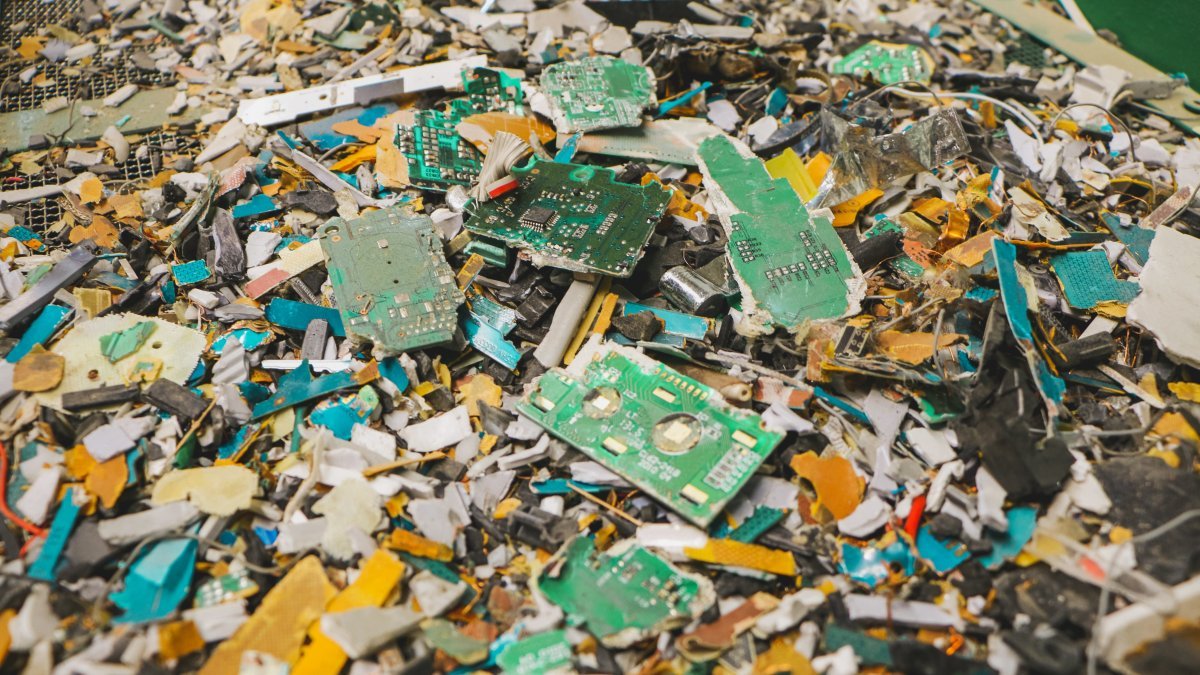
The drive to electrify also carries an obligation that gets less attention. The growing numbers of appliances, electronic controls and solar panels, along with the devices that serve an expanding digital economy, will eventually need repair, replacement or disposal. As a result, electrical and electronic waste (e-waste) is becoming a policy issue for industry and finance ministries as well as for environment departments. Policy has to follow this equipment through its whole life.
The U.N.’s 2024 Global E-waste Monitor, produced by the U.N. Institute for Training and Research (UNITAR) and the International Telecommunication Union, estimates that the world generated 62 million tonnes of e-waste in 2022. Only 22.3% of it was documented as formally collected and recycled. By 2030, the total is projected to reach 82 million tonnes. Capacity is struggling to keep up with a growing stock of products whose future treatment needs are already being set by the designs and purchases of today.
The economic stakes go well beyond disposal fees. Drawing on U.N. data, the Zero Waste Foundation’s E-Waste Report 2026 puts the gross value of the metals contained in the world’s 2022 e-waste at about $91 billion. By its breakdown, copper accounts for more of that value than gold. These are industrial inputs locked inside products whose manufacture, transport and sale have already consumed money and resources.
That gross value is not a promise of easy profit. Collecting and separating materials costs money, particularly when useful elements occur in tiny quantities inside complex components. According to the report, less than 1% of the rare earth elements in e-waste are recycled. Governments seeking more secure supplies of materials therefore need to support difficult recovery processes and to measure which materials actually return to production. A high recycling tonnage can hide the loss of strategically important metals.
Chasing material value without control over how waste is processed runs up a different bill. The World Health Organization warns that open burning, crude acid extraction and unsafe dismantling can expose workers and nearby communities to lead, mercury and other harmful substances. Children and pregnant women are especially vulnerable. When saleable metal is recovered while toxic dust spreads, families and public services are left with costs that the scrap price never reflects.
The climate consequences are direct, too. Discarded refrigerators and air conditioners require safe capture of their refrigerant gases as well as recovery of their metals. Yet the capacity to manage these environmental risks varies widely. Regional comparisons in the Zero Waste Foundation report show that consumers in Africa generate far less e-waste per person than Europeans but have much weaker formal collection and treatment systems. Uncontrolled international shipments can add to the burden in places where safe processing is already scarce.
Even well-resourced systems face a capacity problem. Across the European Union between 2019 and 2023, new equipment placed on the market per person rose by about 28%, while collected e-waste per person rose by roughly 14%. Because products stay in use for years, the difference between these annual flows cannot be read as uncollected waste. The gap between their growth rates nevertheless gives planners reason to look closely at future collection and treatment needs.
Capacity falling behind
Laws alone will not build that capacity. Some national regimes lack binding collection or recycling targets. In others, inadequate inspection, opaque producer funds and poorly tracked waste movements undermine implementation. Governments need a reliable picture of where equipment ends up before they can judge whether their rules work.
Solar panels show what this planning means in practice. U.N. projections suggest that annual panel waste could quadruple between 2022 and 2030. Authorities need installation records, estimates of when panels will be retired and money set aside for dismantling and treatment. Facilities planned only around yesterday’s waste volumes will struggle to handle tomorrow’s equipment stock.
Acting before products become waste
Development banks that finance electrification should also support collection infrastructure, training for recyclers and safe treatment capacity. Grants for collection systems and investment in recovering refrigerants from discarded cooling equipment would help ensure that new installations are matched by the services they will eventually need.
The response should begin before products become waste. Longer useful lives, accessible spare parts, repair services and continued software support should be central to product policy and public procurement. Collection needs to be convenient enough that households take part, whether through shops, local facilities or postal returns. Secure data erasure can make people more willing to part with old phones and computers that would otherwise stay in drawers.
Producers and importers, including those selling online, should pay for collection and safe treatment under enforceable rules. Their contributions should be structured to reward products that are durable, repairable and easier to recycle. A collection target produces results only when it is backed by funded services, qualified operators and independent inspection. A just transition should also mean safe, fairly paid work for the people who collect and process discarded equipment. Governments must give existing informal collectors a workable route into regulated systems, with training and protection from exposure.
International cooperation has an equally practical role. The expanded e-waste controls under the Basel Convention, the treaty governing cross-border movements of hazardous waste, have been in effect since January 2025 and provide a framework for prior consent to international e-waste shipments. Customs authorities still need testing, documentation and enforcement to tell genuinely reusable equipment apart from waste falsely labelled as second-hand goods. Shared standards and finance for treatment capacity can support legitimate reuse while making it harder to transfer pollution.
COP31 showed how difficult cooperation becomes when governments disagree over who pays and who benefits. E-waste brings those same questions into factories, ports and municipal budgets. Countries can make progress now by funding collection, extending product lives and publishing credible results on material recovery and worker protection. The diplomatic effort spent in Antalya will still prove useful if it helps governments take on that patient work, with clear responsibilities and the means to meet them.
The views and opinions expressed in this article are solely those of the author. They do not necessarily reflect the editorial stance, values or position of Daily Sabah. The newspaper provides space for diverse perspectives as part of its commitment to open and informed public discussion.