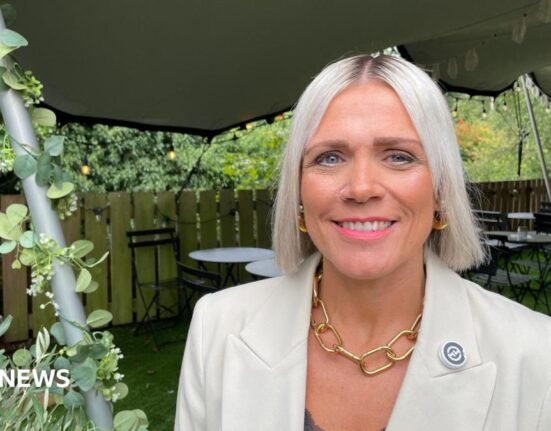
There are practical issues too. Since the fund was launched without any seed funding, it doesn’t have a dedicated staff for outreach. “We are doing that with an interim secretary that is staffed by the CBD secretariat,” said Schomaker.
Businesses were invited to contribute either 1 percent of their annual profit or 0.1 percent of their annual revenue to the Cali Fund. That can add up to tens of millions of dollars a year for large multinationals.
But importantly, decisions on how exactly the money will be spent have not been taken. “To date, funds have not been disbursed, as the disbursement architecture is being finalized,” a spokesperson for the Cali Fund said.
“Companies want clarity on scope and how a Cali Fund contribution interacts with national access-and-benefit-sharing rules,” the spokesperson added.
Ahead of the next biodiversity COP taking place in Armenia next month, Schomaker hopes for a snowball effect. “The business sector is beginning to recognize essentially that you ignore nature at your peril and the peril is for your own bottom line,” she said.
And it’s not inconceivable. A spokesperson from Prozomix, one of the two companies to contribute so far, said: “Since making the contribution, we have realised this phenomenon is actually down to a widespread lack of awareness with respect to what the Cali Fund mechanism is designed to achieve.”
The company is “driving uptake” by requesting the companies it works with “to actively contribute to the Cali Fund moving forwards” if they use public genetic data, the spokesperson added.