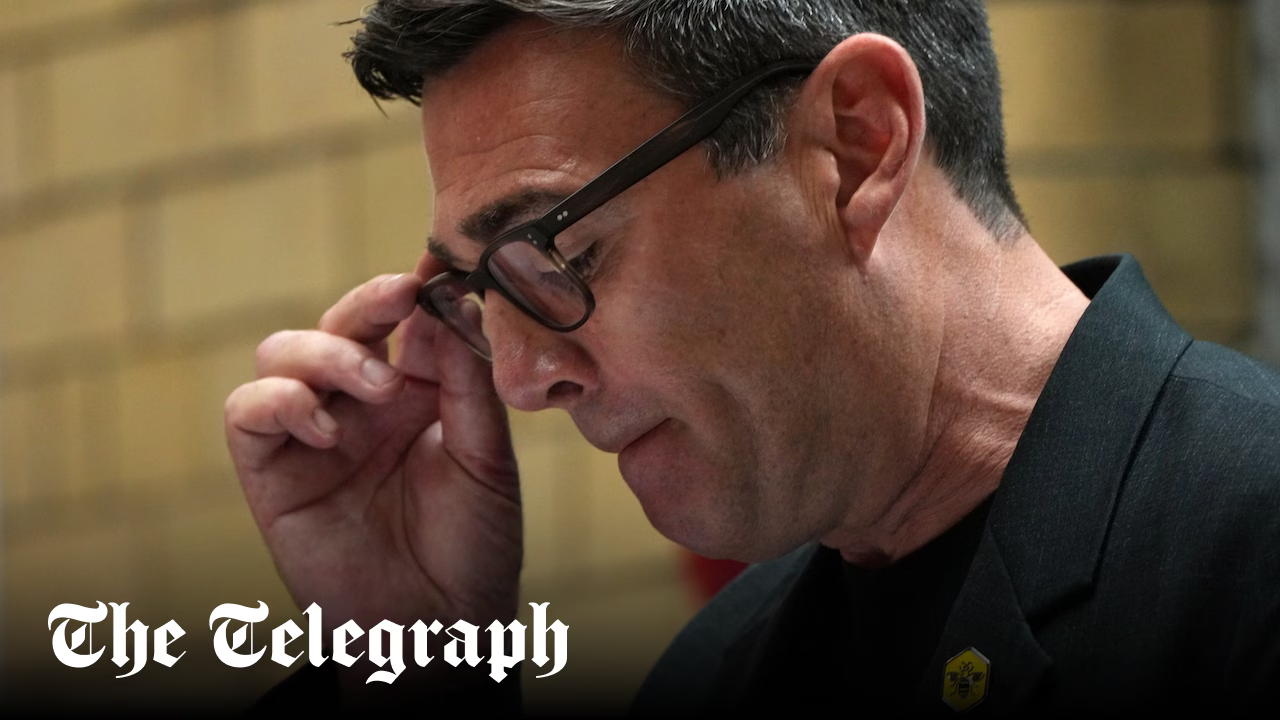
Mr Burnham has signalled that he wants to change business rates so that warehouses pay more than high street shops. He has also backed the idea of a land tax and previously argued work was overtaxed and assets were under-taxed, indicating a potential increase to capital gains tax, which applies to assets like shares and second homes.
The former mayor of Greater Manchester will have to fill a £15bn black hole in Sir Keir Starmer’s defence investment plan in the first few months of his premiership.
While Mr Burnham has pledged to cut welfare to fund higher defence spending, he has ruled out making “crude” cuts to benefits.
Laurence Hulse, an investment director at Dowgate Wealth, warned Mr Burnham against further tax rises to meet the spending commitments.
He said: “I can feel our shoulders tingling already. We cannot tax our way to growth… We have got to incentivise risk-taking and enterprise again.”
Andrew Griffith, the shadow business secretary and a former financial executive in the City, said Mr Burnham was “sowing uncertainty and confusion with his comments on tax”.
He said: “It beggars belief after the last two years that anyone thinks even more tax is the answer. But unless he rules out tax rises, we face another summer and autumn when business can’t make decisions.”
Mr O’Shea said: “People forget that you need investment to drive growth and it’s growth that will drive tax revenues.
“The more you tax things, the less you get of it. It’s one of the reasons why they increase tax on smoking. If you increase tax on smoking, people smoke less.
“If you increase tax on jobs, people employ less people. There is a limit to where you can get to in terms of increasing taxation.”
He called for the abolition of stamp duty on share trading to boost growth. He also said Mr Burnham should consider bringing back dividend tax credits, which were scrapped by Gordon Brown, to foster investment.
Goldman Sachs said Mr Burnham would struggle to raise more money through tax and would likely have to borrow more to fulfil his policy ambitions.
Economists James Moberly and Sven Jari Stehn wrote in a note to clients: “Raising significantly more revenue through tax hikes also looks challenging given the Labour Party manifesto commitments … That points to risks of higher deficits compared to the current fiscal plans.”