Lifestyle
-Oneindia Staff

Metabolism is the set of body processes that turn food into energy. It affects how many calories you burn each day. For weight loss, metabolism matters because it links to your daily energy use. Still, fat loss mainly needs a steady calorie deficit. Knowing the parts of metabolism helps you plan food, sleep, and exercise.
Your body uses energy to breathe, pump blood, and keep you warm. It also uses energy to move and digest food. All these add up to your daily calorie burn, called total daily energy expenditure. When you eat fewer calories than you burn, you lose weight over time. Metabolism shapes how fast that happens.
Metabolism converts food into energy through processes like BMR, activity, and digestion, impacting daily calorie burn. While a calorie deficit drives fat loss, factors such as muscle mass, sleep, and stress also influence metabolic rate.
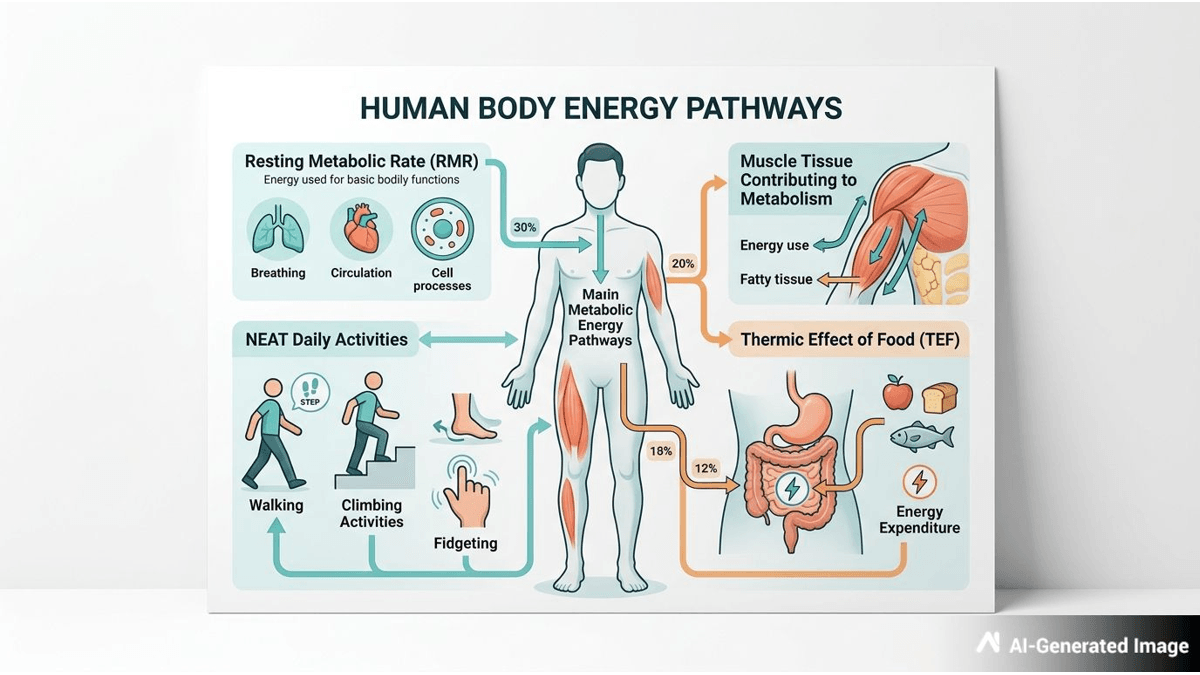
BMR is the calories your body burns at rest. For most people, it is the biggest part of daily calorie burn. BMR depends on body size, age, sex, and lean mass. A larger body and more muscle usually raise BMR. As people age, BMR often drops due to less lean mass.
Activity burn and daily movement (NEAT)
Exercise helps, but daily movement also counts. This is called non-exercise activity thermogenesis, or NEAT. It includes walking, standing, cleaning, and using stairs. NEAT can change a lot between people. Long hours of sitting can lower NEAT. More steps and more standing can raise daily calorie burn.
Thermic effect of food (TEF)
Digesting food needs energy. This is the thermic effect of food, or TEF. Protein has a higher TEF than carbs or fat. That means your body burns more calories processing protein. TEF is smaller than BMR, but it still matters. Regular meals with enough protein can support your daily energy use.
Muscle mass and metabolic rate
Muscle tissue uses more energy than fat tissue, even at rest. Building or keeping muscle can support BMR during weight loss. Resistance training helps maintain lean mass when calories are lower. It can also improve strength and function. This matters for people who diet without exercise and lose muscle along with fat.
Metabolic adaptation during dieting
When you eat fewer calories for weeks, your body may burn less energy. This is often called metabolic adaptation. You may move less without noticing, and BMR can drop a bit. This does not stop weight loss, but it can slow it. Tracking food and steps can help spot these changes.
Why crash diets often fail
Very low-calorie diets can lead to quick water and muscle loss. They can also increase hunger and tiredness. In response, people may snack more or stop moving as much. That lowers daily energy burn. A moderate calorie deficit is often easier to keep. It also supports training and daily activity.
Hormones that affect hunger and weight
Metabolism links with hormones that affect appetite. Leptin helps signal fullness, and it can drop with weight loss. Ghrelin can rise and increase hunger. Thyroid hormones help control energy use. Large diet changes, poor sleep, and stress can affect these signals. Managing hunger supports sticking to a calorie deficit.
Sleep, stress, and metabolic health
Short sleep can raise hunger and reduce control over food choices. It may also lower daily movement and training quality. Long-term stress can change eating habits and push people towards high-calorie foods. Better sleep and stress control do not “speed up” metabolism overnight. They support steady habits that drive weight loss.
Exercise and calorie burn
Exercise increases calorie burn during the activity. It can also support fitness and improve insulin action. Cardio burns more calories per session, while strength training supports muscle. A mix often works best. If time is limited, brisk walking is useful. The key is doing it often enough to add up each week.
Food choices that support metabolism
There is no single food that makes you burn fat on its own. Still, some choices help your plan. Protein helps fullness and supports muscle. High-fibre foods can reduce hunger and aid meal control. Drinking water can support training and reduce mix-ups between thirst and hunger. These steps help you keep a calorie deficit.
Common myths about “boosting metabolism”
Many products claim to boost metabolism fast. Most have small effects, if any. Drinks with caffeine may raise calorie burn for a short time, but they do not replace a good diet. Spicy foods may have a mild effect, but it is small. Focus on food tracking, daily movement, and strength training instead.
How to track progress in a simple way
Weight can change day to day due to water, salt, and meals. Use weekly averages for a clearer view. Also track waist size and photos if needed. If fat loss stalls for weeks, check portion sizes and steps. Small changes often work better than big cuts. This keeps energy, mood, and training more steady.
Health checks and special cases
Some health issues can affect energy use and weight control. Thyroid problems, some medicines, and hormone disorders can play a role. If you gain weight fast, feel very tired, or cannot lose weight despite steady habits, speak to a doctor. Safe weight loss still comes from a calorie deficit, with the right support.