
Wide angle image depicting a senior man’s hand holding an energy bill while the other hand checks th (Image: Getty Images)
Millions of Brits could be sitting on cash in their energy accounts without realising it, with new Ofgem data showing the average fixed Direct Debit customer in credit had £212 sitting in their supplier’s account.
The regulator’s latest figures show domestic energy customers paying by fixed Direct Debit had an average credit balance of £212, up from £206 the year before. Separate Ofgem data for the year ending June 2025 showed around 15 million households with credit balances, holding an average total of £3.09 billion with suppliers.
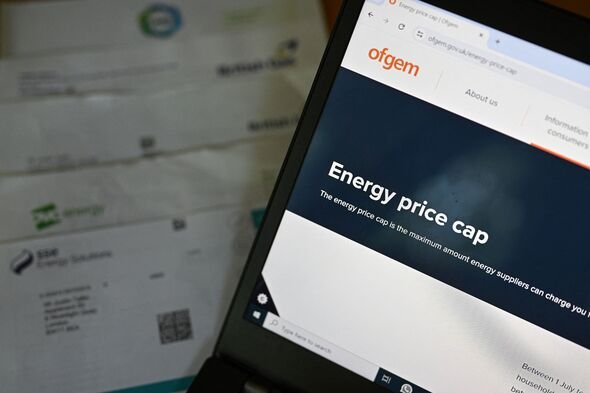
(FILES) In this arranged photograph the website of Britain’s energy regulator Ofgem, is displayed on (Image: AFP via Getty Images)
That does not mean every household should immediately empty their account. Energy credit can be useful because Direct Debits are designed to spread costs across the year, building up during warmer months and helping cover higher winter use.
But Thomas Drury, money-saving expert at The Investors Centre, says many households should still check whether their balance has become too high, especially as warmer weather means many people are now using less energy.
He said: “Energy credit is not automatically a bad thing. A sensible buffer can stop your bills jumping around too much, especially before winter. But there is a difference between having a useful cushion and leaving hundreds of pounds sitting with your supplier when you could be using that money elsewhere.”
Why your energy account may be in credit
Most households on fixed Direct Debit pay the same amount every month, even though they use far more energy in winter than in spring or summer.
That means accounts often move into credit during warmer months and fall back down when heating use rises again.
Drury says this is why people need to be careful before requesting a refund, adding: “The point of a fixed Direct Debit is that you smooth out the cost across the year.
“If you claim back too much in summer, you may simply create a shortfall later when usage goes up again. That can lead to a higher Direct Debit, a catch-up bill, or pressure at exactly the wrong time.”
However, he says the problem comes when credit keeps building and the monthly payment is no longer realistic.
“If your balance is climbing month after month, that suggests your Direct Debit may be set too high,” he added. “That is when it is worth asking your supplier to review it.”

Portrait of a mid adult woman checking her energy bills at home, sitting in her bedroom. She has a w (Image: Getty Images)
When you should consider asking for money back
Ofgem says customers can ask their supplier to refund credit at any time, and suppliers must do this promptly unless they have reasonable grounds not to. Before claiming, the regulator advises customers to think about whether they are likely to need that credit to cover future bills.
Drury says the best rule of thumb is to look at your balance against your monthly payment and likely seasonal use.
“If you have around one month’s payment in credit, that may simply be a normal buffer. If you have two or three months’ worth sitting there, especially heading into summer, that is worth questioning.”
He adds: “The key question is not ‘am I in credit?’ It is ‘is this credit reasonable for my usage?’”
For example, a household paying £150 a month with £100 in credit may not need to do anything. But a household paying £150 a month with £500 sitting in the account should ask why the balance is that high.
“That does not automatically mean you should take the full amount back. But it does mean you should ask for a review and consider a partial refund.”
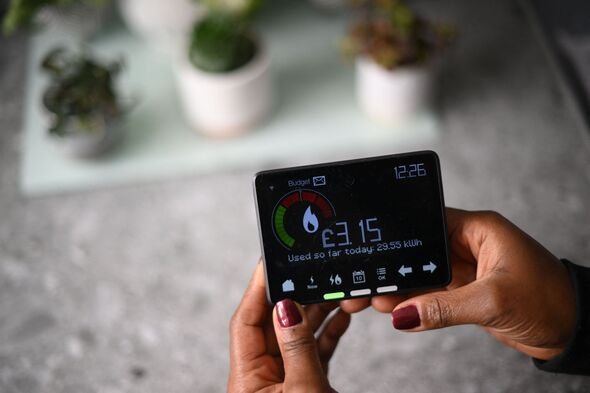
A smart meter indicating how many kWh (kilowatt-hour) of energy has been used already in one (Image: AFP via Getty Images)
How to check if your Direct Debit is too high
Drury says the first step is to compare your energy account balance, monthly Direct Debit and recent usage.
“Do not just look at the credit figure in isolation. A £212 credit balance means different things depending on whether your monthly payment is £80 or £250.”
He recommends checking three things before contacting your supplier:
First, look at your latest bill and see whether the balance is in credit or debit.
Second, check whether your bill is based on actual meter readings or estimates.
Third, compare your current Direct Debit against what you are actually using each month.
“If your supplier is working from estimated readings, the balance may not be accurate,” Drury says.
“Submit an up-to-date meter reading before you ask for money back. That gives both you and the supplier a clearer picture.”
For smart meter customers, the reading should usually be automatic, but Drury says it is still worth checking whether bills are being generated properly.
“Smart meters reduce the risk of estimates, but they do not remove the need to check your account,” he adds.
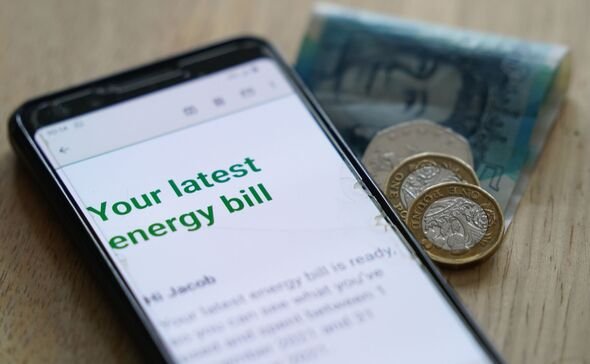
– (Image: PA)
The mistake households should avoid
The biggest mistake, according to Drury, is treating energy credit like a bonus payment.
“This is not free money,” he says. “It is money you have already paid towards energy.
“That is why you need to handle it carefully. Claiming a refund can be sensible if the balance is too high, but taking it all out without thinking about winter could backfire.”
He also warns against ignoring high credit balances because the household feels “safe” being ahead.
“Some people leave large balances untouched because they like the reassurance,” he says.
“But if your account is hundreds of pounds in credit, you have to ask whether that money is working for you.
“It could be covering other bills, reducing debt, building an emergency fund, or sitting in an interest-paying savings account instead.”
What to say to your supplier

Portrait of a mid adult man checking his energy bills at home. He has a worried expression and touch (Image: Getty Images)
If your account looks too far in credit, Drury says customers should contact their supplier and ask for two things: a Direct Debit review and, where appropriate, a partial refund.
He suggests keeping the conversation simple.
“Ask: ‘Is my Direct Debit based on actual usage, and can you explain why my account is this far in credit?’” he says.
“Then ask: ‘Can my monthly payment be reviewed, and can part of the credit balance be refunded while leaving enough to cover future use?’”
Ofgem guidance says suppliers should set Direct Debits based on the best and most current information available, including meter readings and estimated annual consumption. Energy UK also notes suppliers regularly review Direct Debits, and customers can request a review if they think the payment or balance is not right.
Drury says customers should not feel awkward about asking.
“You are not asking for a favour,” he says. “You are asking whether the payment level is accurate and whether money you have already paid should be returned.”
Don’t forget old energy accounts
The issue is not limited to current suppliers.
Ofgem previously urged consumers to check whether they had money sitting in closed energy accounts, after estimating £240 million in unclaimed credit balances was waiting to be returned to customers who had moved or switched supplier. Under Ofgem’s guaranteed standards, suppliers must issue a final bill within six weeks of an account closing and refund credit within 10 working days of that final bill, although missing customer details can delay this.
Drury says this is an easy place for money to disappear.
“If you moved home or switched supplier in the past few years, search your emails for ‘final bill’, ‘credit balance’ and ‘refund’,” he says.
“People often assume everything was settled at the time, but if contact details changed or the account was closed in a rush, credit can be missed.”
He says old supplier apps, online accounts and bank statements can also help track previous providers.
“Even if the amount is small, it is worth checking,” he adds. “That is your money, not the supplier’s.”