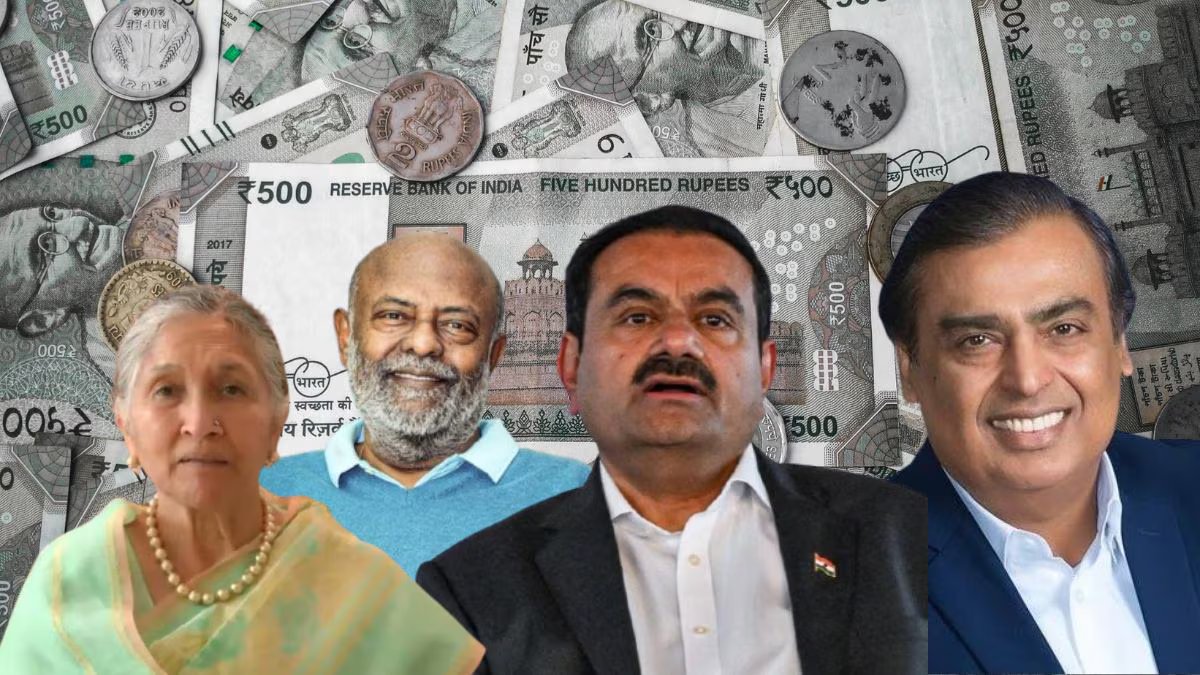
India may still be categorised as a developing economy but its billionaire class tells a far more muscular story. From conglomerates and tech-led fortunes to a new generation of wealth architects, the country is quietly scripting one of the world’s fastest wealth creation stories. With 229 billionaires controlling over $1 trillion in combined wealth, India now sits alongside economic giants like the US and China.
India’s billionaire count has surged by 51% to nearly 229, according to Motilal Oswal Private Wealth. In an exclusive interaction, Akash Hariani, Joint Managing Director, Motilal Oswal Private Wealth, told financialexpress.com more about the 51% rise in Indian billionaires, and how India’s wealth creation depends on domestic demand. “India’s model is best described as a diversified system combining new-age entrepreneurship and a wealth creation model supported by demographics, rising financialization and digitisation,” Hariani told financialexpress.com.
The $1.5 trillion wealth transfer
India has been preparing for an overhaul of the old and a staggering transition phase. As per the Motilal Oswal spokesperson, India has an estimated $1.3–1.5 trillion transfer of wealth across generations over the next decade.
And this has led to a proactive succession planning, and the rising emphasis on the need for continued wealth. As first-generation billionaires now enter this phase, India’s moving graph points to the upcoming $124 trillion global wealth transfer by 2048.
“Generationally wealthy families are looking to choose private trusts, holding companies, and family constitutions to reduce ambiguity. However, they need to focus on ensuring continuity, avoiding disputes, and optimising tax efficiency. Out of all the available options, trusts, in particular, enable consolidation of ownership, smoother succession, and protection from fragmentation of assets across generations,” noted Motilal Oswal Private Wealth’s Akash Hariani.
With trusts being the ideal mode of wealth transfer, the billionaire’s pocket money also expresses itself in the form of adoption-based economy transfer. And still uneven, 85% of Indians still lack formal wills. However, India’s wealth management industry is set to scale from $1.1 trillion AUM in FY24 to $2.3 trillion by FY29.
At the same time, India has noted a rise in family offices by 300 since 45 in 2018. And the role extends beyond investment management. Now, governance, succession planning, and philanthropy are by-products of the process.
Wealth creation vs wealth transfer – Is India prepared?
The Knight Frank Wealth Report 2026 projected a 51% surge in India’s billionaire population by 2031, and the country’s wealth journey has only continued to rise. The ultra-high-net-worth individual base is also expected to grow 27% to cross 25,000, marking one of the fastest expansions globally. But as rapid wealth creation gives way to more strategic and structured growth, the bigger question remains: is India truly prepared for it?
“The GDP of the nation stood at around 7.6% in FY26, significantly higher than the global growth of around 2.7%. India is now one of the few countries that consistently has more than 6% GDP growth,” shared Hariani. Not only GDP, but Indians are now adapting to contactless instant payments with lightning speed.
March 2026 reported 22.6 billion of UPI payments, as India became a wealth-driven country. However, “India is not immune to external shocks. US trade tariffs impacting export-linked sectors, geopolitical tensions affecting energy prices, slower global growth and China’s continued dominance in critical minerals can all affect the market,” remarked the private wealth expert.
“With the top 10% holding around 65% of wealth, out of which the top 1% holds approximately 40% of the wealth, the challenge is whether economic growth can translate into broad-based income expansion,” Akash Hariani added.
However, the upcoming phase of the billionaire boom and wealth creation is more than generational, but largely dependent on demographics, consumption, and inclusion, too.