Unlike parole board assessments, mental health tribunals are not accessible to the public.
In 2018, an NHS England report found that 18 psychiatric patients released from Oxleas had gone on to kill in the past 15 years.
One of those was Daniel Atkins, who beat 71-year-old Ronald Parsons to death at his home in Bromley, south-east London, in 2014. Atkins, who had been diagnosed with schizophrenia, was released from Oxleas without the approval of a consultant two days prior, in what a judge called a “fatally flawed” decision.
He had been held up as a poster boy for the trust at an Oxleas jobs fair where he had campaigned for employment opportunities for mentally-ill patients.
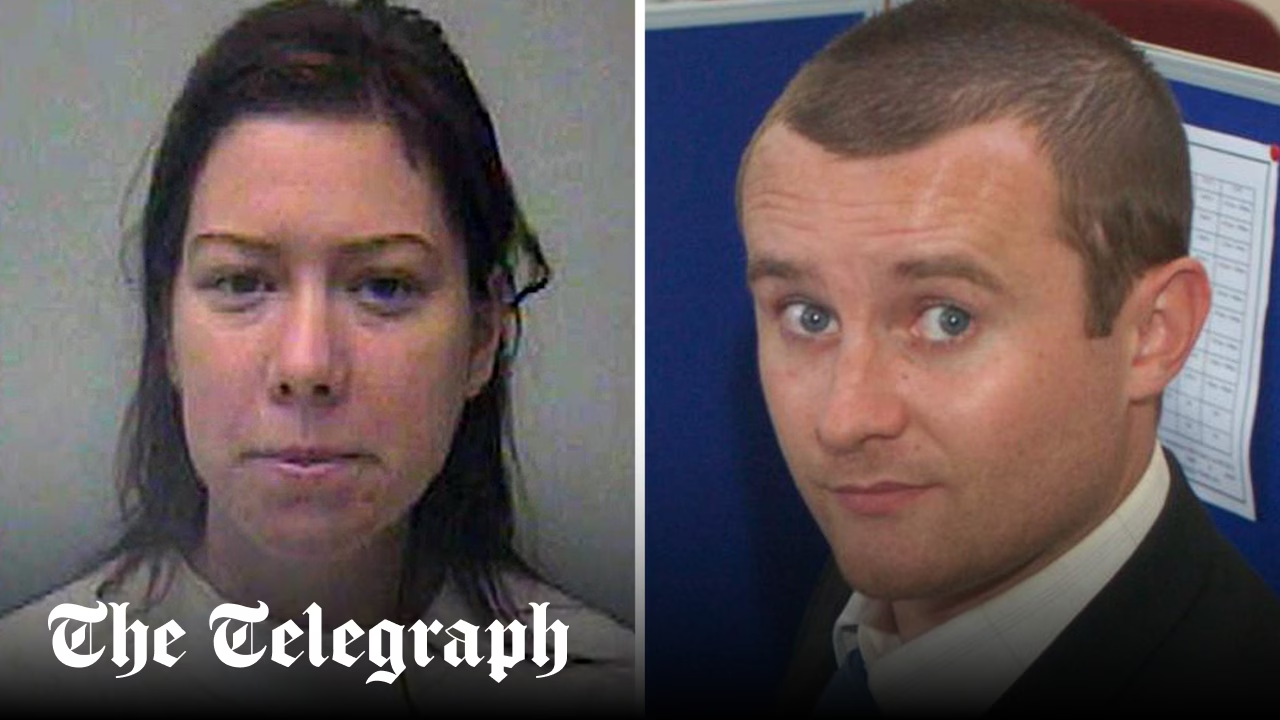
A spokesman for Oxleas did not deny that Edgington or Atkins had advised the trust, but said that neither had been a lived experience practitioner (LXP), the term used to describe mental health patients employed by the trust.
They said: “All Oxleas LXPs are required to have completed a process of training and vetting, including a mandatory DBS check for criminal convictions.
“Once in role, LXPs are subject to the same management as other staff, including clear job descriptions (which specify the oversight for any patient contact they may have), ongoing supervision, management and job appraisals.
“Oxleas takes extremely seriously the need to safeguard the public and to learn lessons from serious incidents.”
The Telegraph is aware of at least one convicted killer with a history of mental illness who is currently employed as an expert by experience for an NHS trust.
The man pleaded guilty to manslaughter by diminished responsibility.
‘Deeply distressing’
The widow of his victim told The Telegraph that she was “horrified” to learn that her husband’s killer was working for the NHS.
“As victims, we had absolutely no say, and were left with little support,” she said. “That he should now work in the role he does for an NHS trust beggars belief and I find it deeply distressing.”
It is understood that the convicted killer has been vetted, including undergoing an enhanced DBS check.
A spokesman for the NHS trust said: “Drawing on the experience of people who have used mental health services to help us improve is something we are deeply committed to.
“Experts by Experience directly support patients, work with us to co-produce service developments and help us continue improving services for our local communities.
“We have a requirement to co-produce commissioned services, which involves drawing on the experience of people who have used secure mental health services.
“We have rigorous processes in place for the recruitment and ongoing management and support of people with lived experience who work with us.”