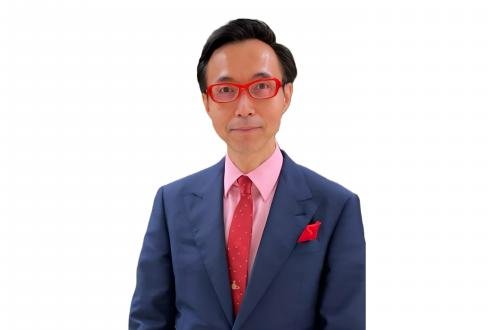
As the independent wealth management industry contends with shifting demographics, geopolitical uncertainty and rising client sophistication, the imperative for multi-family offices to differentiate has never been greater. For Anthony Chan, Partner and Responsible Officer at Avenue Family Office, the path forward rests on three pillars: building scale through strategic recruitment, broadening access to private markets and maintaining the human relationships that technology alone cannot replicate.
The wealth management landscape in Asia is being reshaped by a confluence of structural forces. Chief among them is the intergenerational transfer of wealth, which Chan estimates will exceed USD5.8 trillion by 2030, citing McKinsey research. While the scale of the opportunity is significant, the transition itself presents considerable advisory complexity. First-generation wealth creators and their successors often differ markedly in how they wish to manage and allocate family assets, a divergence that demands careful navigation.
At the same time, the proliferation of single-family offices (SFOs) across Hong Kong and Singapore, now numbering in the thousands, is revealing the cost constraints of standalone operations. Chan notes that personnel expenses alone typically account for more than half of total operating costs, making scale a prerequisite for sustainability. He anticipates a gradual transition from SFOs to multi-family offices (MFOs) as families recognise the efficiency gains available through shared platforms, a trend he believes will benefit the broader external asset management (EAM) and MFO sector.
Diversification as a Risk Management Imperative
Client behaviour is evolving in response to heightened geopolitical uncertainty and shifting macroeconomic conditions. Chan observes that wealthy families are increasingly diversifying across both geography and currency, motivated in part by concerns around US dollar debasement and changing dynamics in US Treasury markets.
This reallocation is flowing into several directions. Private markets, including private credit, private equity and hedge funds, are absorbing a growing share of family office portfolios, driven by the illiquidity premium they offer and their lower correlation with public market assets. Precious metals, gold in particular, have also attracted significant inflows. Asian family offices now allocate approximately 30 per cent of their portfolios to private markets on average, according to Chan, a figure that, while still trailing European counterparts, represents a meaningful shift from the traditional 60/40 framework.
Building Differentiation Through People and Infrastructure
In a market where advisory services have become largely commoditised, Chan argues that differentiation ultimately rests on people. Avenue Family Office has pursued a deliberate recruitment strategy, expanding its team of seasoned private bankers and adding experienced commercial bankers, including a former head of commercial banking at a major US bank responsible for the southern China region. This brings access to a network of entrepreneurs and business owners who may not have previously engaged with independent wealth management.
Beyond personnel, the firm has invested in operational infrastructure. Avenue holds Type 1, Type 4 and Type 9 licences under the Securities and Futures Commission (SFC), with what Chan describes as a “big” Type 1 licence enabling the firm to act as a custodian. A proprietary mobile application allows clients to trade US and Hong Kong equities, a feature designed to appeal to [digital savvy clients as well as] digitally fluent second-generation wealth holders.
Onboarding speed is positioned as a further advantage. Clients can begin investing through Avenue Investment Management Limited within one to two weeks, compared to the four to nine months typically required by private banks. The firm runs parallel onboarding processes, ensuring clients can deploy capital without delay.
Manufacturing Capability as a Structural Advantage
Avenue Family Office distinguishes itself through in-house asset management capabilities. Chan highlights that the firm [used to run an SFC-authorized Fixed Income Fund for retail investors] , a distinction he believes is rare among Hong Kong MFOs. As HNW is the segment to serve, the firm converted it ] into a UCITS-eligible fixed income alpha fund now available on private bank shelves.
This manufacturing DNA underpins the firm’s private market offering. Avenue has established a fund of hedge funds, constructed from a curated universe of strategies sourced through external partners with rigorous due diligence standards. More recently, it launched a fund of private credit funds, applying a similarly selective approach. Chan notes that the portfolio avoided exposure to the weaker credits, particularly in the technology sector, that have since experienced distress. This combination of proprietary fund manufacturing and disciplined selection is positioned as a capability most competitors lack the scale to replicate.
Technology as Complement, Not Substitute
On the question of artificial intelligence, Chan takes a measured view. He acknowledges that AI offers significant efficiency gains in data analysis and administrative automation, but draws a firm distinction between operational support and the advisory relationship.
“The decision-making, the core thinking really rests with the advisors,” he says, framing technology as a complement rather than a replacement. In his view, the complexity and individuality of client needs require a depth of trust that only sustained human relationships can deliver. Without that trust, advisors are limited to superficial engagement, unable to access the detailed personal and family information necessary to provide genuinely bespoke solutions.
The firm’s approach is to use AI to absorb repetitive workloads, freeing advisors to focus on higher-value activities. Chan identifies expertise and human judgement as the two capabilities that AI cannot replicate, and the two that wealth management will always require.
Strategic Priorities: Scale, Responsiveness and Risk Management
Over the next 12 to 18 months, Avenue Family Office is focused on increasing scale, a priority Chan frames as essential not only for growth but for the effective deployment of technology. Without sufficient scale, the marginal benefits of AI and automation are difficult to justify against implementation costs.
Equally important is responsiveness. In an environment of persistent uncertainty, Chan emphasises proactive client engagement, sharing possible scenarios and helping clients prepare before events materialise. “Clients are our boss,” he notes, adding that responsiveness serves a dual purpose: retaining existing relationships while deepening the trust that underpins long-term mandates. For Avenue Family Office, combining scale, manufacturing capability and relationship depth represents the foundation on which it intends to compete as the industry consolidates.