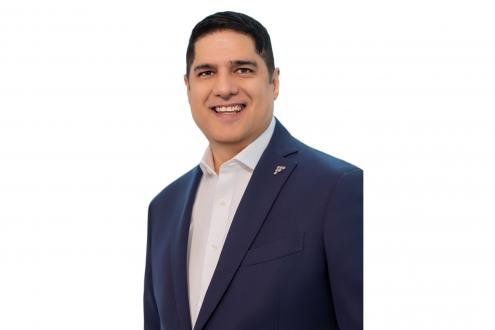
As wealth management continues to evolve, the industry is increasingly shaped by structural pressures around revenue generation, shifting client expectations and the accelerating role of technology. For Hemant Tucker, Co-Founder & CEO of Farro Capital, the underlying fault line is clear: a growing drift towards product-led models across both large institutions and independent firms is moving the industry away from its core advisory mandate.
Across the landscape, revenue pressures are influencing behaviour at multiple levels. Larger banks, facing increasing performance expectations, have become more product-driven in their approach, while smaller independent asset managers often lack the financial backing required to build fully institutionalised platforms. The result is an ecosystem where transactions increasingly outweigh long-term client-centric solutions.
He cautions that this trajectory is unlikely to prove sustainable. “The industry has become overly product-driven,” he observes, pointing to a structural misalignment between operating models and client needs.
A Governance-Led Model Anchored in Longevity
Against this backdrop, Farro Capital has positioned itself around a fundamentally different organising principle – one centred on longevity, alignment and the preservation of family wealth and values across generations.
The firm’s philosophy is rooted in the idea of endurance, with its name reflecting the focus on family legacy designed to survive for millennia.
This translates into a model that extends well beyond traditional investment management, incorporating family governance, family constitutions and long-term structuring into a unified advisory framework.
“We want the family’s wealth, legacy and values to survive for thousands of years,” Tucker explains, framing this as the foundation of the firm’s approach.
This positioning is reinforced by a predominantly fee-based model, designed to remove conflicts associated with transaction-driven revenue. By aligning incentives with client outcomes, the firm seeks to operate as an extension of the family office rather than a distribution-led intermediary.
Industry Constraints: Talent, Technology and Structural Change
Alongside the shift towards productisation, Tucker identifies talent as a key constraint across the industry. Hiring and retaining high-quality professionals remains challenging, particularly as firms attempt to balance cost pressures with the need to build more sophisticated capabilities.
At the same time, the pace of technological change is creating additional pressure. The rise of artificial intelligence, the development of tokenisation and broader shifts in financial infrastructure are redefining how wealth management services are delivered.
“Not being able to use the mega trends of AI and tokenisation is a big challenge,” he says, pointing to the risk of firms falling behind as these trends accelerate.
These dynamics are further amplified by the ongoing intergenerational transfer of wealth, which is reshaping both client profiles and service expectations.
Client Expectations Move Towards Speed and Responsiveness
Client behaviour is evolving rapidly, particularly as next-generation wealth owners become more involved in decision-making. Increasingly, expectations are centred around speed, transparency and the ability to access insights in real time.
“Clients want speed in terms of getting a view and optimising their portfolio,” Tucker notes, emphasising that the demand is not purely for execution, but for faster understanding and decision support.
This marks a shift away from traditional advisory cycles, where portfolio changes are often driven by periodic reviews or investment committee processes. Instead, clients are seeking more dynamic engagement, supported by technology-enabled tools that allow for quicker scenario analysis and portfolio adjustments.
An Integrated Platform Across Structuring, Investment and Philanthropy
Farro Capital differentiates itself through an integrated platform spanning governance, structuring, investment and philanthropy.
On the structuring side, the firm combines advisory with execution, managing both the design and ongoing compliance of wealth structures. “There is a difference between advising on a structure and actually implementing it,” Tucker observes, highlighting a gap that many providers do not fully address.
The investment platform is built around a multi-asset and multi-strategy team, incorporating equity, fixed income, hedge funds, and private investments, alongside dedicated Quant and AI capabilities. The firm’s approach is grounded in robust portfolio construction rather than trading activity.
“We are asset allocators at heart,” he says, reinforcing a focus on long-term portfolio construction aligned with multi-decade client objectives.
Philanthropy forms a dedicated pillar, with the firm supporting families in designing institutional-grade giving strategies, governance structures, and measurable impact frameworks. This includes integrated philanthropy and blended finance advisory that helps families transform aspirations into structured, actionable outcomes while elevating their long-term ambitions. In a region where dedicated philanthropic advisory of this calibre is still uncommon, the firm is uniquely equipped to guide families with both rigour and purpose bridging intent with disciplined execution.
“We partner with families to design, implement, and scale philanthropic strategies that deliver meaningful, measurable impact through bespoke philanthropy advisory and blended finance structures” Tucker frames this as a cornerstone of wealth planning, one that builds a legacy of both values and value.
Further, please use the attached Image of Hemant for the Article, not the old one which is currently being used.
Embedding AI Across Investment and Advisory
Technology plays a central role in the firm’s operating model, particularly through the application of AI within both asset management and client advisory.
Within investment strategies, AI-driven risk frameworks are used to dynamically adjust portfolio exposure based on market conditions. “The system can move portfolios into cash when market momentum turns negative,” Tucker notes, highlighting the role of automation in managing downside risk and reducing emotional bias.
These capabilities are now being extended into client portfolios, enabling more personalised and rule-based portfolio management. This includes scenario modelling and conditional instructions that allow portfolios to adapt based on predefined triggers.
“Clients can define how they want their portfolio to behave under certain conditions,” he says, reflecting a broader shift towards customisation and control.
Adapting Strategy in a Rapidly Changing Environment
Looking ahead, Farro Capital’s priorities are shaped by two dominant forces: geopolitical uncertainty and the continued advancement of artificial intelligence. Both are influencing how the firm approaches its people strategy, product development and overall positioning.
“We are constantly adjusting our strategy based on geopolitical risk and AI,” Tucker notes, highlighting the need for continuous adaptation.
As the industry continues to evolve, the ability to combine governance-led advisory, aligned investment frameworks and technology-enabled delivery is likely to become increasingly important. For firms able to integrate these elements effectively, the opportunity lies in moving beyond product distribution towards a more holistic and enduring model of wealth management.