We’ve made a lot of progress on renewable energy in Wales, and around the world too.
These are natural sources of energy that will never run out and that produce very little or no greenhouse gases. The ones that make climate change worse.
Up until the 18th century, most people lived in rural areas farming or producing goods on a small scale.
But when we began making things on a large scale, more people moved to cities and started working in factories and mines.We also began using a lot more energy, which came from fossil fuels like coal, oil and gas.
Fossil fuels are a finite resource, which means they will eventually run out altogether.
They also release a lot of greenhouse gases.
With these changes happening at different times in different countries, some have been burning fossil fuels longer than others.
The UK was one of the first, so you could argue we have a big responsibility to sort out the problem.
Renewable energy is very important for reducing greenhouse gases.
There are different benefits and limitations for each kind of renewable energy. So let’s have a look at them.
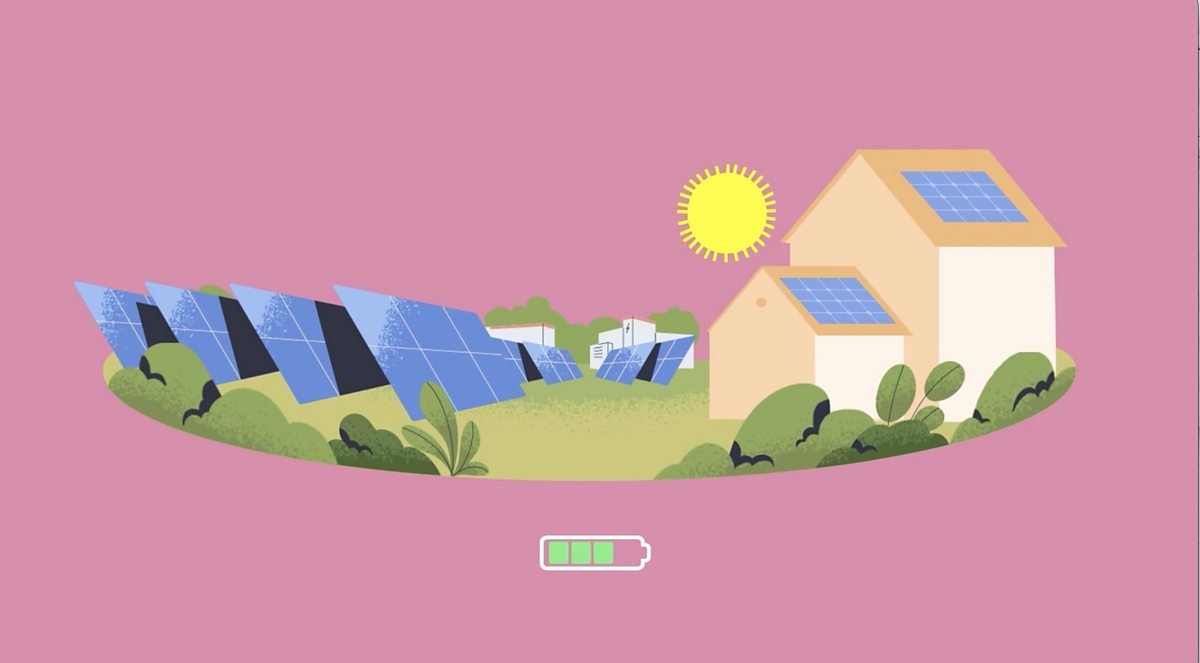
Solar power converts sunlight directly into energy.
It produces no greenhouse gases but does produce less energy in cloudy weather, and none at night, which means in Wales the energy produced changes a lot between summer and winter.
Giant turbines use wind power to create electricity.
Like solar, wind power produces no greenhouse gases.
There are debates about their effects on the view of the sea or countryside and they don’t produce energy when the wind isn’t blowing.
But luckily, Wales is often very windy!
Dams create hydroelectric power from the water flowing through them.
This process doesn’t make greenhouse gas emissions and is quite reliable but building them requires flooding a large area which can be bad for the local environment.
Dams are made largely of concrete, which produces greenhouse gases when it’s made. But they’d work well with the many rivers in Wales.
Biomass is any material made by plants and animals that we can convert into energy by burning it.
Burning biomass reduces what ends up in landfills. However, it does release low levels of greenhouse gases.
Land for wildlife or growing food will also be lost if it’s used to grow biomass fuel instead.
Hydrogen fuel cells use hydrogen and oxygen to generate electricity.
They don’t release any greenhouse gases.
However, producing hydrogen often involves using fossil fuels and it can be difficult to store.
Avoiding fossil fuels and using renewable energy will be a huge help in tackling climate change.
However, industries like steel manufacturing and mining still rely heavily on fossil fuels, and many people in Wales depend on jobs in these areas.
Fortunately though, more and more of our energy in Wales and across the UK comes from renewable sources.
In Pen y Cymoedd, for example, there’s a windfarm with more than 70 turbines.
Technology is also improving and the more time and attention we put into it, the better and cheaper it gets.
Solar power is now cheaper than producing it from fossil fuels.
And because solar power has improved so much, it now makes sense even in rainy climates like ours.