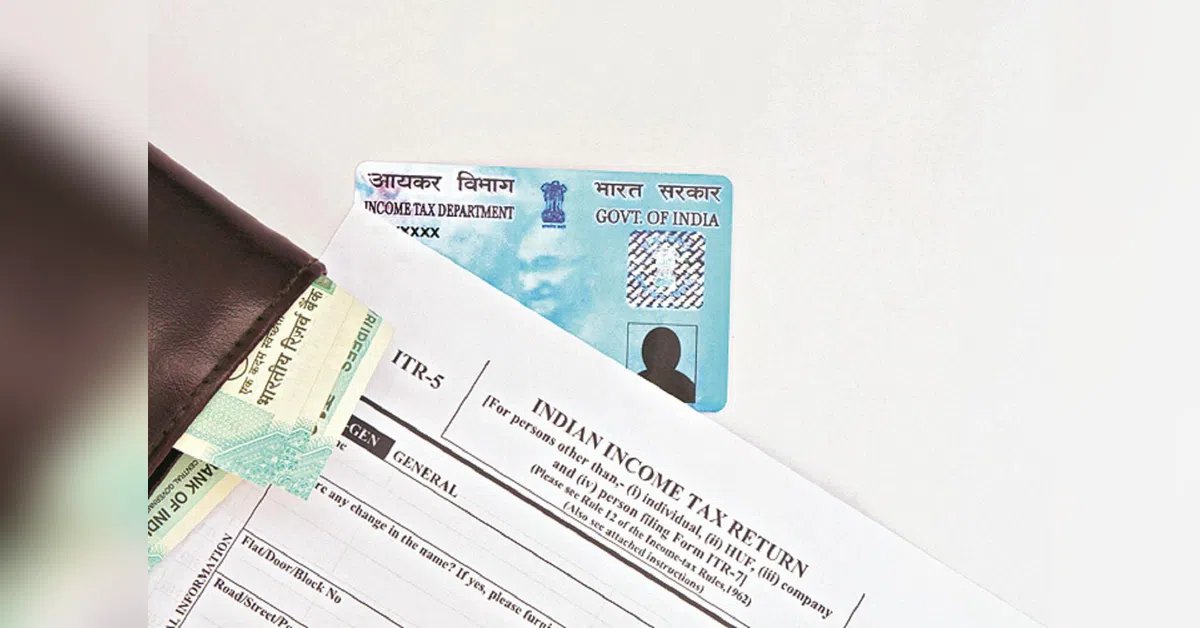
A key change in the Income Tax Return (ITR) framework will alter tax filing for small businesses and freelancers. The Central Board of Direct Taxes (CBDT) has made investment disclosure mandatory in ITR-4 (Sugam), the form used by those opting for presumptive taxation.
The rule will apply from Assessment Year 2026-27 (for income earned in FY26), shifting from the earlier regime where such disclosures were not required.
What changes
Who uses ITR-4:
-
Individuals, Hindu Undivided Families, and firms (excluding LLPs) -
Taxpayers earning up to Rs 50 lakh -
Those opting for presumptive taxation under Sections 44AD, 44ADA and 44AE
Under the new rule, taxpayers must now declare details of their investments as on March 31 of the financial year in a new section titled “Financial Particulars of the Business”.
This means even those who were earlier spared detailed reporting will now need to disclose assets such as:
-
Mutual funds -
Fixed deposits -
Equity shares -
Property holdings
Namit Saxena, advocate on record and special public prosecutor for the Income Tax department, said the move is part of a broader shift towards closer financial tracking.
The objective is to build a “360-degree financial profiling of taxpayers”, enabling authorities to check whether a taxpayer’s asset creation aligns with declared income. “It helps curb the practice of routing undisclosed income into assets and aligns presumptive taxpayers with the AIS/TIS data-matching system,” he said.
In effect, even small taxpayers will now fall within the same data-verification framework that already applies to salaried and high-income individuals.
Compliance burden likely to rise
The presumptive taxation scheme simplified compliance by allowing taxpayers to declare income as a fixed percentage of turnover without maintaining detailed books.
However, this simplicity may now be diluted.
Saxena points out that freelancers and small businesses will have to start maintaining structured records of investments. “Many may need to engage professionals for the first time or move away from self-filing, increasing both cost and complexity,” said Saxena.
Mihir Tanna, associate director of direct tax at SK Patodia & Associate LLP, said that the requirement will help the tax department to check if business funds are being diverted into investments. “If there is a substantial increase or decrease in assets, the department can inquire if required,” he said.
That said, Tanna believes the overall disruption may remain limited. “Funds not required for business are typically invested temporarily and can be disclosed. So, the impact may not be very significant for most taxpayers,” he added.
Impact on taxpayers
Consider a freelance graphic designer earning Rs 18 lakh annually and opting for presumptive taxation under Section 44ADA.
Earlier:
-
She could declare 50 per cent of receipts as income -
No need to report investments
Now:
-
If she holds Rs 12 lakh in mutual funds -
Rs 5 lakh in fixed deposits -
Or has equity investments -
All these must be disclosed in the ITR.
As Saxena explains, this would require consolidated account statements, capital gains summaries and bank records — documents many such taxpayers may not have previously organised for tax filing.
Risks of getting it wrong
The introduction of disclosure brings with it higher scrutiny risks.
Tax authorities already receive transaction-level data through the Annual Information Statement (AIS) and Taxpayer Information Summary (TIS). Any mismatch between these and ITR filings can trigger automated notices.
Saxena warned that discrepancies may lead to scrutiny under Section 143(2), while incorrect reporting could attract penalties under Section 270A for under-reporting of income.
Tanna highlights the financial implications more sharply:
-
50 per cent penalty on tax for under-reporting -
200 per cent penalty for misreporting income
“AIS already captures specified investment transactions. If these appear in AIS but not in the ITR, it can result in penalties,” he said.