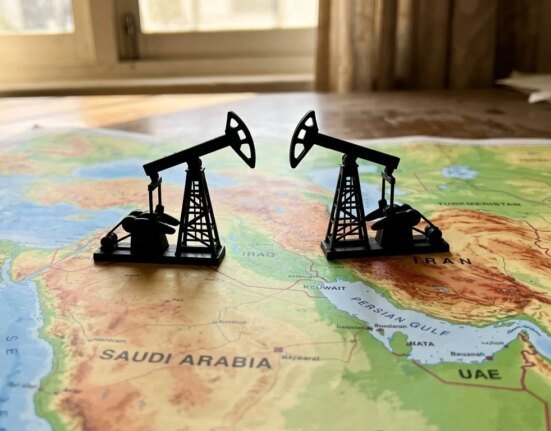
There is great uncertainty as to whether and to what extent the Strait of Hormuz is reopening the flow of global oil and gas trade against the backdrop of a fragile ceasefire. What is certain, however, is that the global energy sector will see far-reaching consequences of the historic disruption for a long time to come. In fact, the global energy landscape may never be the same again.
On an average day, approximately one-fifth of the world’s oil and gas trade crosses through the Strait of Hormuz, a waterway between the Persian Gulf and the Arabian Sea controlled by Iran. That flow of around 20 million barrels per day dropped to virtually zero a bit over a month ago when the United States and Israel started bombing Iran. As a result, oil and gas prices skyrocketed overnight on a global scale, with particularly severe consequences for Asia and for poor countries across the Global South that are more reliant on energy imports and less resilient to market shocks.
As a result, the world is shifting its energy priorities to place energy security and resilience as a matter of utmost urgency, even if it means undertaking difficult transitions away from long-entrenched trade relationships and expansive established energy infrastructure. In short, it is about to kick the global clean energy transition – and, by association, the global energy storage sector – into overdrive.
“For years, clean energy has been sold as a moral imperative. Now it is simply an economic and geopolitical necessity,” states a Forbes report from earlier this month. “It’s not about emissions. It’s about resilience and price stability.”
Related: Chinese Publication Claims U.S. Has Two Months of Rare Earths Left
The crisis has thrown the precarity of the current global energy trade into sharp relief, and international energy policy is already starting to shift in response. In the words of Forbes, the conflict in Iran has “once again exposed the fragility of the global fossil fuel system: too much economic power concentrated in too few places, all of which must travel through the same maritime—and militarized—chokepoints.” Many world leaders believe that the solution is to diversify the global energy mix and to shore up domestic energy independence. And for most, that will come in the form of expanded clean energy production capacity.
All of this is great news for China, which controls a massive portion of the world’s clean energy supply chains, from solar panels and wind turbines to batteries and electric vehicles. This leaves Chinese companies incredibly well positioned to continue to consolidate their dominance in global markets, as they are by far the cheapest producer and most accessible trade partner for many nations that have been left in the lurch by the effective blockade of Hormuz.
The volume of Chinese exports for energy storage systems was already sharply on the rise thanks to the massive energy needs of the AI boom, but this newest large-scale threat to global energy security is set to push the sector into overdrive. Compared to this time last year, the total export value of Chinese inverters, which are central components in energy storage systems, has climbed a whopping 57 percent.
“The increasing demand for energy storage [systems] is mainly due to the development of artificial intelligence globally … But the Iran war may push it to a new high,” Xu Jianzhong, a freight forwarder specialising in these types of exports, told the South China Morning Post earlier this week. “The war in the Middle East will also lift overall costs, such as [prices for] raw materials.”
Energy storage systems are integral to making an increasingly renewable-powered grid secure and stable. And we can expect variable energy sources like wind and solar to skyrocket in coming months and years thanks to their affordability and their potential to boost energy sovereignty, protecting today’s net importers from enduring another energy crisis like the one we’re living through now.
“Wind and solar cannot be embargoed, blockaded, or shut off by a foreign power,” David Frykman, General Partner at Stockholm-based venture capital group Norrsken, recently wrote in an op-ed for Fortune. “Every terawatt-hour of domestic renewable generation is a terawatt-hour that no adversary can weaponize.”
By Haley Zaremba for Oilprice.com