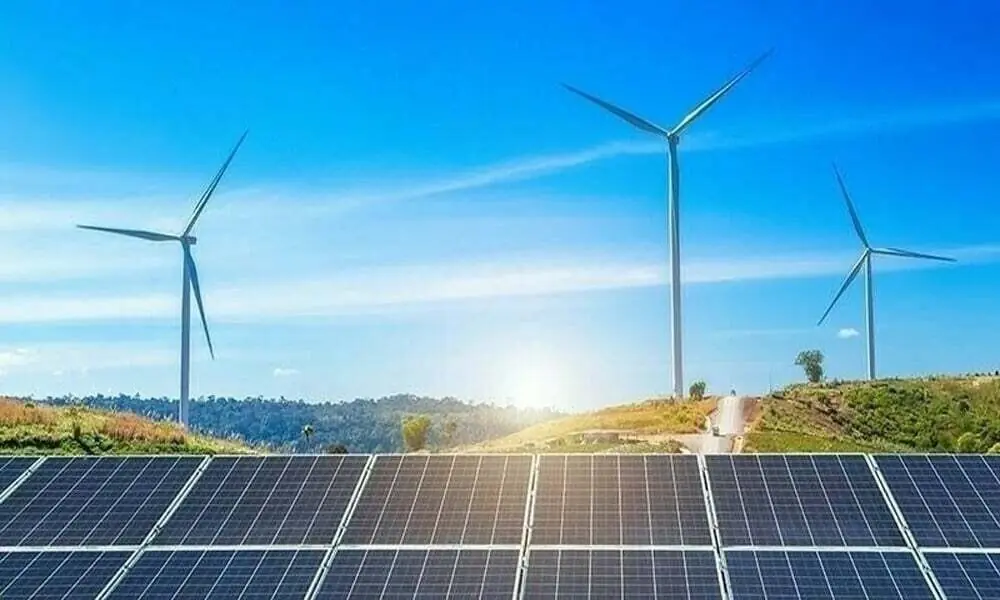
Pakistan government should use the energy crisis caused by disruptions in the Middle East as an opportunity to embark on a systematic transition towards renewables energy in general and decentralised solarisation in particular, experts said.
Experts, analysts, and government officials were unanimous at a seminar on Thursday that the war in the Persian Gulf should not force Pakistan into a fossil fuel trap.
They highlighted that fossil fuels are prone to external shocks such as disruptions in their supply chains and unexpected changes in prices and, therefore, cannot be relied upon for a financially sustainable policy.
This was discussed during a seminar organised by the Policy Research Institute Equitable Development (PRIED), an energy and climate think tank. The seminar was titled as ‘Pakistan’s just-energy transition and climate agenda in the time of war in Iran’.
Also read: Solar push helps Pakistan temper Gulf energy shock
State minister for climate change and environmental coordination, Dr Shezra Mansab Ali Kharral, highlighted the challenges the government is facing due to energy shortages and energy price increases as a result of the Iran war.
“We have done our level best to pass on the minimum impact of the energy supply disruptions and prices to the people”. She said, “while the government is committed to resolving the energy crisis, we will not take any decisions that trap Pakistan into a fossil-fuel lock-in through long term and expensive energy supply and usage contracts”.
The government, she said, was also committed to its promise with the global community that “we will phase down fossil fuels in Pakistan”. So, she added, “the government will continue to support the decentralised solarisation going on in the country because that is the only environmentally sustainable, economically affordable and financially viable pathway for Pakistan towards a cleaner, greener and prosperous future”.
Lidy Nacpil, a climate justice activist from Philippines and the convener of the Asian People Movement on Debt and Development (APMDD), told the audience that war in the Persian Gulf has caused a serious energy, economy and financial crisis across Asia, particularly in countries like Philippines, Vietnam, and Pakistan as they are heavily reliant on fossil fuel imports from the countries in the Gulf.
People in all these countries are grappling with severe energy shortages and energy prices hikes, which are resulting in fuel rationing in some of them and changes in work routines in others.
Linking energy usage with debt and climate change, she said, “Future energy policies should protect countries in the Global South from supply and price shocks. They should not destroy our climate and they should not increase the debt burden of the countries in the region”.
“It is only through prioritising and accelerating the use of renewable energy, especially wind and solar power, that we can achieve these three objectives simultaneously,” Nacpil said.
Speaking at the seminar, Dr Nafisa Shah, a member of the National Assembly and the co-convener of the Parliamentary Forum on Energy and Economy, also emphasised the need for long term policy-making, prioritiding renewable energy over fossil fuels in order to achieve maximum energy autonomy both at the individual and national levels.
“Instead of discouraging renewable energy such as solar power by imposing taxes on it, the government must encourage it by removing all taxes and by subsidising its provision to those who cannot afford it,” she said.
Shaista Pervaiz Malik, convener of the Parliamentary Task Force on Sustainable Development Goal (SDGs), told the participants of the seminar that an equitable access to affordable and sustainable energy is a part of SDGs’s agenda.
Also read: High fuel prices could drive shift to new energy vehicles, experts say
Explaining the challenges being faced by the government in ensuring smooth energy supply and keeping energy prices under a certain limit during the war, she said renewable energy acceleration was the government’s top priority.
Taking part in a panel discussion during the seminar, Waqas Moosa, chairman of Pakistan Solar Association, demanded the government not just remove taxes on solar panels but also on battery storage energy systems.
“As of now, these systems have attracted as much as 48% in taxes in total. By removing these taxes, the government will be facilitating a battery revolution that can help Pakistan overcome the intermittency problems associated with renewables such as wind and solar. This revolution can also support our efforts to overcome energy supply and price constraints,” he said.