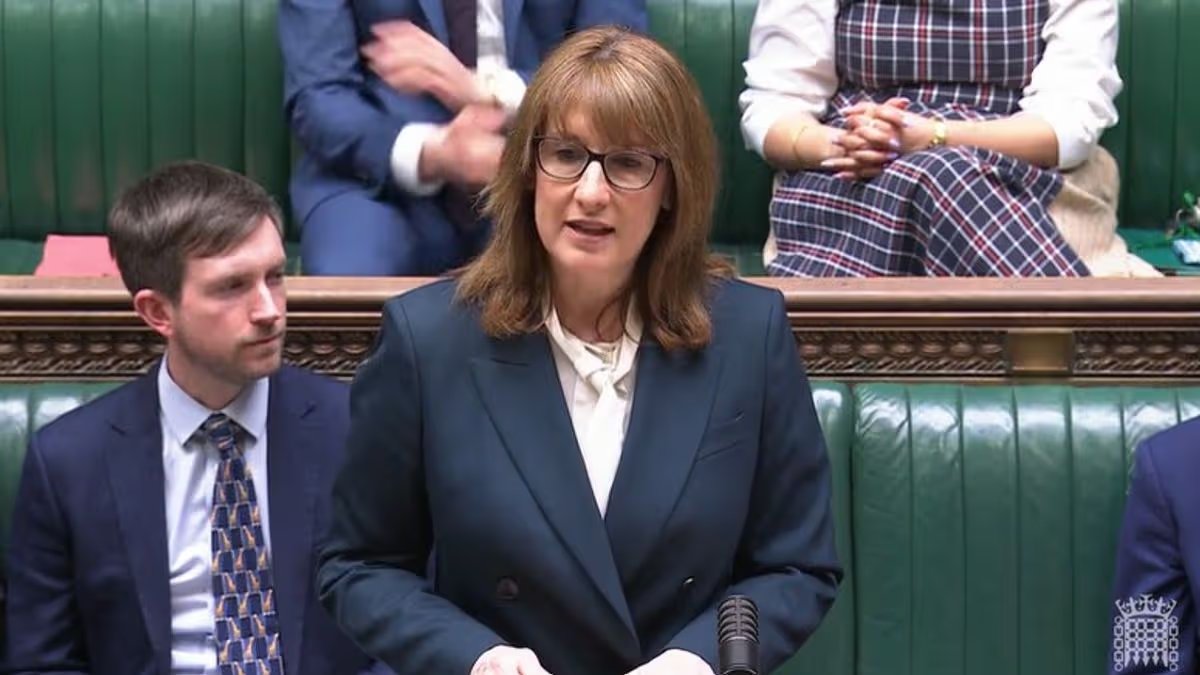
Rachel Reeves admitted the economic challenges from the Iran war may be ‘significant’ as she vowed to support Brits – The Mirror takes a look at the key points from her update
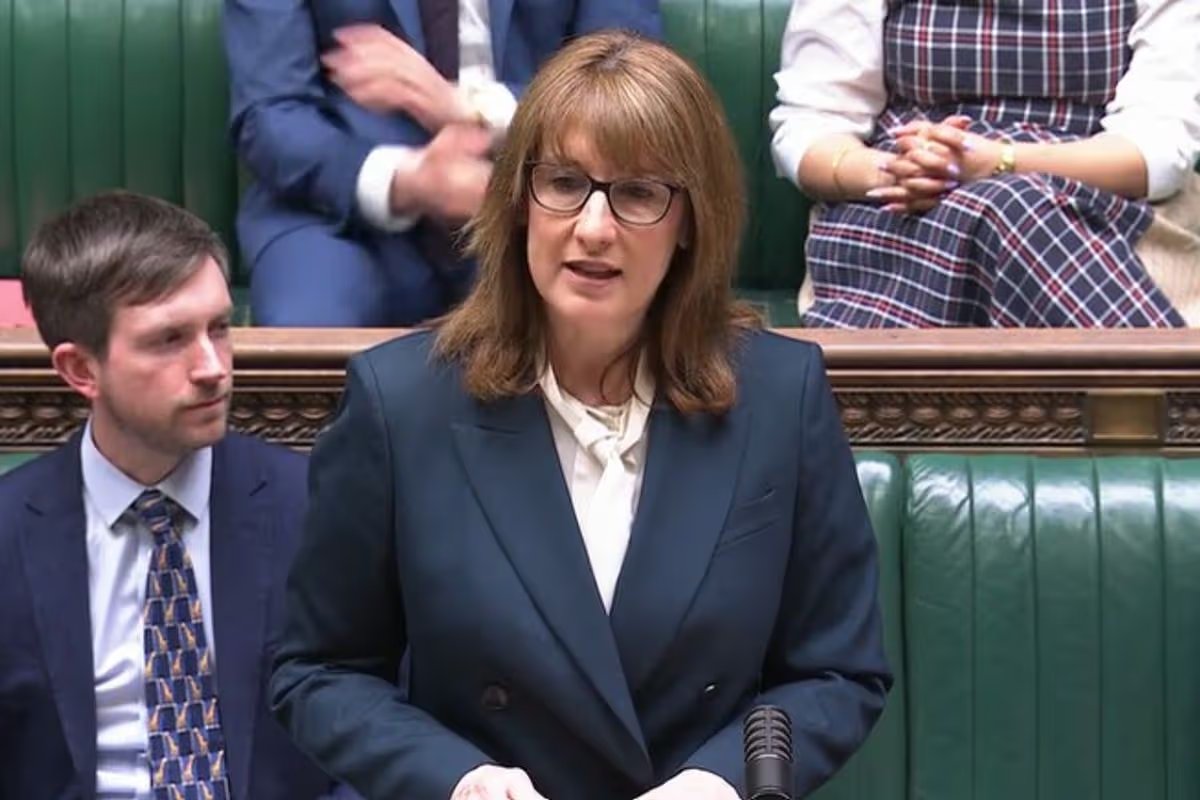
Rachel Reeves gave an update to MPs in the Commons on plans to support people with the fallout of the Iran war
Rachel Reeves has admitted the economic challenges from the Iran war may be “significant” as she vowed to support British families with energy bills.
In an update to the Commons, the Chancellor said any help with soaring energy bills will be targeted, criticising a £40billion Liz Truss-style bailout that gave support to Britain’s wealthiest families. And she announced that the competitions regulator will have the power to “crack down on price gouging”.
Conflict in the Middle East has sent oil prices rocketing. Iran has been blocking passage through the Strait of Hormuz, a key oil shipping route in the region. Keir Starmer chaired an emergency Cobra meeting on Monday on protecting Brits from being clobbered by the economic fallout of the conflict. The PM said ministers were looking at support for people in the winter, as well as when the energy price cap is set to change in the summer.
The Mirror takes a look at all the key points from Ms Reeves’s statement in the Commons.
READ MORE: Ministers consider winter energy help as Starmer warns Iran war could last ‘some time’
1. No universal support scheme
Any support with soaring energy bills will be targeted, Ms Reeves said – criticising Liz Truss for bringing in across-the-board measures to support even the richest.
This has left taxpayers with high level of national debt, the Chancellor stated. During her brief spell in 2022, Ms Truss set out an energy price guarantee, which applied to all households.
Ms Reeves said: “We must learn the mistakes of the past. The previous government pushed up borrowing, interest rates, inflation and mortgage costs with an unfunded, untargeted package of support under Liz Truss that gave the support to the most wealthiest of households between 2022 and 2024.
“Under the last government households in the top income decile received an average of £1,350 of direct energy bill support. That left us with high levels of national debt.
“A cheque written then for a bill that is still being paid today. I can confirm to the House that contingency planning is taking place for every eventuality, so that we can keep costs down for everyone and provide support for those who need it most.”
2. Challenges may be ‘significant’
Ms Reeves said work was under way on targeted help for households when the current energy price cap expires at the end of June and global prices could push up domestic bills.
She told MPs: “Contingency planning is taking place for every eventuality so that we can keep costs down for everyone and provide support for those who need it most, acting within our iron-clad fiscal rules to keep inflation and interest rates as low as possible.
“This is not a war that we started, nor is it a war that we joined… but it is a war that will have an impact on our country.
“The challenges may be significant but I promise to do what is right and fair, being responsive in a changing world and responsible in the national interest.”
3. New laws to speed up nuclear projects
Ms Reeves said the Government will push forward new laws to speed up nuclear projects.
The Chancellor told the Commons the recommendations of the independent Nuclear Regulatory Taskforce, led by John Fingleton, would be put into force. Its review found an “overly complex” and “bureaucratic” system was holding back the development of new plants.
Ms Reeves lashed out at Reform and the Tories, saying they were standing in the way of Britain’s energy security. She said: “I will not tolerate red tape and vested interests holding back our energy security. So our new planning rules will unblock the pipeline of critical infrastructure projects. I can announce today that we will legislate to implement the Fingleton review in the next Parliamentary session.”
She went on: “Thanks to the parties opposite who like to talk big about energy security, but then vote against the very infrastructure to build it.
“Let me say this – it is time to put our country first. And I can confirm today that we are developing options to back critical energy projects with indemnities if they’re planning, consent is challenged so that we don’t waste a single moment in protecting our energy security.”
4. Releasing energy reserves
The Chancellor said the UK is releasing oil from its reserves to deal with short-term shortages.
It follows the International Energy Agency (IEA) this month signing off on the biggest crude oil release in history. Ms Reeves said the UK is releasing its share of 13.5million barrels of oil.
Ms Reeves told the Commons: “I welcome the IEA decision to authorise a coordinated release of our collective oil reserves to alleviate the immediate pressure on supply. And the UK has now begun the release of our share of 13.5 million barrels of oil.”
Earlier this month the IEA said a total of 400 million barrels of oil will be made available to the market, with the UK contributing 13.5 million barrels.
5. UK to work with NATO on defence procurement
The Chancellor said the UK would look at ways of working with NATO allies on defence procurement. The Government has committed to spending 2.5% of gross domestic product (GDP) on defence.
Ms Reeves said Britain would be working with EU and NATO countries on buying military tech. Labour has consistently accused the previous government of hollowing out the armed forces and putting the UK’s ability to defend itself at risk.
Ms Reeves told the Commons: “It remains the case that the best way to protect families and businesses is rapid de-escalation of this conflict, and to strengthen our collective security. I can announce that we will explore new defence financing and procurement mechanism with the Netherlands, Finland and other EU and NATO partners.”
6. Fuel price update to come
The Chancellor says she will give an update on fuel pricing within the next month after the competition regulator stepped up its monitoring of spiralling prices.
She told MPs: “Since my last statement, the Competition and Markets Authority have stepped up their statutory monitoring of fuel prices and I will update on fuel pricing within the next month. They are working with government to monitor the cost of household essentials for both price rises and disruption and they’ve launched a market study into heating oil.”
7. Crackdown on price gouging
Ms Reeves announced that the government will ensure the Competition and Markets Authority have the powers they need to detect and crack down on price gouging.
She told the Commons: “Today I can announce that we are going further to make sure that the Competition and Markets Authority have the powers that they need that were denied to them by the previous government to detect and to crack down on price gouging. Bringing in a new anti profiteering framework and considering time limited targeted powers for the CMA and other regulators.
“This week, the Business Secretary and I will convene the Regulators Council to discuss their work to protect consumers. Because let me say again, this government will not tolerate any company exploiting this crisis at consumers’ expense.”
8. EU deal to bring down food prices
Ms Reeves says an agreement with the EU which is set to bring down food prices it set to conclude this year. The Chancellor also says she will meet supermarkets and banks this week about support for customers amid concerns the Iran conflict will lead to increased food prices.
She told MPs: “On trade, I can confirm to the House that we are aiming to conclude negotiations with the EU this year on the Sanitary and Phytosanitary Agreement, which will directly impact food prices in our shops.
“And I have asked officials to look at where there are targeted reductions to agri-food tariffs, which can help bring down food prices too, balancing this with implications on domestic producers and food security. And later this week, I am holding meetings with supermarkets and with banks to discuss how they can further support their customers.”
The National Farmers’ Union over the weekend warned that the price of cucumbers and tomatoes could rise over the next six weeks, with the cost of other crops and milk increasing in the next three to six months.