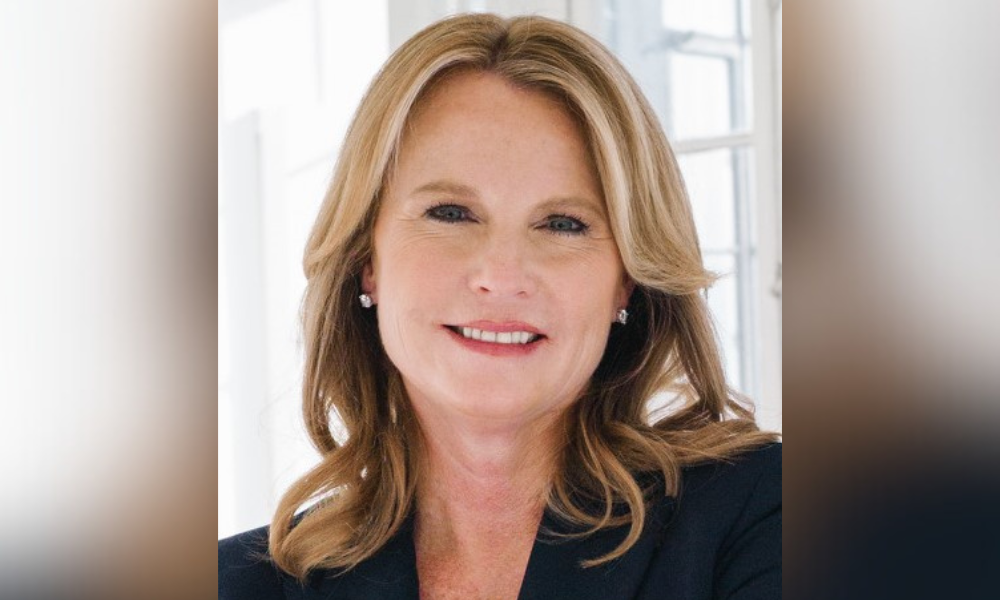
Kara Lewis, chair of Bernstein Private Wealth Management National Women’s Council.
Bernstein Private Wealth is taking an intentional approach to mentorship, sponsorship, and leave policies as women move into control of trillions in assets.
As trillions of dollars in assets move into the hands of women over the next few years, wealth firms are under pressure to prove they can both serve and retain them. Inside Bernstein Private Wealth Management, that urgency is reshaping how the firm thinks about mentorship, parental leave, and what it means to build a sustainable leadership pipeline.
Kara Lewis, chair of Bernstein’s National Women’s Council – who was among the finalists at last year’s Women to Watch Awards in the “Allyship Champion of the Year” category – sees mentorship not as a soft perk, but as core infrastructure.
“Mentorship is one of the most powerful levers we have to increase female success and leadership in wealth management,” Lewis told InvestmentNews.
Across the industry, women make up just under 25% of the overall advisor population, according to one analysis by AdvizorPro. Across channels, that ranges from 18% in the RIA space – to 30.6% in wirehouses. With respect to firm ownership, it found roughly one-sixth of firm owners or executives with known gender are female, while 23.5% of RIA firms have at least one female owner or executive.
Read more: Next generation of women enters wealth management, but revenue roles still dominated by men
For Lewis and her colleagues, the first step to addressing the mentorship challenge was defining what it’s not. Ad hoc coffee dates and occasional check-ins, she argued, don’t move the needle.
“Mentorship is not a one‑size‑fits‑all program,” she said. “Intentionality matters. Informal coffee is not a development strategy.”
Instead, Bernstein has layered in programs targeted to specific stages of an advisor’s career. An Emerging Leaders Council pairs rising professionals with mentors who can speak directly to their growth trajectory. Separate mentorship circles bring together advisors with one to three years of tenure at the firm.
Those early‑career circles have a different mandate than leadership programs. Rather than being left alone, participants get guidance on how to develop a prospecting rhythm, where to lean on platform resources, and how to build confidence in front of sophisticated clients.
“For all of those programs, the goal is to accelerate learning, build confidence, and, specifically for that advisor cohort, provide guidance on the practical aspects of building a successful practice,” she said.
Bernstein’s approach extends beyond classic mentoring to what Lewis calls sponsorship and advocacy – the behind‑closed‑doors support that often determines who gets a shot at stretch assignments.
“When talented women can envision a clearer path for growth, they are more likely to stay and more likely to thrive,” she said. She added that having someone to throw their support behind you, whether “a senior leader, another advisor, or [an internal resource], such as a senior investment strategist,” helps open doors that might otherwise stay shut.
Those advocates are often the ones who bring a junior advisor into a high‑stakes prospect meeting, or put their name forward for internal career‑development initiatives focused on diverse talent. In Lewis’s view, that kind of intercession is no longer optional.
“Having someone talk about you in a room where you are not present is key,” she said.
While its Women’s Council programs are a safe space, Bernstein has not made them women‑only. Its doors are open for male participants who want to help build a more inclusive culture, particularly around serving women investors.
“If a man is interested in helping develop us and develop the internal culture that creates the wealth management firm of choice for women investors, he can be included,” Lewis said.
To address the risk of women’s support programs turning into “box-ticking exercises,” she said the firm also collects feedback from both mentees and mentors, tweaking the program structure based on what actually shows up in practice.
“This is the third year of this specific program,” Lewis said. “We continue to refine it to make sure it is not just a check‑the‑box program.”
Read more: Mentorship can’t be a checkbox item
That refinement happens at the content level, too. The topics covered with a given cohort in 2026 may look different from those in 2024, depending on what that group needs. For Lewis, that fluidity is a feature, not a flaw, as a static, one‑size‑fits‑all curriculum that’s repeated year after year doesn’t help anyone.
The mentorship work has also spilled into other areas where women advisors said they felt most vulnerable. Through feedback gathered in the circles, Lewis and her team heard recurring concerns around parental leave: who covers clients, what happens to production targets, and how performance is judged after a long time away.
“We think it is critical for firms to be very intentional around career moments,” she said.
Bernstein has redrawn that experience from end to end, with advisors going on leave now having structured planning conversations with their clients and their managing director. The firm also shares national best practices for coverage and emphasizes the importance of a thought‑through reentry plan.
“It includes clear re‑entry support and how you get back to the activity cadence that you were familiar with before leave,” Lewis said.
On the measurement side, the firm adjusted advisor success metrics to account for time away, seeking to remove the quiet penalty that often attaches to taking leave in a production‑driven business.
“The goal is to ensure that leave is not a career derailment, but a supported transition,” she said.
For women who do not have access to that kind of infrastructure, Lewis’s advice is blunt. If possible, she said, consider moving.
“If you are at a firm that does not provide that kind of voice, support, or intentionality, I would encourage you to look for a firm that prioritizes these things.”
Alternatively, she recommends building a curated circle of internal and external contacts who can help with different aspects of a career, from personal branding to deepening technical skills.
“Do not wait for the perfect mentor to show up at your door,” Lewis said. “Start using your voice to build your own personal board of directors.”
All of this is happening against the backdrop of a massive shift in who controls wealth. Lewis pointed to the widely cited statistic from McKinsey that women are expected to control $30 trillion by 2030.
“Getting it right in terms of how we support and accelerate the success of our women advisors is not just a nice‑to‑have; it is going to be a business imperative,” she said. “This is not just about shifting assets. It is about shifting influence in wealth management.”