As the United Arab Emirates enters a more mature phase of its development as a global wealth hub, independent wealth managers face a dual challenge. They must demonstrate clear, client first value in an environment of fee scrutiny and product commoditisation, while simultaneously building deep partnerships with execution and custody platforms that enable global reach.
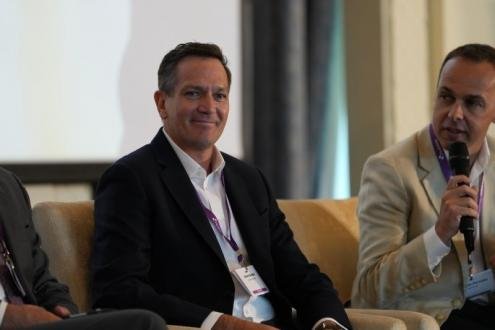
These themes framed the second panel at the Independent Wealth Management Forum Dubai. The session brought together independent advisers and platform providers to examine how partnerships can strengthen, rather than dilute, independence.
Among the panellists, James Bradie, Senior Executive Officer at Interactive Brokers (U.K.) Limited (DIFC Branch), articulated the role of technology driven brokerage infrastructure in supporting the next stage of the UAE’s independent wealth ecosystem. His contribution highlighted how scale, pricing efficiency and artificial intelligence (AI) are reshaping both the adviser and end investor experience.
Key Takeaways
- Client Growth Reflects Platform Utility: Interactive Brokers globally added approximately one million clients last year, underscoring demand for global market access and efficient execution.
- Open Architecture Supports Independence: The platform does not mandate product distribution, allowing wealth managers to trade what they want, when they want.
- Technology Frees Advisers to Focus on Advice: Robust trading infrastructure and automation enable relationship managers to concentrate on client relationships rather than operational friction.
- AI Enhances, Rather Than Replaces, Advisers: AI research and portfolio tools can augment advisory capability and improve client service.
- The UAE Is Attracting Talent and Infrastructure: Regulatory maturation and growth in licensed firms are expanding the regional talent pool.
- Democratisation and Professionalisation Are Converging: Platforms must serve both self-directed investors and professional wealth managers, often on the same infrastructure.
One Million New Clients: What It Signals
During the panel discussion, Bradie was asked about Interactive Brokers’ recent momentum. The addition of around one million clients globally over the course of the previous year is notable in any market. In the context of increasing competition among global brokers and custodians, it is particularly telling.
Bradie attributed this growth to several structural factors: ease of use, global market access and continued advancements in technology, including AI-driven portfolio analysis tools, research and real time news summaries.
The proposition is straightforward. Investors and wealth managers gain access to multiple global markets through a single interface, with competitive pricing and transparent execution. In an era where cross border portfolios are increasingly common, such breadth is no longer a luxury but a baseline expectation.
For the UAE specifically, global access has distinct value. Clients frequently hold exposure across the United States, Europe, Asia and emerging markets. The ability to trade United States equities on a twenty-four hour, five-day basis, for example, is particularly relevant in Middle East time zones.
Enabling Independence Through Infrastructure
The central tension explored during the forum was whether partnerships with large platforms undermine the independent wealth model. Bradie’s answer was unequivocal: open architecture brokerage infrastructure strengthens independence by removing product agendas.
“We are not pushing a particular product,” he explained. “We are giving the best global access, the most efficient pricing and the simplest ease of use.”
This distinction matters. In traditional private banking models, advisers may be incentivised to distribute in house funds or structured products. By contrast, an execution only platform that does not mandate product sales provides advisers with freedom of choice.
For external asset managers and multi-family offices (MFOs) operating in the UAE, this neutrality is critical. They can construct portfolios using exchange traded funds, equities, derivatives or other instruments without internal distribution pressure.
In this sense, the platform becomes an enabler of independence rather than a competitor to it.
Technology as an Advisory Multiplier
Bradie also addressed a theme that surfaced repeatedly during the panel: Artificial Intelligence. As AI research tools become more sophisticated, some observers question whether traditional advisory models will be displaced.
Bradie’s position was pragmatic. AI driven analysis tools and research engines can provide both individual investors and professional wealth managers with deeper insights. However, they are most powerful when integrated into an adviser’s toolkit.
Rather than replacing private bankers or wealth managers, AI can enhance their capacity to synthesise information, analyse portfolios and deliver more rounded advice.
“Private bankers and wealth managers can use AI tools to enhance their service,” he noted.
For independent firms in the UAE, where competition for qualified advisers is intense, such augmentation may be decisive. AI can reduce time spent on manual research, freeing advisers to focus on strategic conversations and relationship management.
Serving Two Audiences on One Platform
Interactive Brokers operates at the intersection of two constituencies: self-directed investors and professional wealth managers. Bradie made clear that Interactive Brokers are pursuing both segments simultaneously.
For individual investors, the appeal lies in direct access, competitive pricing and powerful analytical tools. For wealth managers, the platform offers institutional grade execution infrastructure without the need to build proprietary technology.
This dual model is particularly relevant in the UAE. The region is witnessing both a rise in digitally confident next generation investors and continued growth in ultra-high-net-worth (UHNW) advisory mandates. Platforms must therefore accommodate do it yourself investors while also integrating seamlessly with professional advisers.
Bradie suggested that the flexibility of the infrastructure allows wealth managers to manage client relationships independently while relying on robust backend technology.
Talent, Regulation and Regional Maturity
A question from the chair touched on talent availability in the UAE. Compared with other financial centres where visa constraints can limit hiring, the UAE’s regulatory framework has evolved rapidly.
Bradie observed that the number of regulated financial firms in the Dubai International Financial Centre continues to expand. This expansion broadens the local talent pool and enhances the overall ecosystem.
Interactive Brokers’ growth in the region reflects both organic hiring and internal transfers from other global offices. The attractiveness of Dubai as a relocation destination plays a role, drawing experienced professionals from Europe, Asia and the Americas.
As the regulatory landscape matures, with clearer frameworks for external asset managers and custody providers, platform providers can operate with greater certainty.
Capturing Growth in the Time Zone
The Middle East time zone occupies a strategic position between Asia and Europe. For a global broker, this creates operational and commercial opportunities.
Bradie indicated that Interactive Brokers’ strategy involves expanding presence and capability in the region to capture this growth.
Demonstrating Proof of Value
In a market where product access is widely available and fees are under scrutiny, platform providers must articulate tangible value. For Interactive Brokers, that value proposition rests on cost efficiency, breadth of access and technological sophistication.
Lower trading costs, transparent pricing and advanced portfolio analytics have measurable impact on client outcomes over time. In an environment where performance differentials can hinge on basis points, execution efficiency is not trivial.
For independent wealth managers partnering with the platform, the proof of value lies in the combination of global access and neutrality. They can demonstrate to clients that they are selecting instruments based on merit rather than distribution incentives.
The Next Decade: Democratisation and Discipline
As wealth transitions to younger, digitally literate generations, the demand for intuitive platforms and immediate access will intensify. At the same time, regulatory expectations around onboarding, reporting and compliance are becoming more stringent.
Bradie’s contribution suggests that the next decade will require platforms to balance democratisation with discipline. Investors expect seamless digital experiences. Regulators expect rigorous controls. Advisers expect flexibility and reliability.
In the UAE context, where international capital converges and expectations are high, scalable, technology-driven infrastructure will underpin the independent wealth model.
A Platform in a Partnership Ecosystem
The Independent Wealth Management Forum Dubai underscored that independence in 2026 and beyond will not be defined by isolation. It will be defined by effective partnerships.
For James Bradie and Interactive Brokers, the role is clear. Provide neutral, global, efficient infrastructure that empowers wealth managers to sit firmly on the client’s side of the table.
**
Interactive Brokers (U.K.) Limited (DIFC Branch) is regulated by the Dubai Financial Services Authority (DFSA) to carry in and from the DIFC the financial services of Arranging Deals in Investments and Arranging Custody as defined under the DFSA Rules. DFSA register number F008423 DIFC registration number CL8717.