Key Takeaways
- Direct premiums written are total premiums received before reinsurance is factored in.
- They indicate the growth of an insurer’s business in a given period.
- Insurance companies increase revenue by writing new policies.
- Gross premiums written include both direct and assumed premiums.
- Insurance state taxes depend on direct written premiums in each operating state.
What Are Direct Premiums Written?
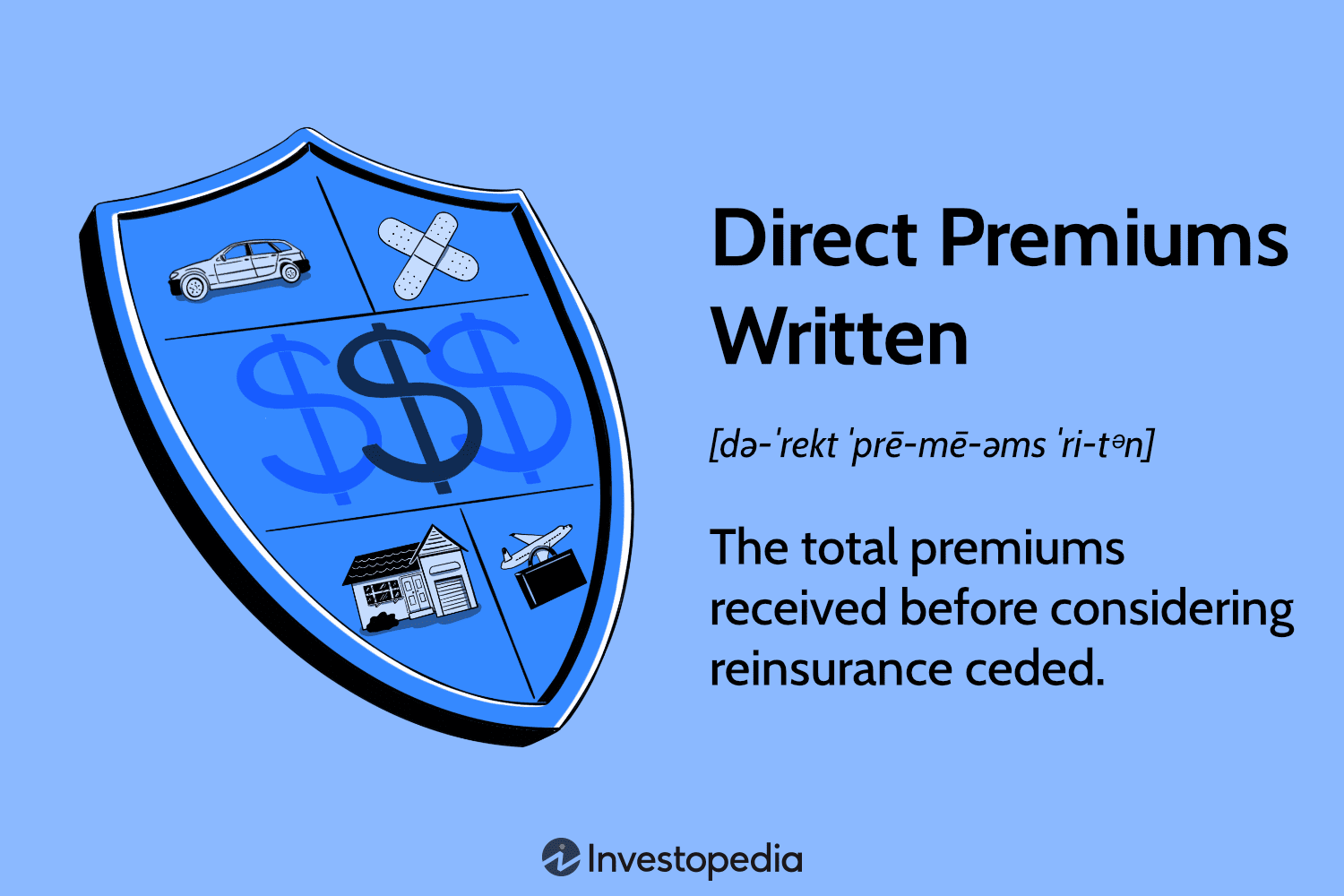
Direct premiums written are the total premiums received before considering reinsurance ceded. Direct premiums written represent the growth of a company’s insurance business during a given period. It can include both policies written by the company and policies written by its affiliated companies.
How Direct Premiums Written Influence Insurance Profitability
An insurance policy is a binding contract between the insured–or customer–and the insurance company–or insurer–whereby the insurer agrees to pay for any losses that are covered within the policy. In return for covering the losses to the insured, the insurance company receives a premium or payment from the customer.
For the insurance company to make a profit, the company needs to collect a greater amount in total premiums as compared to the total amount paid out in insurance claims. Insurance companies can increase revenue by increasing premiums on existing policies that have come up for renewal. However, one of the main drivers of growth for insurance companies comes from the revenue generated from writing new policies. Direct premiums written represent the premiums on all policies that an insurance company and its subsidiaries have written or issued during the year.
Insurance companies don’t immediately record the premiums paid by customers as earnings. Instead, the premium is considered unearned income since the insurance company still has an obligation to fulfill to the insured, meaning an insurance claim could be filed as long as the policy remains open. Once the coverage has expired, the premiums that were paid can be recorded as earned revenue, which is called direct premiums earned. Direct written premiums, on the other hand, show how many new premiums were written regardless of whether those premiums have been collected yet.
The Role of Reinsurance in Direct Written Premiums
If an insurance company wants to reduce the risk in its portfolio, meaning reduce the risk of claims being paid out, it can cede or offer the policy to another insurance company willing to take on the policy. The company that’s giving the policy is called the ceding company, while the company receiving the policy is called a reinsurer. The reinsurer collects the premiums from the customers or policyholders but pays a portion of the revenue back to the ceding insurer, called ceding commissions.
Any premiums earned as a reinsurer are not included in direct written premiums because they do not represent premiums written by the company. Any new insurance policy written is included in the direct written premiums figure since the risk presented by the policy has not yet been passed on to any reinsurance company in exchange for a portion of the policy’s premium.
Comparing Direct and Gross Premiums Written
When direct written premiums exceed direct premiums earned, a company is considered to be experiencing an increase in underwriting volume. The sum of an insurance company’s direct written premiums and its assumed premiums is referred to as gross premiums written. Assumed premiums are the revenue received for policy coverage that’s provided due to a reinsurance agreement. Gross premiums written are the sum of direct premiums written and assumed premiums written, prior to the effect of ceded reinsurance being taken into account.
However, gross premiums written do not take into account the company’s risk management strategies and tactics, especially considering its use of ceded reinsurance. Although direct premiums written are before any allowance for premiums that have been ceded to reinsurers, they mainly represent the premiums from policies issued or written during the year.
Important Tax Considerations for Direct Premiums
The state taxes that insurance companies owe depend on how many states the insurer operates in. Insurance companies that operate in different states may owe a proportional amount of their direct written premiums, with the proportion equal to the amount of direct written premiums from the state levying taxes divided by the total amount of direct written premiums the company has for all states in which it operates.