A mother-of-two who developed postnatal depression took her own life when her calls for help were ignored by NHS mental health services, an inquest heard.
‘Funny and kind’ Abigail Jelley, 34, suffered ‘a crisis’ following the birth of her second child.
The mother had reached out to mental health professionals, but there were ‘failings’ in training, culture and knowledge of those in charge of her care, the hearing was told.
Coroner Nicholas Walker has now warned that more needs to be done to tackle postnatal depression in a prevention of future deaths report.
The mother’s friends are also now drafting a bill proposal that would see more training to treat postnatal depression to honour the legacy of an ‘amazing woman, partner and mum’.
Her friends said she had been an amazing mother to her first daughter, but said following the birth of her second child she was ‘different’ and was ‘struggling’.
Mr Walker said there was a ‘lack of professional curiosity, lack of escalations of deteriorating patients and non-patient centred decision making’ from the mental health services.
Just a few weeks after requesting help on November 12, 2024, Ms Jelley took her own life.

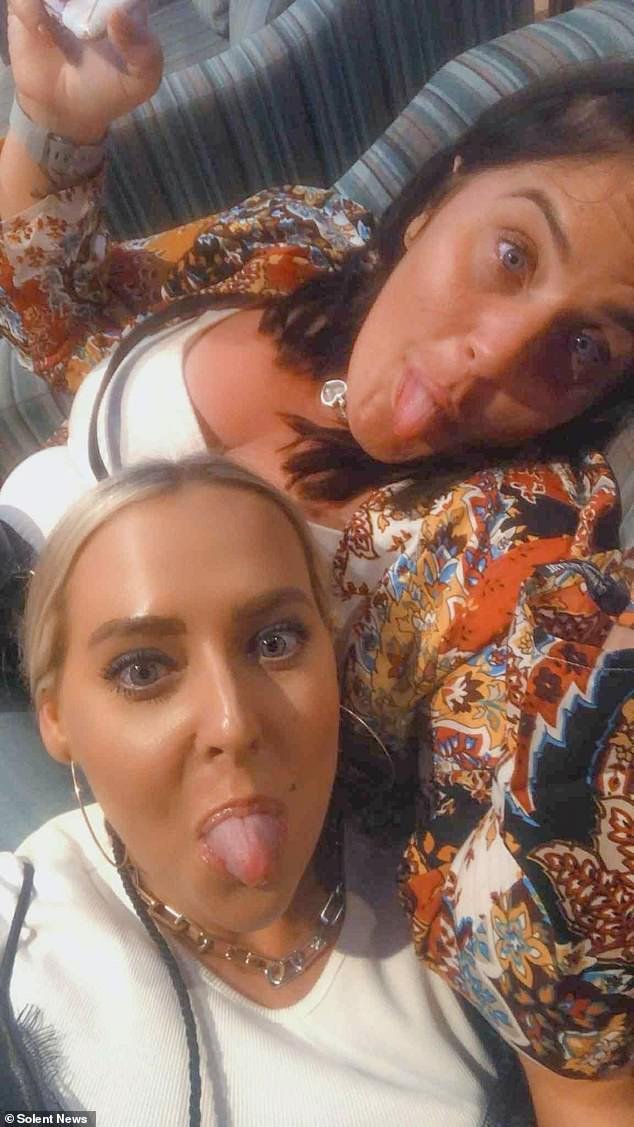
Kirsty Hill (bottom/left) pictured with her friend Abigail Jelley. Ms Hill is drafting a bill that will make postnatal mental health training mandatory for the teams who deal with postnatal illnesses
In the report, Mr Walker said the Perinatal Team, who are experts in cases like Ms Jelley’s, aren’t commissioned to do urgent visits.
Instead, they have to refer patients to The Community Mental Health teams – who don’t receive mandatory training on postnatal mental health issues.
The team that helped Ms Jelley did go on to request training – but hadn’t received it a year later.
There was also no contact with Ms Jelley’s parents, who she was living with during her period of illness and who accompanied her to appointments, even though they could have provided ‘valuable’ information about her mental condition, the coroner said.
Mr Walker wrote that ‘women [suffering] poor mental health before and after giving birth is sadly common and I am concerned that there is a risk of future deaths and that a large and vulnerable group of patients will not receive appropriate care’.
He added: ‘The deceased was suffering with post-natal depression and in the weeks leading to her death she asked mental health professionals for help.
‘It was established that there were failings in training, culture and knowledge by some of the professionals charged with Abigail’s care.
‘That women suffer poor mental health before and after giving birth is sadly common and I am concerned that there is a risk of future deaths and that a large and vulnerable group of patients will not receive appropriate care.’
He continued: ‘It was accepted that there was a lack of professional curiosity shown by professionals both in Abigail’s case and generally and I am concerned that there is a risk of future deaths.
‘It was accepted that there were cultural issues within the trust services.
‘A report into Abigail’s death concluded that these included ‘a lack of professional curiosity, lack of escalations of deteriorating patients, non-patient centred decision making and a linear approach to risk assessment and formulation.’
‘I am concerned that there are structural issues with the leadership of the Hampshire and Isle of Wight Healthcare Trust that are to the detriment of patients like Abigail, and I am concerned about the risk of future deaths.’

Abigail Jelley, 34, suffered ‘a crisis’ following the birth of her second child, the inquest heard
The report was sent to Hampshire and Isle of Wight Healthcare NHS Foundation Trust, who have 56 days to respond.
Speaking after the inquest, Ms Jelley’s friend Kirsty Hill said she is drafting a bill that will make postnatal mental health training mandatory for the teams who deal with postnatal illnesses.
The 44 year old said: ‘I met Abi when we both worked in mental health services at St James’s Hospital in Portsmouth. It was before we both had kids.
‘We quickly became friends because she was difficult not to like. She was so friendly and outgoing. I’m a bit older so she was like a sister to me.
‘She went to work in the prison system, looking after and supporting people. She had her first child, Amelia, who’s 12 now.
‘Looking back, there might have been something wrong but she was coping well, it was written off as, you know, normal baby blues or female hormones.
‘She was a really really great mum to Amelia. She became a single mum after a divorce but did so well.
‘Then she had her second child and something was different this time around. She was struggling. She accessed mental health services and support.’
She continued: ‘I’ve worked in mental health services and it’s been a big part of my professional and personal life. I also had postnatal depression, but I was lucky I got the help I needed.
‘There’s a lot of identifiers which people aren’t trained to notice. There’s a lot of stigma too – people might think we’ll hurt our babies or something.
‘I’m a doer – after losing Abi, I wanted to do something to help raise awareness. I did the three peaks challenge, which raised about £2,500.
‘And I wanted to do something to create change. We’re still thinking of ways to help but we’ve just drafted a bill that will help give training to mental health professionals and encourage communication between services.
Ms Hill added: ‘We just want to do something to honour Abi and help other women. At the end of the day, she’s not just a mental illness. She’s an amazing woman, partner and mum. She’s funny and kind.
‘As someone who worked in mental health, it’s a shame she didn’t get the help she needed when she needed it. This is about Abi’s legacy because she would have wanted to help other women.’