Mission Wealth, a Santa Barbara, Calif. headquartered registered investment advisor with $14 billion in client assets, is in the process of rethinking its advisor workflows as part of its focus on client experience.
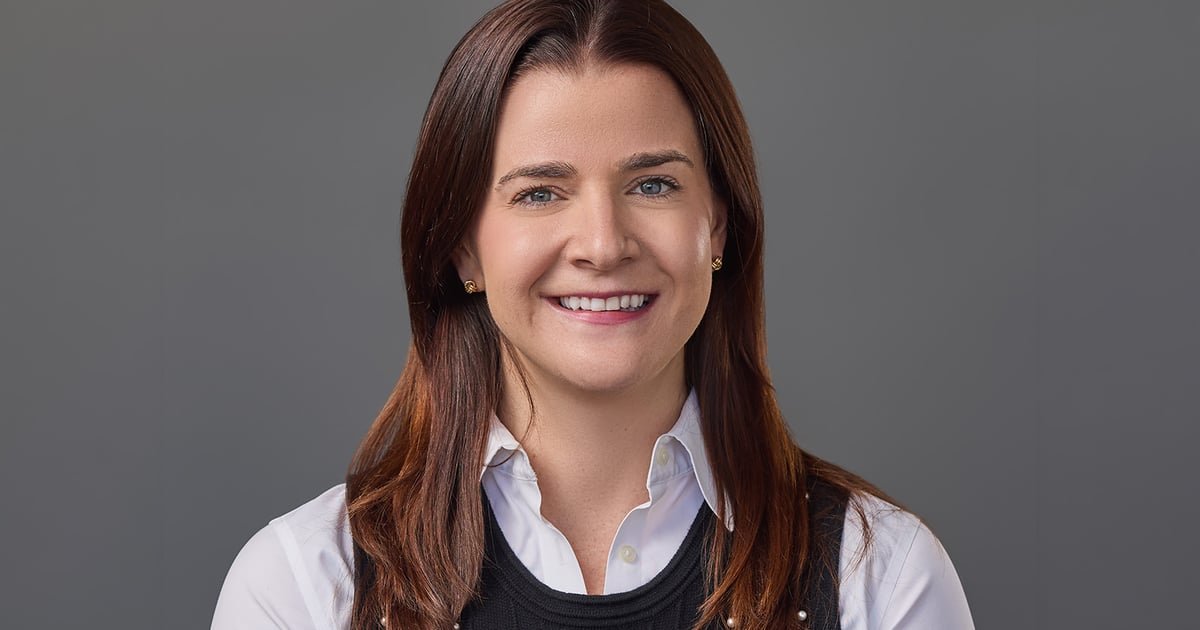
Sara Clark, chief client officer and partner at Mission Wealth, is spearheading the effort, which has been focused more on operational improvements, rather than adding services. Clark joined the RIA in 2022. She was previously the director of relationship management at AdvicePeriod, an RIA acquired by Mariner Wealth Advisors in June 2021.
Clark recently spoke with Wealth Management about the operational changes Mission Wealth has put in place, the RIA’s broader effort to reduce internal friction and what some of the results have been.
The following has been edited for length and clarity.
Wealth Management: I know Mission Wealth has a broader effort underway at the firm to reduce internal friction and give advisors more time in front of clients. Tell us about this effort.
Sara Clark: One thing that we’re keenly focused on at Mission Wealth is really trying to streamline all of our processes and to create operational efficiencies that really focus on two things, and the first is evolving and elevating our client experience. We want to minimize points of friction for our clients, anything from prospecting and onboarding, and then throughout their client experience with Mission Wealth. And then secondarily, I’m working closely with the advisory teams on how can we leverage our people and technology to really make sure that we are freeing up our advisor capacity to do what they love most, which is spending time directly with clients and spending the least amount of time on cumbersome administrative headaches?
WM: What are some of the practical steps you’ve taken to do those things?
SC: First and foremost, we’re constantly thinking about how to automate specific processes and create workflows that are very consistent from one advisory team to the next. In any automated workflow that runs through the lifeblood of our company, which is really Salesforce as our CRM, we have very detailed guidance for success, very detailed case instructions. So we’re trying to curate an experience for all of our team members that guides them through a decision tree to arrive at the best outcome for what they’re trying to accomplish on behalf of the client.
WM: Would you provide some examples?
SC: Right now, given a lot of the geopolitical conditions, market volatility and a lot of the conversations about private credit, our advisors have been fielding a myriad of questions from clients and prospects about our investment philosophy, their current holdings and how we’re addressing market volatility within their portfolios. We have a dedicated behavioral wealth specialist who’s been working hand in hand with our chief investment officer and our investment team, as well as our third-party investment managers that we trust for research. We’ve created an internal ChatGPT, an intelligence agent specifically focused on market volatility over, call it the past month, as it relates to private credit. The tool helps address frequently asked client questions and navigate difficult conversations with clients through that psychology-of-wealth lens, so we’re really focused on providing real-time analysis, accurate information and clear, concise advice.
We subscribe to the enterprise version of ChatGPT, and then we created this intelligence agent specifically focused on these topical areas. Advisors are provided with timely updates, and they can go in and query specific keywords, frequently asked questions, common client concerns. And then we’re providing not only written content to the advisor teams to help them with different talking points, but also illustrations.
WM: Is this a newer initiative, to reduce friction?
SC: That’s always been top of mind for us, but it also comes to mind with mergers. We’ve now merged in about 20 firms, which we’re fortunate to now call Mission Wealth Partners. A lot of the mergers come to us with great ideas that we could be incorporating, whether it be into our tech stack or into our client experience. We always want to be evolving, and we want to be best in class, so I think our mergers always bring to the forefront a lot of those great ideas.
WM: I know Mission Wealth is looking closely at how advisors spend their time, how their meetings are structured, how they handle recurring client questions. What other things are you doing around those?
SC: We have prescribed client service models for how we segment all of our clients, and for each particular client segment, we have what we call a service assigned in Salesforce, which really equates to a prescribed client meeting. Every advisor through Salesforce can track all of the services, not only across their practice, but also at the client level. It really helps our advisors to hit the ground running at the beginning of the year because they can go through and schedule services as they see fit. We give them a lot of autonomy in terms of how they’re scheduling and delivering advice throughout the year, but at the same time, because information is power, the transparency of it all, they really know how much they’re staying on track and then how they can move around their schedules to accommodate that.
We also have a high-performing advisor dashboard where advisors can go in and see the last high-touch quality communication that they had with each client within their practice. That’s kind of low-hanging fruit for them, where outside of the prescribed client service meetings that you may be having with a client, who should you be reaching out to on an ad hoc basis to provide that seamless, comprehensive client experience?
WM: How is your approach impacting referrals?
SC: The natural segue for a lot of our advisors in terms of asking current clients for referrals stems from soliciting candid feedback during those prescribed client service meetings. We also work with Testimonial IQ to ask our clients for testimonials regarding the comprehensive wealth management advice that they’re receiving. So we really do want our clients’ opinions. We want to know if we can be doing better.
WM: Mission Wealth recently partnered with Fynancial. Can you tell me more about that partnership?
SC: Yes, we’ve partnered with Fynancial to white-label a proprietary mobile app called Mission Forward, and we’re really looking to engage next-generation clients. The ideal Mission Forward client profile would be a high-income-earning professional who wants to delegate and is really keen on having an accountability partner to help them navigate financial planning choices. And that can be anything from medical school debt that they’re looking to consolidate to considering whether to rent or buy a home. Maybe they’re trying to save for a secondary education for young children. We’re really trying to have a tech-forward platform, where they have in-app messaging to directly contact their CFP professional and access to video content and written content that can provide them with guidance. But at the end of the day, we still want to have that human element with that dedicated CFP professional.
WM: How does your operational approach differ from other firms out there?
SC: We are very much a people-first company, and we really approach technology and operations from the perspective of how we can elevate the roles of our people to have the most impact on clients and the most impact in terms of how we engage with each other internally. And I think a lot of other companies are so focused on reducing friction, but not necessarily on making their team members’ lives easier or their clients’ lives better.
WM: How does AI play into all of this?
SC: For several years now, we’ve had a head of data science and analytics, so we’ve really tried to always be at the forefront in terms of machine learning, automation and artificial intelligence. From my seat, I really look at, how can we harness artificial intelligence to capitalize on our advisors spending the maximum amount of time with their clients, and create scalable client experiences that are hyper personalized.
WM: How do you provide that scalable experience that’s also hyper-personalized?
SC: I’ll give you an example. We have curated a list of about 20 different life events that most of our clients will experience throughout their lifetime, albeit graduations, anniversaries, retirements, buying a home, loss of a spouse. And we’re curating very bespoke gifts or experiences that specifically relate to that transition period or life event, so our advisors who know their clients best can pick a specific solution, experience, gift idea that would really be impactful to the client and create a sense of belonging and everlasting impact, quite frankly, to want to be our clients for a very long time. But the advisor doesn’t have to do all of the legwork around what would be an appropriate fit.
We’re curating the list to build an intelligence agent. So an advisor can go in and say, “I have a client who is retiring after selling their business. These are the types of things that they’re interested in.” And then it will prompt them with various ideas that would be appropriate for that celebration or occasion.
WM: What would be an example of an experience that it would recommend?
SC: We’ve thought about, around the Christmas holidays, hiring a photographer that families can opt into to take their family photos. Also, now that we’ve expanded to over 40 offices, we’ve worked on creating very bespoke guides for the different cities where we have a presence.
WM: With all these operational changes you’ve made, can you quantify the results of those efforts?
SC: Yes, I’ll give you one example. About two years ago, we started working with Jump AI for meeting notetaking. And now that we have thousands of meetings kind of in our archive, for advisors who started using Jump AI, it takes them about a quarter of the time to actually conduct and complete their meeting follow-up. And then also, 90% of the advisors who are using Jump AI are on track with delivering their services throughout the year, meaning they have no overdue services at any given point in time. So it helps the advisors because they’re able to execute all of the meeting follow-up in about a quarter of the time.