Thailand’s wealth management industry is becoming more complex, more globally connected, and more demanding for providers across the value chain. As clients look further offshore, become more fee-conscious, and expect stronger guidance during periods of market volatility, the role of asset managers is also shifting. Success is no longer defined simply by product manufacturing or distribution reach. It increasingly depends on whether firms can stay relevant in a market where advice, portfolio construction, and speed of response now matter as much as product access itself.
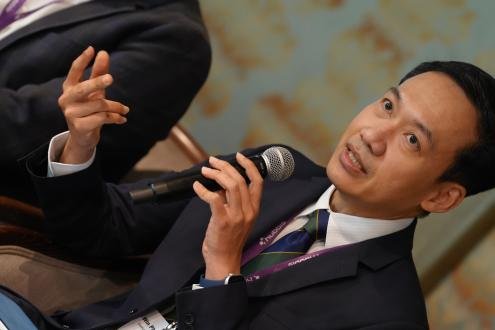
At the Thailand Wealth Management Forum 2026, a panel discussion chaired by Alex Ng, Managing Director, Head of Intermediary, Asia Client Group at Janus Henderson Investors, examined how Thailand’s wealth market is adapting to changing client behaviour, technological disruption, and rising competitive pressure. Among the panellists, Win Phromphaet, Executive Chairman of Kasikorn Asset Management, offered a clear asset management perspective on how client expectations are changing and how firms must respond. His remarks highlighted the rise of offshore investing, passive products, and lower-fee expectations, but also made the case that this environment increases, rather than reduces, the need for high-quality advice, strong portfolio construction, and faster, more personalised communication.
Key Takeaways
- Clients Are Becoming More Global and More Fee-Conscious: Offshore investing, passive products, and pressure on fees are reshaping demand.
- Advice Matters More in Volatile Markets: In a more uncertain environment, clients need help building diversified core portfolios rather than making isolated product choices.
- Asset Managers Must Prove Their Relevance: Traditional managers need to show where they can genuinely add value.
- Omni-Channel Delivery Is Becoming Essential: Reaching large client bases requires technology, data, and consistent messaging across platforms.
- Speed of Communication Is Now Strategic: Clients increasingly expect rapid analysis and practical guidance when markets move.
A More Global, Lower-Fee Market
Phromphaet began by outlining three major trends reshaping the market from an asset manager’s perspective. “One is, you see more clients of all ages go offshore,” he said. That shift reflects a broader reorientation in Thai wealth, with investors increasingly looking beyond domestic markets for diversification and return opportunities.
Alongside this is a second trend. “They go more passive here,” he said, pointing to the growing acceptance of passive investing among Thai clients. The third is closely linked: “They are looking for lower and lower fee.”
Taken together, these trends create a more challenging environment for traditional asset managers. If clients are moving offshore, becoming more comfortable with passive exposures, and questioning fees more closely, local firms cannot assume that legacy positioning or broad product shelves will be enough.
Phromphaet framed the issue directly: “With all these three trends, very offshore, passive ETF and lower fees, it’s always back to how can K Asset survive.”
That question is more revealing than it may first appear. It is not simply defensive. It reflects a broader reality across wealth and asset management in Asia. As markets mature, firms need to become clearer about the value they actually deliver. For traditional managers, that means demonstrating where active capability, advice, and portfolio construction can still make a meaningful difference.
“My job today is that we need to make sure that my team is capable of managing funds, that we can add value,” he said. In other words, relevance has to be earned.
From Product Push to Portfolio Advice
If clients are becoming more selective, the answer is not necessarily to sell harder. Phromphaet argued instead that the market is moving away from product pushing and towards deeper portfolio advice.
“I quote from Adrian’s and Cholathee’s point that we have come a long way from product push to performance,” he said. That observation captures one of the most important transitions underway in the Thai market. Investors may still have access to many products, but that abundance makes advice more important, not less.
“They can choose anything,” he said. “But then what they need is advice.”
For Phromphaet, the most important form of advice is not about individual product recommendations in isolation. It is about helping clients construct a core portfolio. “They need us to tell them how to construct a core portfolio. How should core portfolio be? It should be a globally diversified portfolio.”
That emphasis on portfolio construction is significant. It reflects a more mature understanding of the adviser’s role in a market shaped by volatility, geopolitics, and constant headline noise. Rather than encouraging piecemeal investing, firms need to help clients build portfolios that can withstand uncertainty.
At one point in the panel, Phromphaet referred to the unstable macro backdrop by saying that when “Trump is doing this and that every day, product push cannot work anymore”. The point was less about politics than about market conditions. In a world of frequent shocks and rapid narrative shifts, product-led selling becomes less credible. Clients need a steadier framework.
“So, I think it’s our jobs to give advice to clients that, look, it’s no more piece-by-piece investment,” he said. “It’s more of how we can advise them to have a holistic portfolio that they are completely diversified.”
That comment goes to the heart of the evolving value proposition for asset managers. Manufacturing products remains important, but the bigger challenge is helping clients understand how those products fit into a coherent structure.
Private Assets and Broader Allocation Thinking
Phromphaet also made clear that diversified portfolios can no longer be thought of only in terms of listed assets. “It’s not just listed assets, but also private assets that should be in their portfolio,” he said.
This is another sign of how Thai wealth management is broadening. Private assets, once considered more niche or restricted to the top end of the market, are increasingly part of mainstream wealth conversations. Their inclusion in client portfolios reflects both growing sophistication and the search for differentiated return streams beyond traditional public markets.
For asset managers, that means product capability must evolve in parallel with client expectations. Advice is no longer limited to equities, bonds, or mutual funds in the narrow sense. It increasingly involves broader allocation discussions that cut across public and private market exposures.
Phromphaet’s remarks suggest that the asset manager’s role is therefore expanding. It is not just about fund management in a technical sense. It is about helping shape the architecture of the client portfolio itself.
Scale Requires Omni-Channel Advice
Another major theme in Phromphaet’s contribution was how to deliver advice effectively at scale. As Executive Chairman of one of Thailand’s largest asset managers, he focused on the practical challenge of reaching very large client bases while maintaining relevance and consistency.
His summary was concise: “You need omni channel with human touch.”
That balance is critical. Technology is essential for scale, but it cannot entirely replace trust, context, or personal relevance. The challenge is to combine digital delivery with advisory credibility.
Phromphaet illustrated the scale of the task with a striking example. “K Bank has 20 million clients on the K PLUS mobile app, K Asset alone we have 1.5 million clients, how can we serve them?” he said.
This is where data and timing become central. “It’s not easy to make sure that we work on the data, so that we give advice to clients at the right time, the right clients,” he said. The aim is not simply mass communication, but more personalised and better-timed communication. “It has to be more personalized and it has to be consistent.”
Consistency across channels matters especially in a large organisation. “When I talk to my client, what I hear from my client has to be the same as what I get from my mobile app notification,” he said. That observation captures a broader industry challenge. Clients increasingly move across human and digital touchpoints seamlessly, and they expect the institution to do the same.
This makes omni-channel capability more than a technology issue. It is an operating model issue. Firms need aligned messaging, integrated systems, and strong coordination between investment teams, communication functions, and distribution channels.
Speed as a Competitive Advantage
Phromphaet also pointed to speed as a growing differentiator. In today’s environment, clients do not just want market updates. They want rapid interpretation and actionable advice.
He described how his team responds to overnight developments quickly. “Whatever Trump did last night, we got to get it out by 8 a.m. in the morning, not just what he did, but what our advice to the client.”
That is an important distinction. Fast communication alone is not enough. The real value lies in translating events into portfolio implications and client guidance. What matters is not merely reporting the news, but analysing its impact and advising clients on what, if anything, should change.
Phromphaet added that external observers had noticed the pace of Kasikorn Asset Management’s response. “A lot of media channels say that, Oh, K Asset has got it earlier than them, earlier than media.” He also noted that artificial intelligence is part of how the firm is trying to do this more efficiently. “Of course, we use AI to help us doing that.”
This reinforces the idea that speed is no longer a communications extra. It is part of the strategic proposition, especially in volatile markets where clients are anxious and information moves rapidly.
What Asset Managers Need from Global Partners
One especially useful part of the discussion came when the chair asked how global asset managers could better support firms such as K Asset. Phromphaet’s answer was direct and practical.
“I think what you can help us is that please help us to analyze the situation, analyze the impact on portfolio so that we can communicate more with the clients what’s going on,” he said.
That comment underlines the increasingly collaborative nature of the industry. Local asset managers do not simply need products from global partners. They need insight, interpretation, and support in translating global events into portfolio-level guidance for clients on the ground.
This also reflects a wider truth about modern wealth management: information is abundant, but usable insight remains scarce. The firms that can synthesise global developments into relevant local advice are likely to have an advantage.