The competitive landscape of wealth management in the UAE is no longer defined solely by private banks and boutique advisers. Technology driven platforms are now firmly part of the conversation, challenging traditional pricing models and reshaping how affluent investors access markets. As fee transparency increases and clients become more informed, digital players are positioning themselves not as disruptors on the fringe, but as core components of the independent wealth ecosystem.
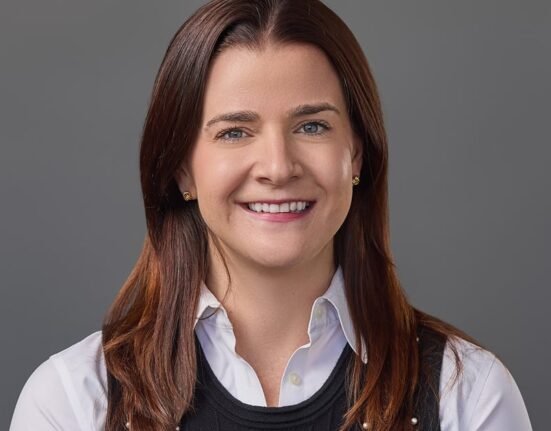
At the Independent Wealth Management Forum Dubai, the second panel examined how independence, partnerships and proof of value will shape the UAE’s wealth ecosystem in 2026 and beyond. Among the speakers, Michele Ferrario, Co-founder and Chief Executive Officer of StashAway, offered a perspective rooted in technology, fee transparency and the growing expectations of digitally confident investors.
For Ferrario, the opportunity in the UAE is clear: significant wealth creation and migration are underway, yet access to institutional quality portfolio management for clients below the ultra-high-net-worth tier remains underdeveloped.
Key Takeaways
- A Structural Gap Exists Below Ultra High Net Worth: Clients with up to ten million United States dollars in financial wealth often lack access to institutional grade portfolio construction at transparent fees.
- Alignment of Incentives Is Central to the Model: StashAway operates without retrocessions; where such payments exist, they are rebated to clients to avoid bias.
- Algorithmic Allocation Reduces Human Bias: Core portfolios are managed systematically, seeking to remove behavioural distortions in asset allocation decisions.
- Private Markets Access Is Being Democratized: Digital platforms can offer private credit, private equity and infrastructure exposure at lower fee points than traditional banks.
- The Middle East Has Structural Growth Drivers: Post pandemic repositioning and geographic centrality are strengthening the region’s long term trajectory.
- Artificial Intelligence (AI) Will Reshape Advice: AI driven tools are already capable of generating increasingly coherent financial guidance, forcing advisers to redefine their value proposition.
From Singapore to the Gulf
Founded in Singapore nearly a decade ago, StashAway built its reputation as a digital wealth management platform focused on exchange traded funds, diversified portfolios and systematic allocation. Its expansion into the Dubai International Financial Centre marked its first venture outside Southeast Asia and Hong Kong.
“There is clearly a lot of wealth being built in the region, or wealth being transferred in the region,” he noted during the panel.
In his assessment, while ultra-high-net-worth clients in the UAE are well served by private banks and independent advisers, a substantial segment of affluent investors lacks access to cost efficient, institutional quality solutions. This includes professionals, entrepreneurs and families with financial assets below the threshold typically required by private banks.
Competing With Private Banks on Core Portfolios
When challenged to explain why a prospective client in the Dubai International Financial Centre should choose StashAway over a private bank, Ferrario’s response was direct: cost efficiency, transparency and alignment.
“We only make money by charging you fees,” he said. “We do not get retrocessions from anyone.”
Where retrocessions are received from certain funds, they are returned to clients. This approach aims to remove conflicts of interest in product selection. In contrast to models where revenue may depend on distributing specific funds, the digital platform’s income is tied to advisory fees alone.
For core portfolios, which Ferrario suggests should comprise sixty to seventy percent of most investors’ wealth, StashAway relies on algorithmic allocation. The logic is systematic and designed to avoid behavioural biases that can influence discretionary decision making.
He pointed to historical performance data indicating outperformance relative to risk adjusted benchmarks over the firm’s eight-year track record, though he emphasised that the key differentiator is structural discipline rather than tactical forecasting.
Lowering the Barrier to Private Markets
Beyond liquid exchange traded funds, StashAway has expanded into private credit, private equity and infrastructure. For professional clients, the platform seeks to offer access to these asset classes at fee levels that Ferrario claims are materially lower than those typically available through private banks.
Unless an investor commands assets in excess of one hundred million United States dollars, he suggested, traditional banks may struggle to provide similarly competitive terms.
This push into private markets reflects a broader trend within digital wealth management. Platforms are no longer confined to passive index exposure. They are seeking to replicate, and in some cases undercut, elements of institutional portfolios.
For Ferrario, democratisation does not mean simplification. It means delivering sophisticated exposures through a more transparent and scalable interface.
The Middle East as a Growth Engine
Ferrario was careful to stress that Southeast Asia remains a dynamic growth region. However, he argued that the Middle East, and particularly the UAE, has leveraged the post pandemic period to reposition itself effectively.
Dubai’s geographic location between Europe and Asia, proximity to India and regulatory openness have reinforced its appeal. The region’s efforts to diversify beyond oil and build service driven economies also support long term confidence.
“I think this region is becoming more and more relevant,” he said.
The growth is not solely economic. It is demographic. Wealth is being transferred and created among younger cohorts who are more comfortable with digital interfaces and self-directed engagement.
AI and the Future of Advice
A substantial portion of Ferrario’s commentary focused on AI. He acknowledged that AI tools have improved dramatically over the past year, moving from rudimentary responses to increasingly coherent financial analysis.
Today, a single interaction with leading language models can produce sensible guidance on asset allocation or savings strategies. In one or two years, he suggested, such capabilities may become significantly more refined.
This evolution presents both a threat and an opportunity for wealth managers.
“How do you use that to your advantage?” he asked rhetorically.
At StashAway, the response has been structural. The firm’s co-founder and chief technology officer has shifted focus to become chief AI officer, dedicating resources to integrating AI into the advisory process.
Ferrario believes that AI will have its greatest impact on general advice and portfolio optimisation. Human advisers will still play critical roles in specialised areas such as tax planning, estate structuring and behavioural coaching during periods of volatility.
The Next Generation Imperative
The panel also addressed the transition of wealth to younger generations. Ferrario observed that many investors in their thirties and forties today are already digitally literate, and that this comfort will only deepen as wealth transfers accelerate.
He argued that below a certain complexity threshold, perhaps twenty million United States dollars and across multiple jurisdictions, investors may increasingly prefer platform based relationships supplemented by targeted human expertise.
“I think below that threshold, most people will not want a human adviser for general stuff,” he said.
Instead, they may seek specific experts for discrete issues while relying on digital platforms for core portfolio management.
This hybrid model, blending automated allocation with selective human input, may define the next phase of wealth management in the UAE.
Redefining Independence
In a forum dedicated to independent wealth management, Ferrario’s perspective challenges traditional boundaries. Independence is no longer synonymous with boutique advisory firms alone. It can also describe a digital platform free from product pushing and retrocession driven incentives.
However, independence must be proven through performance, transparency and client experience. Fee compression is an ongoing reality. Clients are more informed and more sceptical.
For digital platforms, the task is to demonstrate that lower cost does not equate to lower quality. For traditional advisers, the task is to articulate value beyond what algorithms can deliver.
Looking to 2026 and Beyond
As the UAE wealth ecosystem matures, multiple models will coexist: external asset managers, multi-family offices (MFOs), digital platforms and hybrid structures.
Ferrario’s contribution suggests that the most resilient models will combine transparency, technological fluency and alignment of incentives. AI will not eliminate advisers, but it will reshape their function.
The Middle East’s structural growth, geographic centrality and demographic trends provide a fertile backdrop. Whether through inheritance or entrepreneurship, more wealth will be held by digitally savvy individuals.