India’s asset management industry stands at a pivotal stage of expansion, shaped by structural growth drivers including digitalisation, financialisation of savings, and a rapidly widening investor base across demographics and geographies. As markets deepen and investor expectations evolve, asset managers are increasingly challenged to combine institutional stability with agility, technology integration, and personalised solutions delivered at scale.
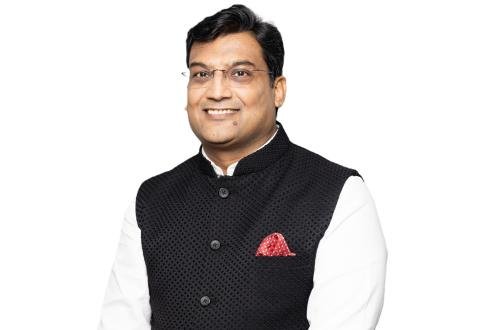
In an interview with Hubbis, Navneet Munot, Managing Director & CEO of HDFC Asset Management Company, discusses how a research-driven, long-term investment philosophy underpins sustained alpha generation, why investor-centric design sits at the core of the firm’s strategy, and how technology, AI and expanding product capabilities across active, passive and alternatives are reshaping the future of wealth creation in India and beyond.
What is your USP? How would you describe your firm’s business model and how it differentiates itself from other asset management firms in India?
HDFC, the four letters are synonymous with trust and confidence. While it’s a matter of deep pride for us, it also puts tremendous responsibility on our shoulders. At HDFC AMC, we have set an ambitious mission for ourselves – to be the wealth creator for every Indian and a vision to be the most respected asset manager in the world. Our purpose drives each of us within the organisation.
Traditionally, the asset management industry in India has been organised around product segments, distribution channels, geographic domains and investor segments. At HDFC AMC, however, we keep only one thing at the centre of everything we do – and that is the needs of our investors. For us, every action, decision and design revolves around this focal point.
We have over 12 actively managed funds that have a track record of alpha generation for over 15 years with some of the funds like HDFC Flexi cap going back 30 plus years. This is a result of time-tested investment philosophy, robust research and portfolio construction and a risk management that’s deeply ingrained in the investment process.
Over the decades, we have built a strong foundation of investment expertise, risk governance and product management that address the growing needs of our investors. Our people deliver this core expertise to investors through our vast distribution network of partners and offices across the country. Our physical presence creates a personalised experience for every investor, and our digital platforms enable us to scale this personalised experience en masse.
How do you segment your clients? How are client expectations evolving?
We manage over $ 100 billion in assets across asset classes in mutual funds and segregated accounts. As the wealth creator for every Indian, we aim to serve everyone. For us, every investor is a segment of one, which is shaped by their unique financial journey and goals. We rely on a confluence of strong relationship management, contextual content and advanced data and analytics to cater to these unique needs.
At the same time, investor needs and expectations are evolving rapidly. In a short period of time, we have leapfrogged from being among the most data-poor societies in the world to among the most data-rich society. That transformation has empowered people to make better decisions — but it has also multiplied the noise and created a constant sense of urgency to transact. More information does not always mean better judgement. That is precisely why investor awareness remains one of our most important responsibilities.
We have created a continuously evolving product and solutions platform to cater to evolving needs. We work closely with our distribution partners to continuously improve the investor experience. And our service teams have been on a transformational journey from “client service to client delight”.
What range of services do you offer, and how do you tailor these services to meet the diverse needs of your clients?
We have built a comprehensive platform across asset classes that include mutual funds spanning equity, debt, hybrid, passive and commodities. An Alternatives platform covering private equity and private credit. PMS for customised solutions. And through our GIFT City platform, we bring India’s growth story to global investors and global investing to Indian investors. As every asset class will grow in India, Active, Passive, Alternatives, PMS, among others, we have built capabilities across categories and around investor needs.
How do you identify and attract high-net-worth individuals (HNWIs) and ultra-high-net-worth individuals (UHNWIs) as clients?
We appreciate the highly customised and personalised service that HNWI and UHNWIs would expect as client. What we have done is built a solution platform suitable to meet their needs. On the product side, we have the longest track record of alpha generation in active funds and have one of the widest product bouquet in passives. As India’s asset management industry matures, there is a natural progression with more investors seeking exposure to specialised areas, for example, private equity and private credit. With one of the larger and experienced team, HDFC group pedigree and network, and impeccable governance track record, we expect to play an important role in the evolution of private markets in India. Our FoF investing across the spectrum of venture capital and private equity funds has been well appreciated. We entered into a partnership with IFC who has also come as an anchor investor in our Private credit fund. We did the first close in December 25 and the offering has seen excellent response from family offices and UHNIs. We have a PMS offering for those wanting customised, portfolio-level attention. We have put together a high quality team with a differentiated approach.
What is your firm’s investment philosophy, and how has it evolved in response to market changes?
We are fundamental, research-driven, long-term investors. We focus on quality businesses with strong fundamentals and governance, run by managements that think long-term and are able to evolve with a changing world. For us, the margin of safety at the point of entry is non-negotiable.
If you look at our funds, the turnover ratios would be among the lowest in the industry. That is not by chance. It reflects a conviction that compounding works best when you let it work. We do not do much market timing. Our edge comes from bottom-up stock selection — understanding a business deeply, understanding the management, understanding the valuation, and getting that thesis right.
We are conscious of both errors of commission and errors of omission. But our stronger instinct has always been to reduce the error of commission – what we buy rather than what we miss. Our fund managers demonstrated this across several market cycles over the decades.
While our investment philosophy is rooted in these time-tested principles, what has evolved is how we apply it. Data, analytics, AI — the tools have become sharper. The universe is wider. And the world around us has become increasingly noisy, fast and unpredictable. But noise actually works in our favour. It creates two arbitrages we have benefited from over the years: time arbitrage, we think longer than most participants in the market; and research arbitrage, we do deeper work, not just more data. Those two, compounded over decades, explain a large part of why our funds have delivered the alpha they have.
What are the needs of clients onshore and global Indians managing their wealth internationally?
Our HDFC International brand caters to both sets of investors through GIFT City, which acts as a neutral financial bridge allowing capital to flow in both directions. For resident Indians, it serves as a gateway to global markets — a way to complement domestic portfolios with foreign currency-denominated allocations without stepping outside the Indian regulatory framework. For foreign investors and NRIs, it offers a convenient and credible route to access India-focused investment solutions. Both transact in USD, which removes a layer of friction that has historically made cross-border investing cumbersome. In that sense, GIFT City does something quite specific — it lets onshore investors go out to diversify, and global investors come in to participate, through a single, well-regulated interface.
Key Priorities
What are your top 3 priorities over the next 12-18 months?
First, in line with our mission, we have a tremendous focus on creating financial awareness among all classes of investors. Second, while we have a track record of alpha generation in active funds over three decades and are among the oldest to launch index products, we have been working on growing newer product segments as the Indian economy and markets expand creating newer opportunities. Our alternatives platform, our PMS offering, our international platform through GIFT City — the opportunity set is widening as more investors look beyond traditional asset classes. And third, AI, the most transformational force since the industrial revolution. Our mission to create wealth for every Indian requires the scalability that AI facilitates, and we are integrating it across our well-established investment, distribution and servicing platforms.
Are there any digital or operational upgrades underway?
All the time! Ten years ago, less than 40% of our investors transacted digitally. Today, it has risen to 96%. It has taken a continuous process of building and upgrading our platforms for both investors and distribution partners. But the biggest upgrade underway is the integration of AI into every area of our business, whether it is investment, distribution or investor servicing. The goal is to deepen our capabilities and deliver personalisation at scale to millions of investors.
How are you approaching talent acquisition or retention?
The HDFC brand is a sought-after name in corporate India. It has been synonymous with trust for decades, and that attracts people who want to be part of something impactful. Many from our senior management have served for over 10,15, 20 years in this organisation. There is a culture of ownership in the organisation, where people are empowered on the ground to take decisions, to serve clients in ways they think are right.
We invest deeply in our people. In a knowledge-centric industry like ours, we place great important to continuous learning and development. What drives our people most, though, is our mission to be the wealth creator for every Indian, and our vision to be the most respected asset manager in the world. Each of us wear this insignia – every desk, every event, every piece of material we produce carries it.
Into the Future
How do you see the industry evolving in the next 5-10 years?
We are at a fascinating juncture. On the one hand, the industry is too big to be small – it has become a necessary tool for investor portfolios. And on the other hand, it is too small to be big – when measured against the potential. That contrast tells us both how far we have come and how much lies ahead. India is 4th largest economy in the world and likely to remain the fastest growing for a long time to come and has capital markets comparable with some of the most advanced markets in terms of sophistication, technology and regulation. If you compare US and India in terms of size of GDP, bank deposits, market cap, savings pool and size of asset management industry, it’s the asset management industry that has the most to catch up on a relative basis. The industry has seen asset size and number of unique investors multiplying over the last few years, SIP flows have a run rate of $ 40 billion per annum but I would say this is just the beginning. Formalization of the economy, digitalisation, financialization of savings, financialisation of assets are structural growth drivers. The size of Alternative assets, be it VC or PE, or REITs and InVits are at the same level as MF industry AUM a decade back and one can visualise where they would be in a decade’s time. While Indian markets offer good long-term compounding, we will also witness a rising trend of global investing by Indian family offices and HNIs.
In what ways has technology impacted asset management services, and how are you leveraging technology and AI to innovate and enhance client experiences?
Technology has been a major accelerator for us. It took us 23 years to get to 7 million investors. In the last two years, we added another 7 million. That was made possible only by the tech-stack we put in place. Over the last decade, we have moved from processing half our transactions physically to operating almost entirely as a digital platform today.
And AI is going to change the game even further. If the information revolution made us more productive, AI will allow the human brain to reach its full potential. We are already leveraging it across content creation, operational efficiencies, client experience, and investment research. Ours is a business of temperament, sound judgement and wisdom — these are the skills that define great fund management, and no machine will replace them. What AI will do is free us to focus on exactly that. In this industry, size and stability give you an advantage, but it is nimbleness and agility that keep you relevant. The firms that combine both — institutional depth with the ability to adapt quickly — are the ones that will define the next era of asset management.
What shifts in client needs or demographics do you anticipate?
While on the one hand, investors are getting more informed and therefore demand more personalised solutions, there are millions who are yet to even start their investment journey. Women, for example, have been significantly under-represented in household investments. Our investor awareness drives have focused majorly on changing that narrative and we can see the rising participation of women investors in mutual funds. Millennials and Gen Z are digital natives and are comfortable with app-based investing, but they need perspective and guidance. It’s encouraging that they have greater curiosity, want to know more and engage more. There is also a large NRI base who need simpler investment solutions. Our GIFT City platform caters to them.
One of the big shifts we have seen, though, is the representation of smaller towns in mutual funds. Towns that are beyond the top 30 cities of India (B30) have been typically under-served. With increased awareness, the share of B30 in the overall transaction count has been fast increasing.
India is also creating one of highest number of new millionaires and billionaires in the world with an expanding economy and thriving capital market ecosystem. Family offices are looking beyond traditional investments while many are truly building institutions with a multi-generation mindset.
Getting Personal
Where were you born and educated, and what moments have shaped your career the most?
I was born and raised in Beawar, a small town in Rajasthan — schooling, graduation, post-graduation, chartered accountancy, all from there. My father’s famous four words were: meet more, read more. He instilled in me a deep sense of curiosity which was the greatest gift my family gave me. I started writing a diary early in childhood recording what is happening in the world, in politics, in markets. Reading those entries from 1980s, the bull market, the crash, the political shifts, all noted down in real time by a teenager in Beawar — is fascinating and a little humbling.
Getting a rank in the CA finals was the turning point. That opened the door to the Aditya Birla Group, where, as a young CA in my early twenties, I sat in treasury and forex committees alongside people with 30 to 40 years of experience. Every organisation after that — Morgan Stanley, SBI Mutual Fund and now HDFC — gave me something different, but the common thread was being surrounded by exceptional people. I can relate to what Malcolm Gladwell wrote in *Outliers* in terms of role of timing in success, if you entered India’s financial services in the early 1990s, worked hard, and had integrity, you did well. Of course, luck and timing played a very large role. It’s such an honor and priviledge to serve millions of investors.
What do you enjoy doing in your spare time?
I love meeting people as much as I love solitude. I like reading varied stuff and enjoy meeting people and hearing their stories. Every interaction teaches you something. I don’t watch TV, movies or OTT. Meditation helps in keeping me grounded and connecting with the inner-self. I also have a habit of writing, though of late it has come down. Honestly, the concept of ‘spare time’ is little alien for me. I believe in work-life integration and not ‘balance’ as widely understood.
Any surprising or little-known facts about yourself?
My father would wake at 4 AM to listen to BBC Radio, and every evening I would note down news from BBC and stock prices from All India Radio — that was how markets reached Beawar in those days. Every price tells a story, he would say. It was largely academic and all about learning how to connect the dots. He would encourage me every day to bring books from library on various subjects. Those years — growing up in a small town, hardly travelled outside till I finished Chartered Accountancy, working within various constraints, staying curious about the world through radio and newspapers — shaped instincts that have served me far better than any formal training.
What advice would you give to younger professionals in this industry?
Younger ones are lot smarter than us! But if you still ask me, I would say, focus on capabilities that compound over time. Do not confuse a bull market with brains — the less experience you have, the more money you might make in a rising market, precisely because you have not seen a full cycle. You need capability, competence, and comprehension but more important for lasting success are courage, conviction and character. Never ever compromise on integrity. True integrity is doing the right thing when nobody is watching. Always, always remember, Trust compounds faster than wealth, but can be destroyed in minutes. We are not just managing money — we are managing trust.