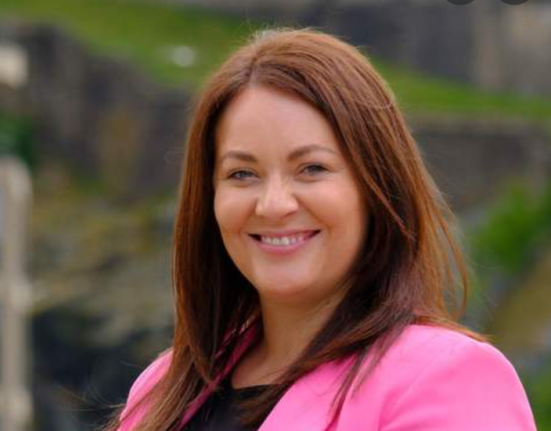
WHEN Danny Wong, Areca Capital Sdn Bhd’s chief executive officer, speaks about long-term investing, he is not just thinking in terms of years or even decades. His vision stretches beyond the lifetime of a single investor.
“For many people, long term might mean 10 years. But to me, true long-term investing goes beyond that – it is about planning across generations,” he explains. That perspective shapes how Areca Capital approaches wealth management as a legacy-building journey.
Wong notes that the definition of “long term” often shifts with age.
“For someone in their 70s, 10 years may feel like a long horizon,” Wong reflects. “But with Malaysians now living well into their 80s and 90s, we need to think about financial planning that stretches across generations, not just one lifetime.”
This outlook is particularly resonant in Asia, where family legacy has always been a central concern. Wong contrasts the mindset of the older generation, shaped by war and hardship, with the younger generation that embraces a more carefree “you only live once” attitude.
He suggests a balance: enjoy the fruits of labour while preserving resources for children and grandchildren.
Building on this philosophy, Wong translates the idea of “purpose-driven” wealth into practical tools, starting with the concept of “multiple saving pots”.
Instead of treating wealth as a single pool, Wong advises dividing it into distinct objectives: retirement, children’s education, lifestyle enjoyment such as travel or hobbies, and contingencies like medical emergencies. By assigning a purpose to each pot, investors gain clarity and discipline.
Each pot requires a different strategy. A contingency pot must remain highly liquid, with funds in deposits or short-term income funds. A retirement pot may take a longer view with a balanced mix of equities and bonds. Education funds, if children are still young, can afford more growth exposure to outpace inflation.
Legacy funds can potentially stretch even further, taking a long-term horizon in equities while also incorporating alternatives such as private equity, commodities, and possibly even a small allocation to emerging assets like cryptocurrency.
“Once you split the objectives, you know exactly which money is for which purpose,” Wong explains.
This naturally flows into strategic asset allocation, which Wong regards as the foundation of enduring success. He points to the Employees Provident Fund (EPF) as a model, with long-term allocations that remain in place regardless of volatility. Individual investors, he says, should adopt the same discipline: maintain a steady allocation and rebalance periodically, rather than chasing trends.
But discipline is easier said than done, as emotions often lead investors astray. Wong encourages investors to stay anchored to fundamentals, averaging into markets during downturns and trimming exposure during euphoric rallies.
Alongside disciplined allocation, Wong highlights another often-overlooked element: cash.
While many investors focus on being fully invested to maximise returns, Wong highlights the value of keeping 10%–20% in cash – not as idle capital, but as a buffer to optimise risk and returns. In downturns, it may have valuable buying power.
“Cash is your buffer. You deploy it when others are fearful, and you accumulate it when the crowd is euphoric,” he says.
Once wealth and investments plans are in place, the next priority is ensuring the wealth that you’ve built is preserved and passed on with intention. This is where private trusts come in.
Trusts are often misunderstood as tools only for the ultra-wealthy, Wong says. In reality, families with even modest assets can benefit. They can be used to ensure that loved ones are taken care of. Distributions can be structured as monthly allowances to prevent reckless spending. This gives families peace of mind.
Wong recalls a single woman in her 60s who cared for her elderly mother. Concerned for her own future as well as her sister’s family, she established a trust.
It ensured her mother’s care while also setting aside resources for her eventual move into a senior living facility, including medical and living expenses. At the same time, it provided for her sister’s children.
By reframing the old saying that wealth seldom survives three generations, Wong underscores how foresight and structure can break the cycle. He points to examples such as Lee Kum Kee, the family-owned sauce maker, and Japan’s centuries-old shinise companies, which have endured through governance, values and planning. Both demonstrate how continuity is possible when families combine tradition with disciplined management.
Underlying all these strategies is a recognition that Malaysia’s financial culture is still evolving.
For many older Malaysians, bank savings have long been the cornerstone of financial security. While savings do provide stability and liquidity, they may also be vulnerable to inflation in the long run.
On the other end of the spectrum, some are lured by promises of high returns and may take excessive risks, through speculation or unregulated schemes.
Wong sees Areca Capital’s role as guiding investors to strike the right balance, embedding discipline while balancing prudence with growth.
The message is not that every investor must become an expert, but that they should partner with advisors who understand both markets and family dynamics.
Areca Capital, Wong stresses, positions itself not simply as a fund manager focused on annual returns, but as a partner committed to thinking across generations.
“We are here for the long term, with your family wealth in mind, not just your personal wealth,” he says.
Disclaimer:
This article is provided for general informational and educational purposes only and does not constitute, and should not be construed as, professional financial, legal, tax or investment advice. Any views, examples, or references contained herein are generic in nature and do not take into account the specific investment objectives, financial situation, risk tolerance or particular needs of any individual. Readers are strongly encouraged to seek independent advice from qualified professionals before making any financial or investment decisions.
Investors should read and understand the relevant disclosure documents of the respective funds prior to investing. While the information contained in this article is derived from sources believed to be reliable as at the date of publication, Areca does not make any representation or warranty, express or implied, as to its accuracy, completeness or reliability. No reliance should be placed on the information provided, and Areca disclaims all liability in respect of any losses or outcomes arising from the use of or reliance upon this article.