Published: 13 February 2026
The media industry is at a pivotal moment. Audience behaviours are shifting rapidly, with people now expecting media that is made with them, not just made for them, and the acceleration of tech innovation is changing the production and distribution of content.
In 2025, 5.24 billion people — nearly 64% of the global population — actively use social media, fundamentally shaping how audiences discover information, entertainment, and be part of culture.
At the same time, artificial intelligence has now moved from the margins into everyday life. With an average of 82% of the global population consciously using AI in their daily lives in 2025, AI tools have officially become part of our daily digital behaviour.
For public service media organisations, this moment is critical. The BBC must reimagine its role in a landscape increasingly defined by third-party platforms powered by artificial intelligence, such as YouTube, Roblox, or TikTok, if it is to remain relevant for future generations.
I lead the product team building BBC Research & Development’s Future World Design portfolio. This is the most fascinating moment in my career to be designing revolutionary experiences for young audiences who want their media to be short and relatable, as well as adaptive and immersive.
Future World Design (FWD) sits at the intersection of culture, technology, and public service media. We build scalable inventions that connect the BBC with new audiences in new ways, delivering reach, relevance and, where appropriate, sustainable revenue.
The BBC has an important role to play, but we cannot do this alone. We’re working with technology partners, other global media organisations, content creators, and startups, as well as the millions of people who we hope to use our future services. We’ll be collaborating in new ways to test and scale ideas, build new business models, and deliver greater value to our audiences.
We are obsessed with trends in technology, industry, and culture and use these to design how audiences can get the most from media. Right now, we’re designing and building solutions for three connected futures for media:
1. Shared and participatory experiences: creating collective moments
Mass audiences are now spoilt for choice and divide their time between social media and gaming, plus live and on-demand TV across multiple platforms. However, cultural events like the Women’s Euro Final for live sport, music festivals like Glastonbury, and TV moments like The Traitors finale create powerful collective experiences and can draw enormous audiences.
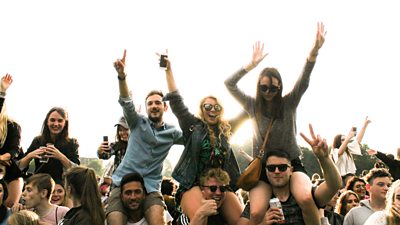
We believe that to make these moments matter more, they need to be playful and participatory, giving audiences a chance to be part of the moment, not just observe it.
TVs are becoming smarter, with next-generation voice assistants, advanced AI, and high-performance processors enhancing the viewer experience. We’re exploring how voice and AI can transform TV and radio into formats that invite interaction rather than passive consumption.
2. Creator economy: supporting the next generation
The creator economy continues to grow rapidly and is projected to exceed $480 billion globally by 2027. Yet the ecosystem is increasingly fragile. In 2025, 69% of creators worried their content was used to train AI without consent, and in 2024, 47% reported brands used their work without permission. As recent BBC UNBOXD research showed, young people quite rightly want to feel in control of their creative work and their digital identities — they are increasingly wary of inauthentic platforms that take more than they give.
BBC R&D’s belief is that the internet backbone will feature a new layer that provides a permanent and transparent registry for digital assets, empowering both creators and consumers while fostering a more credible media ecosystem.
The BBC has a vital role to play in creating and maintaining this ecosystem, helping young creators start their careers, get fairly paid, and retain ownership of their work – keeping cultural value visible and equitably distributed.
3. Companions for curiosity: smart interfaces for learning
Students learn in many different ways, and while teachers are working hard to meet these needs, one and a half million children a week struggle to engage in learning.
Teachers and tutors would like to tailor learning for all their students at every age and stage of learning, but only 4% of teachers believe the education system gives them the right tools to meet their students’ needs.
In 2025, 74% of young people across Europe turned to YouTube videos to learn something new for school and in 2023 over 50% of young people in the UK used an AI chatbot to help them with schoolwork, emails, or their job.
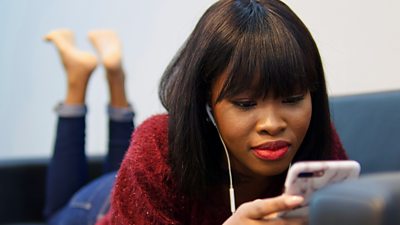
We’re exploring how emerging technologies can help children and adults learn in ways that are fun, snackable, and genuinely engaging, and how character, personality or brand-based interfaces might become companions you can learn from, explore with, or simply hang out with.
We believe the solution should feel approachable, safe, and culturally grounded, reflecting public service values while shaping new relationships between people, technology, and media.
Across all of this work, our approach is deliberately experimental but grounded. We move quickly: making assumptions, building prototypes, testing ideas in real contexts, and working with partners at the earliest opportunity.
This portfolio exists to help the BBC and the wider creative industry navigate what comes next. Not by predicting the future, but by building it.
Info:
We’re partnering with forward-thinking teams inside and outside the BBC on the Future World Design and we’re always looking for partners with bold ideas for strategic commercial collaborations at the intersection of media, tech and culture.
If you have a commercial opportunity we should be working on next, contact us at fwd@bbc.co.uk.