of
Every time you change your motorcycle tyres, chances are you have the same conversation about bedding them in – going steady in order to remove that slippery outer coating and prevent any unwanted and potentially expensive tumbles.
It’s a scenario I personally know all too well – having embarrassingly slipped off my Editors’ Suzuki Katana a few years back just outside my own front door, having had a new set of hoops installed on the driveway the previous day following a nasty puncture.
Generally speaking, it’s a scenario that all bikers want to avoid and, in a bid to help riders through this awkward phase of tyre ownership, German brand Continental use something called ‘TractionSkin’ on their premium radial offerings.
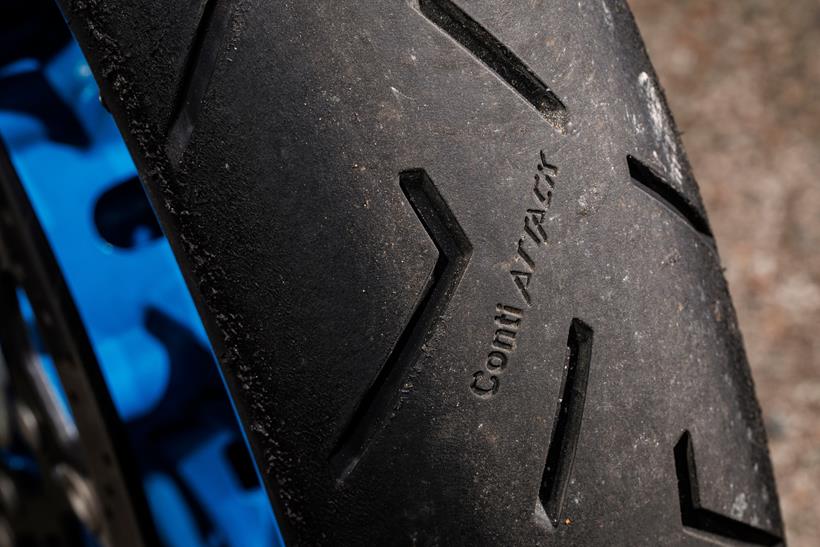
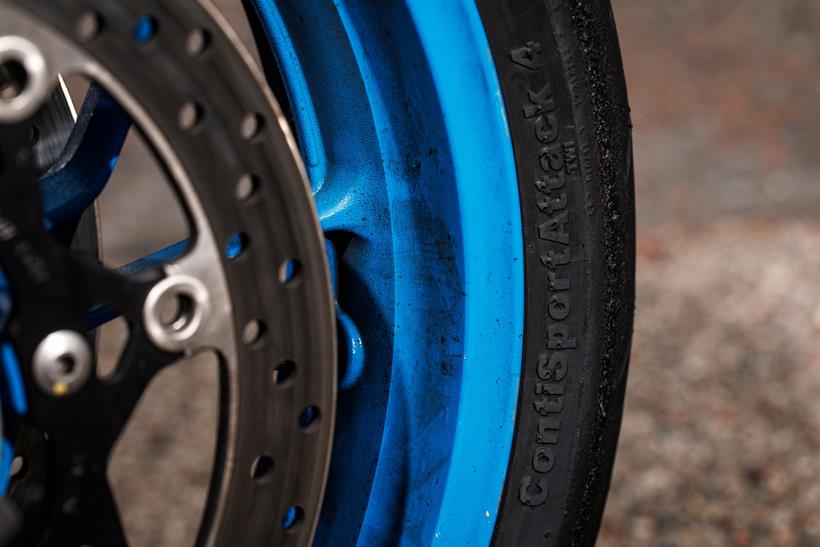
Rather than opt for a smooth outer finish between tread lines, Contis instead come with a mottled outer surface that’s designed to come out of their complex factory moulds without any form of slippery release agent.
It’s also said to make their upper range vegan-friendly – with the best option for squeezing a tyre out of a press said to be an animal fat based lubricant.
“If a tyre sticks in a mould, then that’s a problem,” Continental Brand Manager at Cambrian Tyres (Conti’s UK importer) Graham Matcham told MCN. “That’s why mould release agents have been traditionally used in the past to lubricate between the mould and the tyre.
“But this is the issue which causes people a little bit of problem when breaking them in,” he continued.
“When you fit a new tyre, it’s still advisable to run it in gently just to increase the temperature and the pressure associated with it before giving it the full beans, but I’d say that the whole process of doing that is much, much quicker on a Continental tyre than anything else on the market.”
Instead of being smooth, all TractionSkin-equipped Continental rubber is delivered to customers with a rough, almost pre-scrubbed appearance. They don’t shine like some other new tyres, and that’s because of a pattern applied within the mould itself – designed to be imprinted onto the outer rubber of the tyre, alongside the tread.
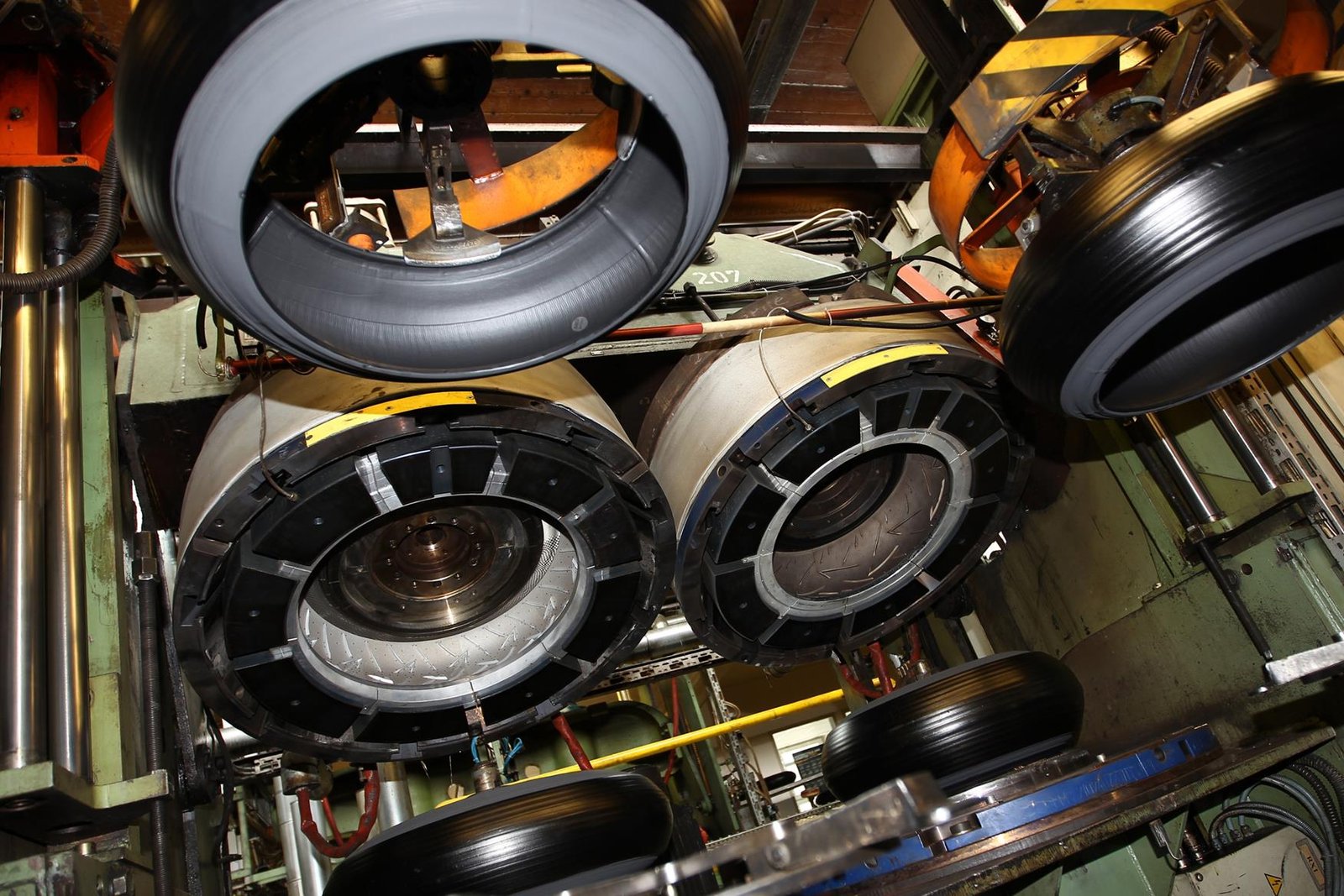
The moulds are built in nine equal segments which expand to ingest a tyre, before closing back round the rubber to create the desired look.
In order to do this, tyres are enclosed for 40 minutes, at 400 degrees Celsius – creating the tread itself, as well as the rough outer appearance on the tyre – essential for its removal from the machine without need for additional lubricant. The outer finish of the tyre is known by Continental as ‘microrough’.
“I think the best example I can give you is a non-stick frying pan,” Graham added. “If you feel it, it’s almost like the surface is slightly rougher than you’d expect. It’s totally unique, it’s more expensive, but it does work.

“On the inside of the mould, you can see the tread pattern, but that is the bit which has traditionally always caused the problem with getting that tyre out of the mould, because if you use a perfectly flat surface with the tread design in, the tyre can sometimes stick in the mould, and that’s a catastrophe, because the system is automated.”
Each new mould is said to cost Continental in the region of £30,000 to £40,000 – with the same TractionSkin design applied across all of the brand’s desired options.
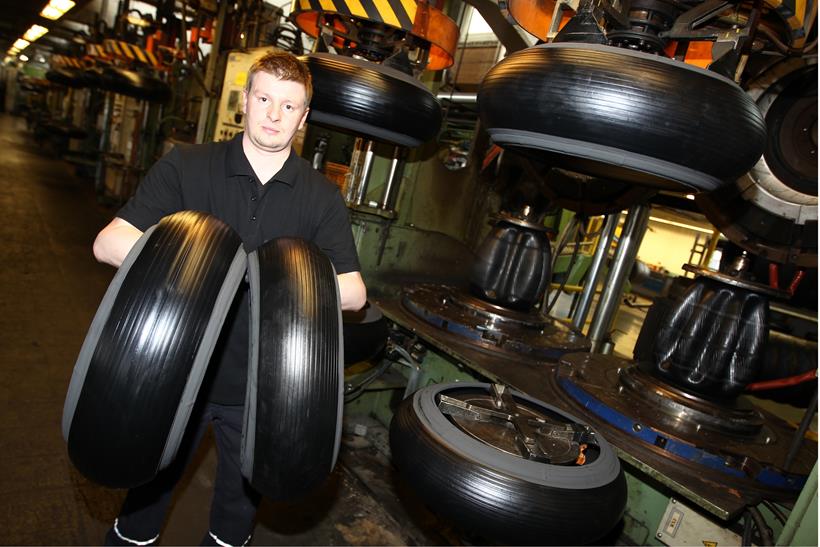
Prior to each individual tyre going into the system, it actually features a striped, shiny outer surface, and that’s because fresh tread rubber has been strip wound onto the carcass, and the tyre is yet to be cured.
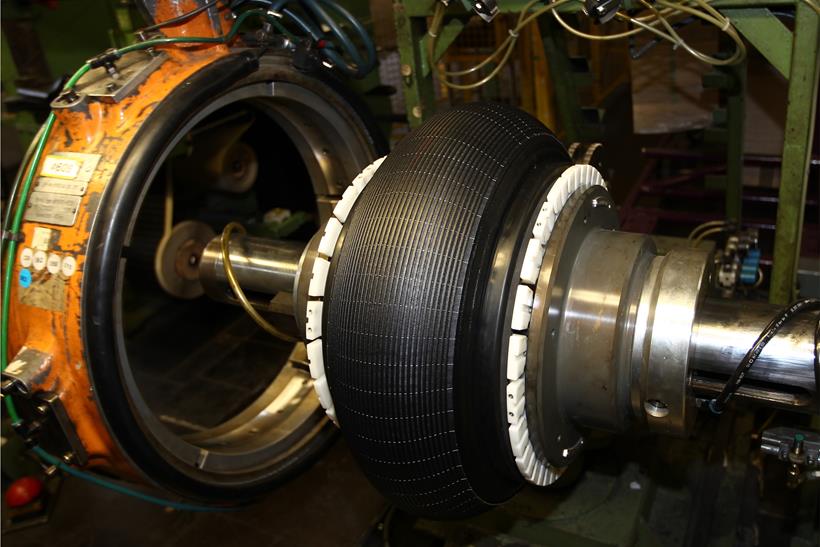
“If you make all of your moulds with that very, very molecular, granular type finish, what it means is that the tires will come out of the mould without any lubrication required at all,” the Continental expert added.
“Because of the cost, it only goes on the premium tyres. Continental make cross-ply tyres for smaller bikes as well, but it just wouldn’t be cost effective to do it on there.”