The Chancellor has been told that the economy is stronger than previously feared, meaning there is no need to break her manifesto promise on income tax
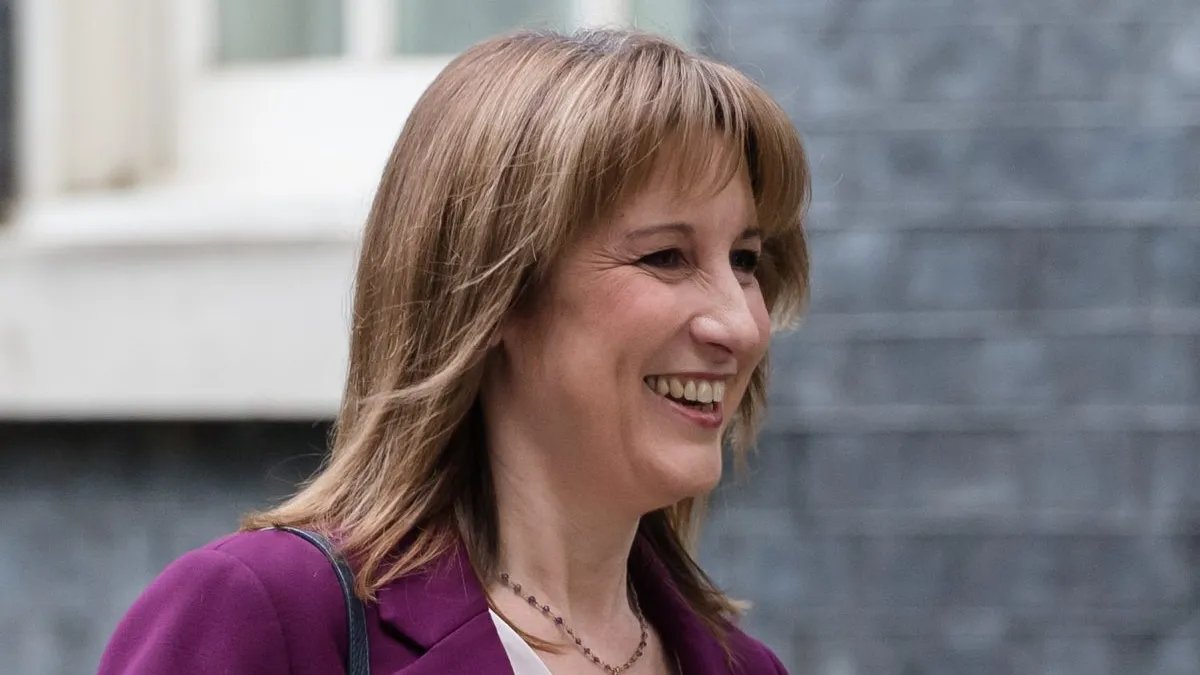
Rachel Reeves has decided not to raise income tax after discovering that the “black hole” in the Budget is smaller than previously feared, The i Paper understands.
The Chancellor is still planning to increase taxes by billions of pounds, including through a freeze to tax thresholds – a so-called “stealth tax” – which will leave most workers paying more.
But the idea of breaking Labour’s manifesto pledges by increasing the rate of income tax has been abandoned in response to improving economic forecasts.
The move will allay fears among MPs of a backlash from voters over broken election promises – although backbenchers are now raising fresh questions over Downing Street’s political judgement given that Reeves had as good as said that the income tax rise would be going ahead.
UK stock markets and the pound fell on Friday after the initial news of the U-turn while the Government’s borrowing costs increased, in a sign that the markets are concerned about the Chancellor’s ability to stick to her fiscal rules and keep the public finances under control.
To raise income tax or not to raise income tax
Reeves is still planning to increase her “headroom” – the financial buffer she has against breaking those borrowing rules – at the Budget, in a bid to avoid having to raise taxes yet again in future, according to insiders.
She has been criticised for keeping this too low at just £9.9bn, which has been too easily wipe out by increases in borrowing costs.
The Office for Budget Responsibility (OBR) has downgraded its forecasts of future economic growth, a move which prompted the Treasury to draw up plans to increase the basic, higher and additional rates of income tax – which would have been a direct breach of the Labour general election manifesto.
In an interview this week, the Chancellor said that keeping to the manifesto would mean having to cut investment spending in a blow to economic growth.
But the latest version of the OBR’s public finances outlook shows that the economy downgrade is partially offset by higher-than-expected wage growth and thus taxation, which has boosted Treasury coffers.

The good news convinced Reeves and Sir Keir Starmer that they should scrap the idea of an income tax rise, although they are still planning to freeze the thresholds at which workers start to pay the various rates rather than allowing them to rise with inflation, and may even lower those thresholds.
Raising income taxes would have been a politically difficult move – Reeves would have been the first Chancellor in 50 years to do so. But with a financial blackhole estimated at £30bn many economists warned it was the only way to raise the necessary cash.
A source involved with the Budget said: “You write a Budget to fit one set of numbers, and then the numbers change so you change your measures.”
What will be in the Budget?
Other measures expected to remain in the final document, which will be unveiled on 26 November, include new restrictions on the ability of workers to cut their tax bills through “salary sacrifice” schemes such as paying into a pension.
Government insiders have insisted there was no link between the tax U-turn and the chaos in Downing Street this week which saw allies of Starmer accusing Health Secretary Wes Streeting of plotting to depose him.
Following news that the suggested income tax rise had been cancelled, Streeting told LBC: “I’m not in favour of breaking manifesto pledges. I think that trust in politics and politicians is low and it’s part of our responsibility to not only rebuild our economy and rebuild our public services, but to rebuild trust in politics itself.”
The Chancellor has described her fiscal rules, which state that she cannot borrow to fund day-to-day public spending over the medium term, as “non-negotiable”.
But in order to meet them, she has ended up raising taxes multiple times – first at last year’s Budget then in the Spring Statement this year – and has been left with a level of headroom that is low by historical standards.
The idea of boosting her headroom this time is designed to ensure that the next fiscal event is not dominated by speculation over further tax hikes or spending cuts.
Income tax-turn is also risky
Andrew Goodwin, chief UK economist at Oxford Economics, warned that the chaos over the Government’s strategy could unsettle businesses and markets. He said: “If the Government has done a volte-face, it would be a risky strategy.
“If the cause is political, with the Government concerned about how voters will react to income tax hikes, it may strengthen perceptions that the Government lacks the appetite to take tough fiscal decisions. If it reflects favourable OBR forecast revisions, there’s a risk markets question the credibility of those projections.”
Your next read

Helen Miller, head of the influential Institute for Fiscal Studies, said: “It is not unusual for chancellors to make last minute changes to their Budget plans. But the news that Rachel Reeves has backed away from a plan to increase the rates of income tax will lead investors to worry that the Chancellor will instead increase a range of smaller taxes that can be more damaging to economic growth.
“They may also worry that the change of plans signals that this Government are reluctant to do politically difficult things. These are the kinds of concerns that can lead investors to demand higher returns when lending to the Government.”