Chancellor set to prepare ground for tax rises with an unusual speech in Downing Street today
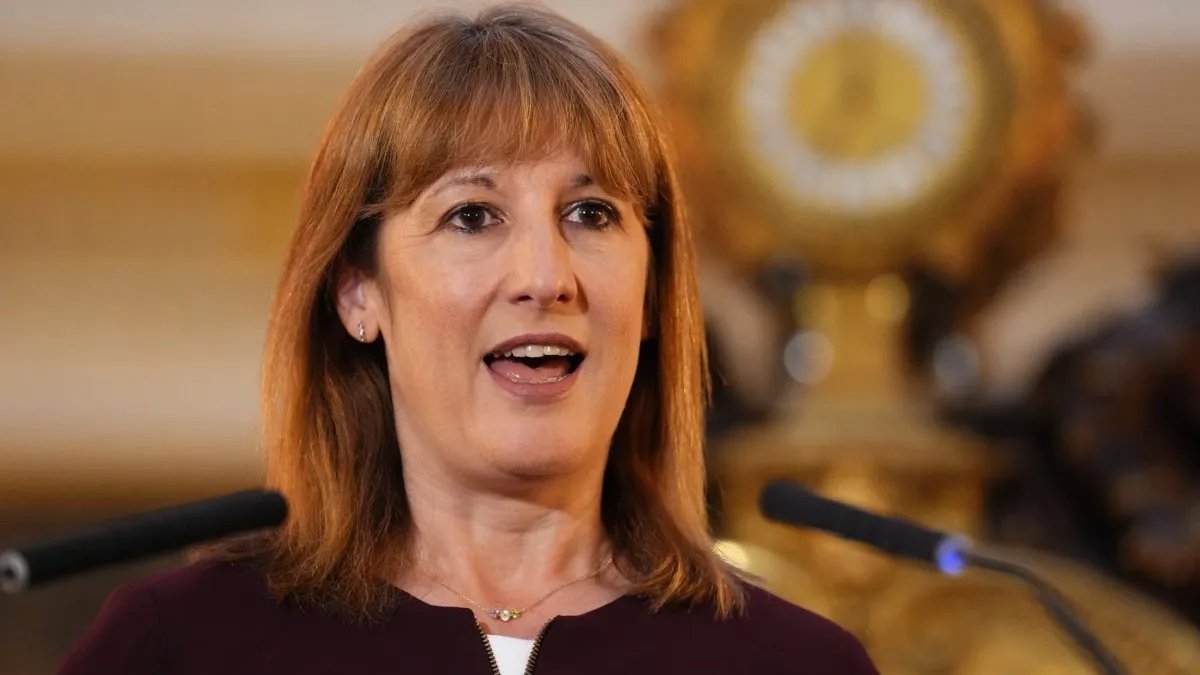
Rachel Reeves will on Tuesday give her strongest hint yet that she will break Labour’s manifesto pledge not to raise income tax, in a key pre-Budget speech.
The Chancellor will say that she plans to “make the choices necessary” for “years to come”, hinting that a major tax rise could be on the cards to raise enough money to avoid having to come back for more cash before the election.
She has been forced into considering tax rises again – despite already facing criticism for increases last year – after the Budget watchdog drastically downgraded the UK’s productivity, blowing a hole in the public finances.
Reeves will set out more about the situation as she seeks to justify returning with another tax raid, insisting it is “important people understand the circumstances we are facing” as well as the “principles” behind the Budget, including “protecting our NHS, reducing our national debt and improving the cost of living”.
Sir Keir Starmer’s official spokesman said the Chancellor would be “honest about the scale of the challenge we face and candid about the choices we must now take”.
Reeves setting out stall for tax rises
Last week, Starmer failed to rule out an income tax rise at the Budget when grilled by Tory leader Kemi Badenoch at Prime Minister’s Questions.
It meant that he failed for the first time since the election to say Labour would stick to its manifesto pledge not to raise income tax, VAT or national insurance.
The Chancellor needs to raise between £20bn and £30bn in order to fill the hole in the public finances, with many economists arguing a rise in income tax is the simplest and cleanest way to do this.
A Treasury source said the Chancellor’s speech was about making the “bigger arguments” and providing the “framing” for her crunch Budget in three weeks’ time, in another suggestion she is rolling the pitch to break Labour’s manifesto pledge not to increase income tax.
In a sign that it is being regarded in the Treasury as a major speech, Reeves will deliver her remarks early in the morning, which will give time for financial markets to digest her remarks as well as allow the Cabinet to discuss it at their weekly meeting.
The unusual event in Downing Street, just three weeks before the Budget, suggests the Chancellor and No 10 may be attempting to establish their reasons for breaching the manifesto pledge – and hope to win over the public – in good time to minimise the political fallout.
The Chancellor has also been preparing for the speech since at least the middle of last week, according to a document brandished to photographers, suggesting she sees it as an important moment.
Forecasts may be better than feared
Despite Reeves and Starmer painting a gloomy picture of the state of the public finances, on Tuesday the Resolution Foundation argued that the Office for Budget Responsibility (OBR) forecasts that set limits for the Budget may be better than feared.
The think tank said productivity downgrades would add around £14bn to borrowing by 2029-30, to add to the burden on the public finances caused by £7bn in higher debt interest, and £6bn in U-turns on welfare cuts and scrapping the universal winter fuel payment.
But the downgrade to productivity would be “offset” by stronger wage growth figures that will reduce borrowing by £13bn, meaning that overall, Reeves would only face a black hole of around £4bn to fill.
However, the foundation argued that she must seek to build up more “headroom” of around £20bn against meeting her goal of balancing day-to-day spending to avoid even more tax hikes in the years ahead – suggesting this would require her to raise around £31bn on 26 November.
This means she must break Labour’s manifesto pledge not to raise the three “big taxes” – VAT, income tax and national insurance (NI) – as several small hikes in other levies risk “doing more harm than good”.
The foundation is arguing for a 2p rise in income tax, offset with a 2p cut in employee NI, shifting some of the tax burden from workers to pensioners, the self-employed and landlords. It says the move would raise £6bn overall while protecting those in regular jobs.
Reeves urged to make spending cuts
However, Cambridge University economics professor Jagjit Chadha told The i Paper that Reeves was wrong to focus on tax rises, as speculation around what measures she may use damages investment, while the scale of the increases will not meet the challenge of a structural deficit that sees the state spending 5 per cent more than it brings in.
Failing to consider spending cuts will just create more pressure for tax rises in years to come, he said.
Chadha, former head of the NIESR think tank, told The i Paper: “The actual taxes themselves are going to be distortionary if we’re talking about housing taxes, wealth taxes, and these are not by themselves going to clear a 5 per cent of GDP deficit which is over £100bn.
“What amazes me… is we are not addressing the fact that we are spending 45 per cent of GDP through the public sector, compared to the post-war norm of about 40 per cent.
“So at some level, the state is just too large.
“There are six million people working in the public sector supported by 28 to 29 million people in work – the simple arithmetic is going to make pressure for taxes to increase to pay for all these people in the public sector.”