As the government’s official forecaster, the Office for Budget Responsibility (OBR), flags, there are other risks this year – pressures on defence and health spending, for example.
The OBR is paid to be cautious. But it means that, come the autumn Budget, there could still be a need for tax or spending changes – if the sums on the public finances are to add up.
Beyond that, there’s the spending plans the chancellor has pencilled in for future years. The rate of growth of public spending slows down in a few years’ time. Take account of population growth and inflation and some departments’ budgets may be squeezed.
Pencilling in perhaps unrealistic future spending plans is a ploy many chancellors have used to make numbers add up. In reality, there will be pressure to increase this spending, especially just ahead of an election – and that may spell tax rises too.
And then there is something we don’t talk much about – productivity.
Some public services, including the NHS and the law courts remain less efficient than prior to the pandemic.
Some areas are turning the corner, but some analysts fear the government’s assumptions about improvements may be ambitious. If so, several billion pounds more will need to be found by the next election, just to maintain services.
Is there a get out of jail free card? The ideal scenario would be faster growth, which brings in more tax money. But, as the chancellor acknowledged, there is more to do to boost our prospects.
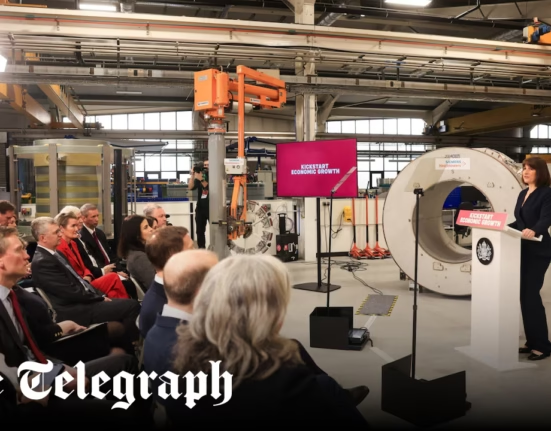
With this statement, the chancellor intended to show that she has achieved sound public finances, providing a stable backdrop with which to face an uncertain world. But there is much still to keep her, and taxpayers, on their toes.