Economists argue such a move is ‘100 per cent certain’ in order to fill an estimated £42.1bn black hole
Rachel Reeves will be forced to extend a stealth tax on workers’ incomes in this autumn’s Budget to fill a black hole in the nation’s finances, economists believe.
One academic said they thought it “100 per cent certain” that the Chancellor would have to extend the threshold freeze on income tax bands – a form of stealth tax – to balance the books.
It comes as Keir Starmer on Wednesday failed to rule out raising taxes when directly asked.
In last October’s Budget, Reeves said that extending the freeze would raise “billions of pounds” but added that she decided against it because it would “hurt working people” by taking “more money out of their payslips”.
However, economists increasingly believe she will be forced into a painful U-turn because of weaker than expected growth and the Government’s inability to deliver welfare cuts.
On Wednesday, the National Institute of Economic and Social Research think-tank predicted that Reeves is on track to miss her fiscal rules, leaving a £42.1bn gap in the nation’s finances.
Her rules state that day-to-day expenditure has to be met by taxation rather than borrowing. She has been criticised for leaving just £9.9bn of headroom against this pledge, and her options for raising extra revenue are also limited by Labour’s manifesto pledge not to raise taxes on ‘working people’ including income tax, VAT or national insurance.
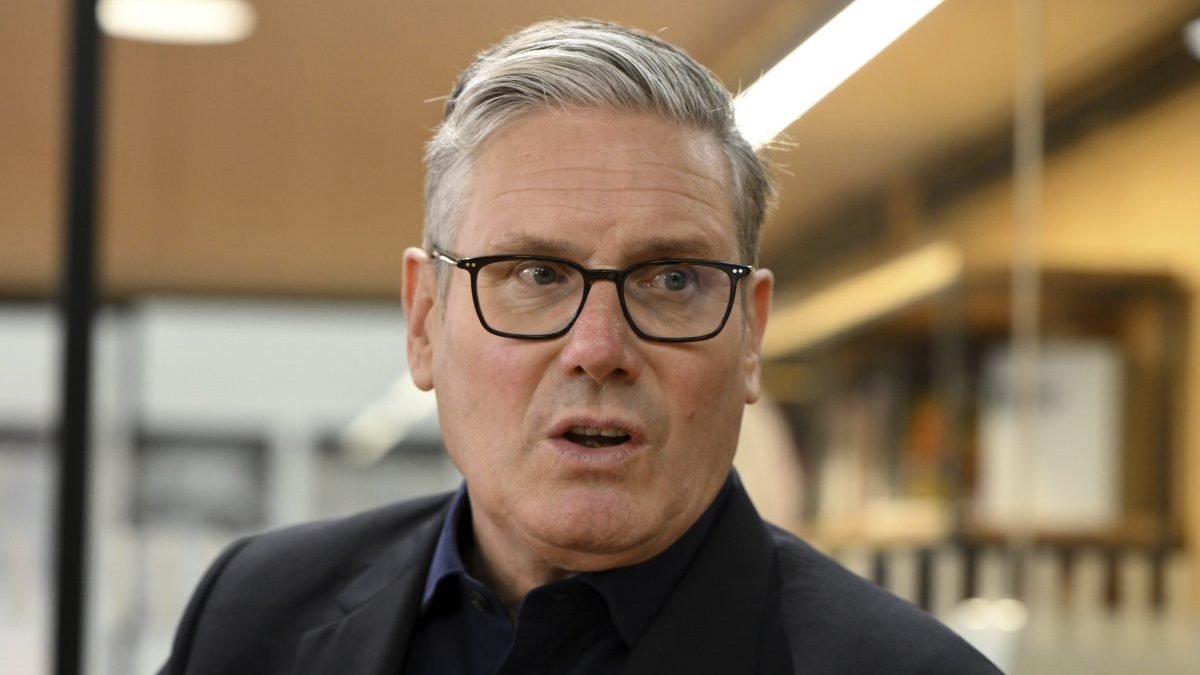
Asked about the NIESR analysis during a visit to Milton Keynes on Wednesday, the Prime Minister said: “Some of the figures that are being put out are not figures that I recognise.”
Downing St committed to manifesto pledges
Taking a question about whether the Government would put up these taxes, the Prime Minister said: “In the autumn, we’ll get the full forecast and obviously set out our Budget.
“The focus will be living standards, so that we will build on what we’ve done in the first year of this Government.
“We’ve stabilised the economy. That means interest rates have been cut now four times.
“For anybody watching this on a mortgage – that makes a huge difference on a monthly basis to how much they pay.”
Downing Street sources later sought to clarify that Labour remains committed to its manifesto pledges, which included a promise not to raise taxes on “working people”, including income tax and VAT.
The rates at which people start paying the basic, higher, and additional rates of tax were frozen under the previous Conservative government in 2022, but the freeze is set to expire in 2028.
It means that as wages grow more people are pulled into paying higher rates of tax despite the cost of living also increasing.
The cost to workers of freezing thresholds
If the freeze were to be extended by two years, someone earning a roughly average salary of around £30,000 could end up paying an extra £106 in income tax and national insurance in 2028-29 and an extra £214 in 2029-30, calculations from wealth manager Quilter show.
Someone on £60,000 would pay an extra £317 in 2028-29 and an extra £643 the following tax year.
But a higher earner, on £150,000, would pay an extra £354 in 2028-29 and an extra £718 the following tax year.
Freezing thresholds has proven an attractive revenue raiser in the past because it nets large sums but is less visible than increasing headline tax rates.
Chris Martin, an economics professor at University of Bath, said he thought it was inevitable that Reeves would resort to the measure this autumn.
He said: “NIESR is at the more pessimistic end with a hole of £40-50bn: others think it might be £20-30bn. Nobody really knows.
“Whatever the figure, I think it is 100 per cent certain that income tax thresholds will be frozen beyond 2028.”
Martin also said that Reeves could put up council tax for more expensive properties – although the Government has denied it is considering an overhaul of council tax bands.
He said: “If the Chancellor keeps to her promise not to increase the headline rates, my money would be on an increase in council tax for higher value properties. That would be politically less unpopular than the alternatives. And it is the most practical form of wealth tax since it is hard to dodge and easy to collect.”
Freezing thresholds ‘won’t be enough’
Michael Saunders, a former Bank of England rate-setter, also said that Reeves would have to increase taxes in the Budget. “Freezing the income tax thresholds is an obvious place to start but won’t be enough,” he said.
And Rob Wood, chief UK economist at Pantheon Macroeconomics, said: “We expect Ms Reeves to extend the freeze on tax thresholds.”
It comes as former Prime Minister Gordon Brown backed calls for a tax on gambling to fund an end to the two-child benefit cap.
A report from the Institute for Public Police Research (IPPR) suggested taxes on gambling, especially online casinos, slot machines, and high-stakes betting, could raise £3.2bn and help lift half-a-million children out of poverty by being used to end the benefit cap.
Brown, also a former Labour chancellor, said: “There are many reasons why the highly profitable betting and gaming industry should pay a fairer share towards the cost of UK’s unmet needs. Most important is that it would enable half a million children to be lifted out of poverty in this autumn’s budget, and so help to build our country for the next generation.”
A Treasury spokesman said: “The OBR [Office of Budget Responsibility] will publish an updated medium-term forecast alongside the Autumn Budget – we will not speculate on their forecast.
“As set out in the Plan for Change, the best way to strengthen public finances is by growing the economy – which is our focus. Thanks to our planning reforms, the OBR has said that the economy is expected to grow by the end of the decade.”