Unlock the Editor’s Digest for free
Roula Khalaf, Editor of the FT, selects her favourite stories in this weekly newsletter.
Senior Labour figures believe a rise in income taxes in the Budget this month can be justified as being “in the spirit” of the party’s manifesto if accompanied by a simultaneous cut in national insurance, despite fears from some MPs about a backlash from voters.
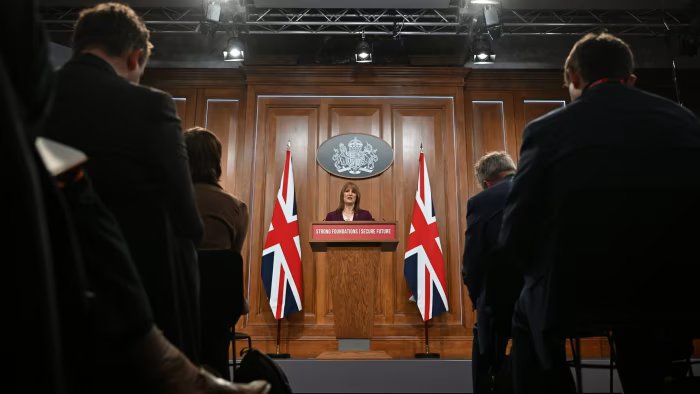
Chancellor Rachel Reeves made an unusual pre-Budget intervention on Tuesday with a speech in which she warned the general public about a deterioration in the public finances and the need to make tough decisions on November 26.
She put the country on notice for major tax rises in the Budget, saying “we will all have to contribute” to building a new future for Britain.
The chancellor needs to fill a hole in the public finances estimated at £20bn-£30bn after a downgrade in productivity forecasts by the Office for Budget Responsibility.
Reeves has been mulling a rise in income tax for weeks despite the potential political fallout. The Treasury has not denied a report in the Times that she has informed the OBR that it is one of the “major measures” she is preparing to announce at the fiscal event.
She has also been considering implementing a simultaneous 2p rise in income tax across all the bands and a 2p cut in national insurance, which would raise £6bn from the income of non-workers such as landlords and pensioners who pay the former levy and not the latter.
Reeves faces a major political backlash if she breaches Labour’s manifesto, which explicitly promised: “Labour will not increase taxes on working people, which is why we will not increase national insurance, the basic, higher or additional rates of income tax, or VAT.”
Lucy Powell, deputy Labour leader, raised the stakes on Thursday by telling the BBC there was “no question” the party had to stick to the manifesto pledges as “trust in politics was essential”.
But one cabinet minister said raising income tax was the fairest option being considered by the government, adding: “It’s the least bad of a bunch of bad options, there is no good option.”
One Labour aide said that the “switch” option under which income tax would rise but NICs fall would technically breach the manifesto but was “in the spirit of the manifesto” because it would mean working people would pay the same amount of tax on their income.
“It’s self-evident that the switch would be easier to defend from the perspective of whether it will hit working people, because by definition it would be neutral for people working,” said one Treasury figure.
However Reeves is considering limiting the NICs cut to the main rate of the levy, which applies to earnings up to £50,270. This would mean that earnings above that level, which are subject to a different rate, would not receive a deduction.
If this were combined with 2p increases to the basic, higher and additional income tax rates, bringing them to 22p, 42p and 47p in the pound, the yield would reach around £11bn a year, according to Adam Corlett of the Resolution Foundation think-tank.
The total haul would grow to around £20bn if combined with a two-year extension to the freeze on personal tax thresholds that was introduced by the Tories, coupled with tweaks to dividend taxation, he added.
That would provoke a fresh debate over why Labour did not consider high earners to be “working people”, a phrase that the party has sometimes struggled to define.
One Labour MP said putting up income tax and cutting NICs would still mean an obvious manifesto break. “We should not try to do that,” they said.
Another said: “You can claim you have not broken the manifesto. But it will not wash with the ordinary voter. There is an almost emotional impact of taxes going up.”
But many Labour MPs now believe that the party needs to embrace the idea of higher taxes in order to maintain strong public services.
Andy McDonald, MP for Middlesbrough and Thornaby East who is on the left of the party, said: “People are crying out to feel changes in their lives, and I think that trumps the need to stick to every letter of your manifesto.”
A Treasury spokesperson said: “We do not comment on speculation around changes to tax outside of fiscal events.”