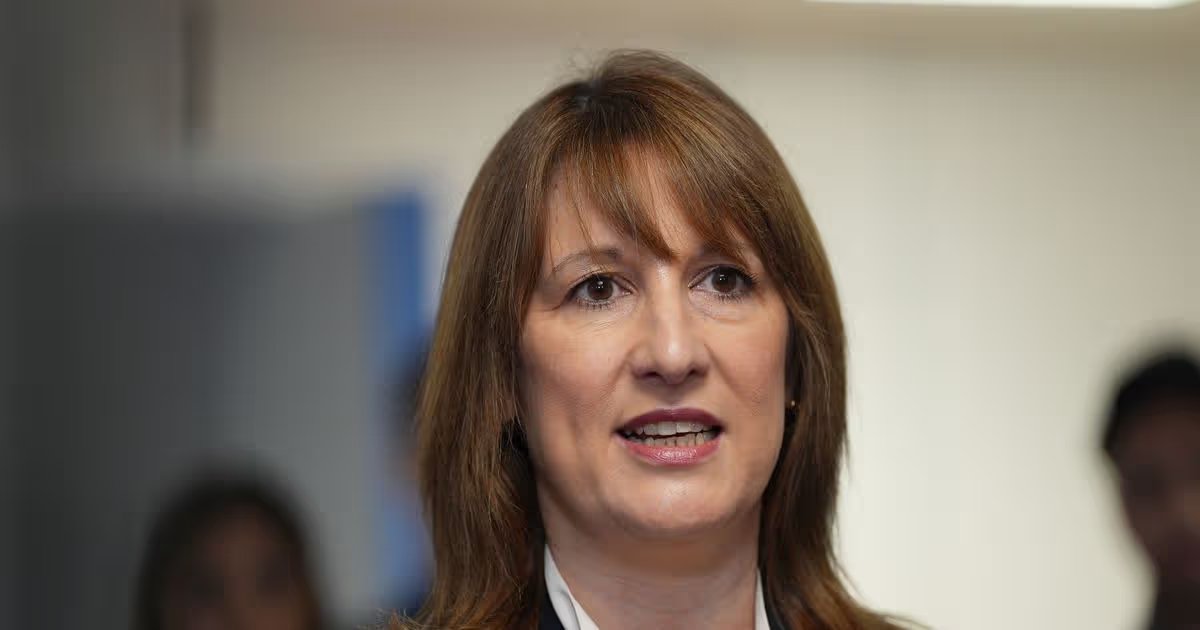
A massive surge of support for for the personal income tax allowance to rise from £12,570 to £20,000 is putting pressure on Chancellor Rachel Reeves ahead of the spring statement

(Image: PA)
A campaign calling for a rise in the income tax threshold has hit a major milestone, with increasing pressure on Chancellor Rachel Reeves to revise the personal tax allowance limit for the lowest-paid workers in the spring statement on March 3.
Concerns are growing that millions more individuals, many amongst the nation’s lowest earners, have been caught by the tax system through ‘fiscal drag’. This stems from the lowest income tax threshold remaining frozen at £12,570 since 2021, whilst inflation, which impacts wages, has been soaring.
This means that some of the poorest workers face taxation as soon as their pay surpasses that amount – and because it has stayed static, inflation and pay rises mean that millions more are subject to tax than would have been the situation if it had increased as normal.
A petition on the Parliament website urging the government to increase this figure has attracted 76,000 signatures, meaning the Treasury will be obliged to respond. If it reaches 100,000 signatures, a debate could take place in Parliament, heaping additional pressure on Ms Reeves to introduce changes in the November Budget. But people need to sign up soon to get over the threshold – just 3 days remain until it closes on February 28.
The petition, launched by Shannon Keene, states: “Raise the income tax personal allowance from £12,570 to £20,000. This would help with increasing rent, mortgages, Council tax, and Gas and Electric bills. Some families can’t afford to go back to work after children due to childcare costs wiping out their whole income!
“We think that we are currently paying ridiculous amounts of tax, and that minimum wage isn’t even enough to support an average family. We believe that this would lead to a massive increase in people willing to look for work, instead of people not wanting to, due to it being too expensive to live now.”
The matter has generated multiple petitions, demonstrating the widespread public feeling nationwide. Earlier this year, one petition demanding the threshold be lifted to £20,000 gathered an impressive 281,792 signatures on the Parliament website before it stopped accepting additional supporters during the summer.
This triggered a Parliamentary debate where the Treasury calculated the cost at £50 billion. Underlining the scale of public anxiety, a fresh petition has been established calling for the income tax personal allowance to rise from £12,570 to £20,000.
The earlier petition’s position as one of the biggest ever documented on the parliament website was viewed by campaigners as proof of substantial public feeling on this matter. Currently, a basic tax rate of 20 per cent is applied to earnings above £12,570, whilst those earning more face a 40 per cent rate on income over £50,270 – both thresholds have remained frozen since 2021.
The dispute revolves around ‘fiscal drag’, a phenomenon that occurs due to the personal income tax allowance remaining frozen at £12,570 since 2021. During a Westminster Hall debate in the House of Commons earlier this year, Liberal Democrat Daisy Cooper emphasised the overwhelming public backing as capturing the nation’s sentiment: “The number of people who have signed it speaks to the strength of public feeling about this issue, which is a serious policy challenge for all political parties. Indeed, I think the petition does more than show the strength of feeling that exists.
“I regard it as a cry for help, because right around the country there are struggling families gripped by a cost-of-living crisis. We have a toxic combination that means that people are seeing their taxes go up but not seeing services improve. It is leading to that cry for help.”
James Murray, Exchequer Secretary to the Treasury, has warned that raising the tax threshold to £20,000 would create a substantial financial burden.
He declared: “I recognise the views of everyone who has put their name to the petition, and let me be clear that, as a Government, we want taxes on working people and on pensioners, who have worked hard all their lives, to be as low as possible.
“We were elected to put more money in people’s pockets and, crucially, we were elected to do so in a fiscally responsible way. That is a critical point to understand.
“We aim to keep taxes on working people and pensioners as low as possible, but if we were to heed the calls of some Opposition parties and abandon fiscal responsibility, it would lead to economic chaos and the collapse of public services, and that would harm working people and pensioners the most.
“Raising the personal allowance to £20,000 would cost more than £50 billion. That is more than the £45 billion of unfunded tax cuts announced by Liz Truss in her disastrous mini-Budget.”
The debate can be viewed here.
To see and back the petition, click here.