A top DWP minister said the current tax system has caused confusion

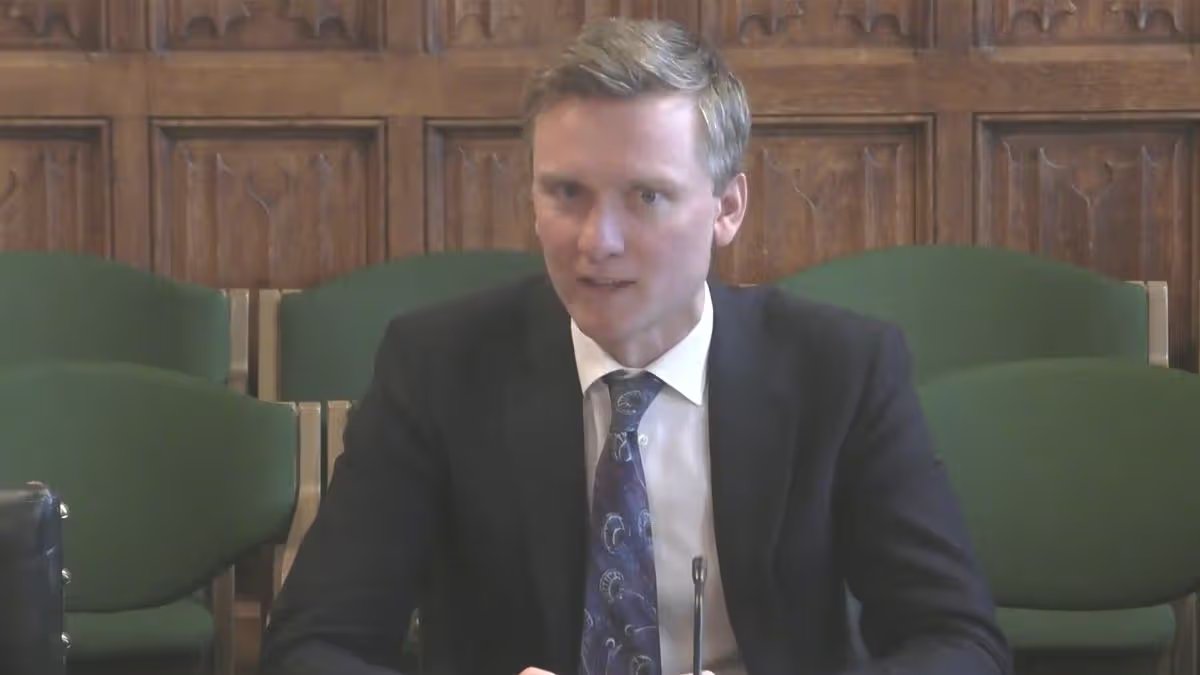
DWP minister Torsten Bell speaking to MPs(Image: UK Parliament)
A high-ranking DWP minister has discussed a major new tax on pensions. Torsten Bell recently addressed the Work and Pensions Committee regarding changes to the state pension age. The state pension age will rise from the current 66 to 67, incrementally increasing between April 2026 and April 2028.
Legislation has also been passed for the access age to climb once more, from 67 to 68, between 2044 and 2046. Mr Bell discussed the impact of making people wait longer to claim their state pension, as well as the Government’s rationale behind these decisions. He was also questioned about a major shift in pension tax, as inheritance tax will soon encompass pensions. Inheritance tax is a 40 percent levy applied to the total assets you pass on when you die. Pensions are currently not deemed part of your estate for inheritance tax purposes, but from April 2027 they will fall under the tax’s remit.
Labour announced this tax change in its inaugural Autumn Budget, in 2024. Mr Bell set out the reasoning behind the change: “There is a long-standing understanding that the purpose of pensions, and why we provide exceptionally generous tax relief – which we rightly do, of about £70 billion a year – is because we want people to have a decent income in retirement.
“That is what it is for. That is what it was always for.” He argued that exempting pensions from inheritance tax means people were encouraged to use their pensions “not to provide a decent income into retirement but to avoid inheritance tax”.
A very bad idea
Mr Bell said: “That is a very bad idea, because you do not want to see pension vehicles and how they operate getting confused about what the purpose is. We saw that causing real problems and confusion.
“Obviously it needs to be done in the right way. All that the changes are doing is bringing us back to the world that we have always lived in.”
The minister went on to clarify that the tax incentives to encourage people to build their pensions are ultimately designed to ensure people can “smooth their income over their life”. He told the committee: “That is what it exists for.
“It is not there for for advisers to make money by saying to some people, ‘Don’t use your pension to provide an income in retirement. Use all your other wealth, maybe even sell your house, and do other things in a contorted fashion, because for some reason we have decided that a pension is not about providing income in retirement but is an inheritance tax avoidance vehicle.’ “
People may not realise
The Government previously said that the expanded tax will apply to most unused pension funds and death benefits. Chartered financial planner Alex Pugh, from wealth firm Saltus, described this as a massive shift and warned there’s a danger that families may not recognise it affects them.
She said: “Inheritance tax planning is already complex, but bringing pensions into the tax calculation from April 2027 really shifts the dial. Many people will drift into the tax net without realising it.
“After property, pensions are often someone’s largest asset, and with tax thresholds frozen since 2009, more estates are being pushed over the line. In truth, any individual or couple could now be affected – even those who never considered themselves ‘wealthy’. It’s a perfect storm created by rising asset values and outdated tax limits.”