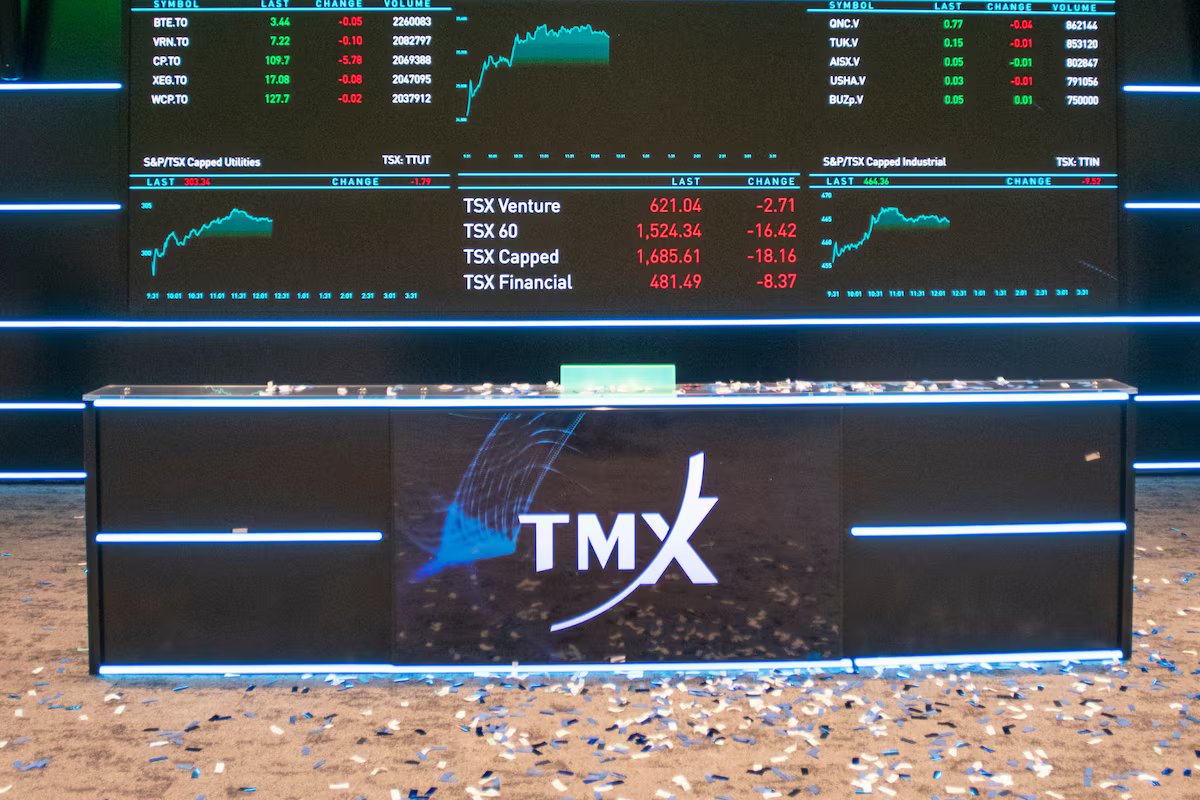
Aspiring equity marketplace CIX Trading Inc. wants to bring extended stock trading hours to Canada, but the Toronto Stock Exchange says the upstart plan poses a potential threat to the stability and integrity of the country’s capital markets.
In a letter submitted to the Ontario Securities Commission last month, TMX Group Ltd. X-T, parent company of the TSX and TSX Venture Exchange, warned of “profoundly disruptive consequences” if CIX is cleared to start offering new features such as extended hours and fractional trading later this year.
Permitting CIX to begin operating an alternative trading system (ATS), TMX said, would “allow a single market entrant to trigger de facto market structural changes across the entire ecosystem.”
“Any implementation of such fundamental changes must be preceded by a commercially reasonable lead time to mitigate systemic risk and ensure the operational readiness of all stakeholders,” the letter said. “Failure to do so may have profoundly disruptive consequences for the stability and integrity of the Canadian capital markets.”
CIX, led by TMX veteran Jeff Foster, wants to execute trades of Canadian stocks from 7 a.m. ET through to 8 p.m. ET, instead of the current trading day that starts at 9:30 a.m. ET and ends at 4 p.m. ET. It would also make it possible for investors to buy fractions of a share, meaning if someone wants to spend exactly $500 on a stock that is priced at $80 a share, CIX would facilitate the sale of exactly 6.25 shares.
Competition intensifies among stock trading platforms
The company’s application is in the final stages of regulatory review and Mr. Foster is expecting to receive approval to begin operations within the next three to four months.
Introducing extended hours and fractional trading to Canadian-listed equities would bring this country in line with several other markets around the world, particularly in the United States.
Many financial institutions, including Canada’s largest banks, are supportive of the CIX proposal. Several, however, also back the more co-ordinated and less ad hoc approach that the TMX considers necessary to maintain market stability.
In an interview, Mr. Foster said TMX was employing scare tactics in the hopes of buying itself more time to build out new features to compete with CIX.
“It is delay, delay, delay and fearmongering,” Mr. Foster said. “This speaks to just how far away they are from being able to do the same things we can do today, because they will have to go through a bunch of re-platforming.”
“They know they can’t do it anytime soon, so they are trying a bit of shock and awe to push for delays that are just unreasonable,” he said.
Tradelogiq looking to buy Cboe Canada in rival bid to Canadian Securities Exchange
TMX chief executive officer John McKenzie challenged that characterization of his company’s submission to the OSC.
“We could turn the market on until 8 o’clock or 12 o’clock or whatever you want tomorrow, but I would have an industry yelling at us for doing that,” he said. “The heart of our response is that the rules of the game need to be thoughtful of industry impacts across the board.”
“I am not commenting on their business plan. I am really focused on what is the best thing for the market structure,” Mr. McKenzie said.
While the vast majority of Canadian stocks are listed on the TSX or the TSX-V, there are a total of 18 different marketplaces owned by five separate companies where those securities can be traded. According to data from the Canadian Investment Regulatory Organization, TMX-owned marketplaces typically handle less than half of Canadian equity trading volume.
The rest is handled by ATS platforms similar to what CIX plans to launch, where small price differences between marketplaces dictate where brokers will execute a trade in hopes of getting their clients the best possible price. Having the most attractive price for any given security at any given time among all 18 marketplaces – and when CIX launches its three new venues that figure will rise to 21 – is referred to as being “top of book.”
None of the existing platforms have imminent plans to offer the extended hours or fractional trading that will be key features of the platform CIX has built. That would create an environment where certain trading activities – or even all trading, depending on the time of day – would only be possible on three out of 21 venues.
Canadian Securities Exchange eyes acquisition of CBOE Canada to consolidate smaller stock exchanges
Such a seismic shift in the way Canadian capital markets operate must be harmonized across all venues, Mr. McKenzie said.
Allowing CIX to be the sole platform offering such core market functions “would be very much like years ago when we moved from trading in eights to nickels to pennies,” Mr. McKenzie said in an interview. “If you just did that in one venue, that would be irresponsible. You need to do that across the board.”
TMX is urging the OSC to conduct a “rigorous cost-benefit analysis and multistakeholder consultation” before granting CIX operational approval, though Mr. McKenzie added CIX could “choose to launch sooner without the functionalities that disrupt how the market operates and then bring them in later.”
CIX poses no threat to the overall market structure, Mr. Foster responded, as the platform will be unprotected when it begins operations. Being unprotected means brokers are not obliged to execute any trades on that platform even if the price offered there is top of book. Trading platforms must have a minimum of 2.5-per-cent market share in order to achieve protected status.
“They are talking about all these systemic risks, but it is actually the opposite where people have to really believe in us to send us their trade orders,” Mr. Foster said. “It is going to cost them money and time and effort to connect to us and trade with us.”
Mr. McKenzie said being unprotected actually makes the problem worse.
“That means you do not have broad connectivity to a marketplace that is trading in a period of time where companies are releasing information,” he said, referring to CIX’s extended hours features. “You actually have more market integrity issues in that model than otherwise.”
2023: Overnight trading technology could one day mean the trading day never ends
TMX is not the only one taking issue with CIX. The Canadian Securities Exchange, in its own letter to the OSC, said the new platform’s fractional trading feature is “the most problematic aspect” of the proposal, arguing fractions of a share are more akin to a derivative than a security and that clear guidance on the definition of the product needs to be provided.
Despite the opposition, Mr. Foster remains confident. Of the 18 organizations that responded to the OSC’s request for comment on CIX’s proposal, Mr. Foster said the vast majority were strongly supportive.
“We recognize that the Canadian capital markets have, in certain respects, lagged behind global innovations,” online brokerage Wealthsimple said in its letter. “We commend CIX’s intention to offer new features that attempt to close this innovation gap.”
Toronto-Dominion Bank’s letter called fractional trading and extended hours “a positive advancement for Canada’s equity market structure, offering justifiable benefits for industry investment with minimal controversy if implemented thoughtfully.”
Letters from Royal Bank of Canada and Bank of Montreal both said they were “supportive” of the CIX proposal. Bank of Nova Scotia said “CIX’s efforts to evolve Canadian equity markets is a refreshing departure from typical imitative marketplace proposals,” though its letter also echoed TMX’s concerns, citing the need for “additional industry-wide adaptation” and recommending CIX operations “be phased to ensure that the launch is not unnecessarily disruptive.”
Mr. McKenzie said his goal is not to delay CIX, but to ensure innovation is done “in a way that supports actual benefit to the industry, not just to do it because you can.”
“Our responsibility is running reputable markets with high availability and reliability,” he said. “Market structure changes should not be driven by applications for marketplace number 21 that hasn’t done anything yet.”