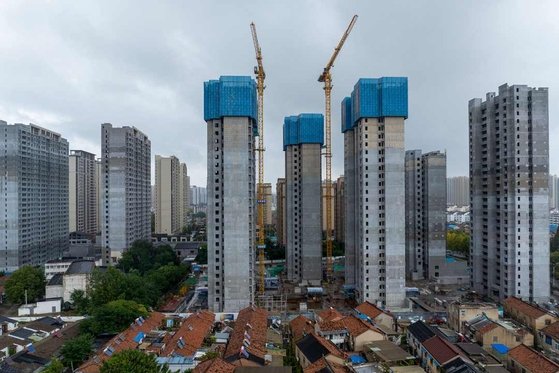
China’s Ministry of Housing has announced plans to renovate one million homes and extend lending to certain property projects as part of efforts to revive its flagging real estate sector. The initiative targets urban villages, known for poor-quality and high-density housing, and outdated residential properties. Residents in these areas will largely receive monetary compensation. The whitelist policy, introduced earlier this year, is aimed at completing unfinished developments by expanding project eligibility and increasing bank lending, which is expected to reach 4 trillion yuan by year’s end [para. 1][para. 2][para. 3].
The housing market’s ongoing depression has prompted the government to introduce several supportive measures. China’s central bank recently cut mortgage rates, reduced down payment ratios, and strengthened its 300 billion yuan loan scheme to convert unsold homes into affordable housing, preceding an economic policy meeting that urged greater loan support and land revitalization [para. 5][para. 6].
Following these policy implementations, key real estate indicators have started to show signs of improvement. There has been an uptick in viewings, visits, and contracts for new homes, as well as higher transaction volumes for second-hand homes. Ni highlights a pending renovation need for 1.7 million housing units in urban villages and 500,000 dilapidated homes. This renewal program aims to eliminate safety risks while incentivizing homeowners to purchase existing properties with their compensation [para. 7][para. 8][para. 9].
Drawing parallels with a similar program from the 2010s that boosted housing demand in lower-tier cities, the current renewal initiative also aims to spark demand where the downturn has hit hardest. The initiative will be funded through policy bank loans, special-purpose bonds, and commercial lending aligning with proper project evaluations. Tax and fee relaxations will support the projects, which must remain financially viable to avoid adding to local government debts [para. 10][para. 11].
The Ministry of Finance has also enabled local governments to support the initiative by purchasing land and housing using special bond proceeds. Initially, within a month of the whitelist policy’s introduction, authorities in 170 cities had identified over 3,200 projects qualified for funding, resulting in significant bank lending—up to 1.43 trillion yuan by September, which has since increased to 2.23 trillion yuan [para. 12][para. 13][para. 14].
AI generated, for reference only