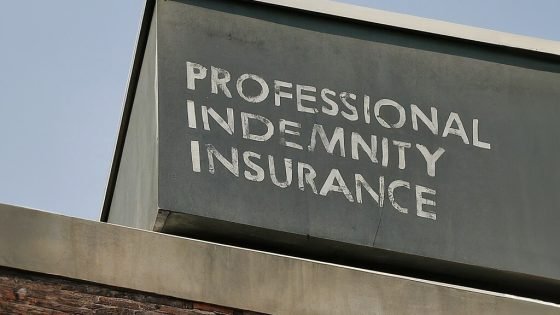
The mutual insurance company said that it had to make the ‘difficult decision’ to issue a supplementary call for cash on top of the annual premiums to ‘protect the long-term success of the mutual and enable it to continue supporting its members’.
Wren’s 64 architectural practice members include Allford Hall Monaghan Morris, BDP, Make, Ryder and WilkinsonEyre. Together, they co-own the non-profit organisation and contribute funds to cover claims and operating costs.
A mutual insurance fund of this kind may put additional funding ‘calls’ – a legally binding commitment to its members – if annual premiums fail to meet costs.
It is unknown how much each practice will have to pay in supplemental payments.
The Grenfell Tower fire in 2017 threw a spotlight on potentially unsafe cladding, leading to massive professional indemnity insurance (PII) claims from architects and payouts from insurers. Wren said that it had had a ‘large number of cladding-related notifications since the tragedy’, primarily relating to works carried out before 2019.
As of the end of September, there are 2,864 buildings with unsafe cladding where remediation work has not started, representing 52 per cent of all the buildings identified as needing remediation in the Building Safety Regulator’s most recent progress report.
The cost of PII cover has skyrocketed in recent years, with some practices struggling to keep on top of payments. Earlier this year, Michael Hyde & Associates went into voluntary liquidation, blaming PII costs owed to insurance brokers as the main reason for its financial collapse.
Wren told the AJ: ‘While acknowledging that a supplementary call was not welcomed by members, it was a necessary step to ensure the long-term success of Wren as a mutual provider of professional indemnity insurance for architects.’
In its 2024 financial report, Wren noted that it ‘continued to be impacted by the events of the Grenfell Tower disaster’ while posting a surplus of £900,000 and capital reserves of £29.5 million. It said that a number of cladding claims had ‘the potential to develop into significant claims against the association’.
At that time, Wren had 74 members, 10 more than are currently listed on its website.
In August, the AJ reported the emergence of a new PII insurance body, the Architects Insurance Scheme, a new mutual society being set up by Prospect Mutual Management and Sanctuary Insurance Brokers, which aims to offer reduced premiums to small and medium practices.
Prospect head of mutual management Rikul Patel said hundreds of design firms were looking at the scheme, which is in its infancy but could evolve into a mutual within two years.
Legal experts warned earlier this year that a Supreme Court ruling, which interpreted important elements of legislation, including the Building Safety Act 2022, increased the need for practices to hold ‘comprehensive’ professional indemnity insurance.
Statement from Wren Insurance Association
The Wren Insurance Association Limited is a mutual insurer of professional indemnity insurance for architects, owned by and for the benefit of its members. It is committed to providing its members with cost-effective and appropriate cover, aligned to their contractual liabilities over the long term and, in addition, providing support on effective risk management.
Since the Grenfell tragedy in 2017, architects across the UK have been subject to a high number of claims in relation to cladding and fire risk, and this led to their professional indemnity insurers having to restrict or withdraw cover.
However, Wren continued to provide cover to its members for cladding claims that was not available in the commercial professional indemnity market at the time.
Wren has received a large number of cladding-related notifications since the tragedy (primarily relating to works carried out prior to 2019) and, in order to protect the long-term success of the mutual and enable it to continue supporting its members, has made the difficult decision to make a supplementary call.
While acknowledging that a supplementary call was not welcomed by members, it was a necessary step to ensure the long-term success of Wren as a mutual provider of professional indemnity insurance for architects.
Wren remains committed to providing its Members with the highest level of service.