Key Takeaways
- Gross profits insurance covers lost profits after an insurable event like property damage.
- The policy helps businesses rebuild, covering losses for up to three years.
- Coverage may not apply if the event wasn’t the proximate cause of the loss.
- Defining gross profit for insurance can vary among accountants and affect coverage.
- Gross earnings insurance, common in the U.S., is generally less expensive but offers narrower coverage.
What Is Gross Profits Insurance?
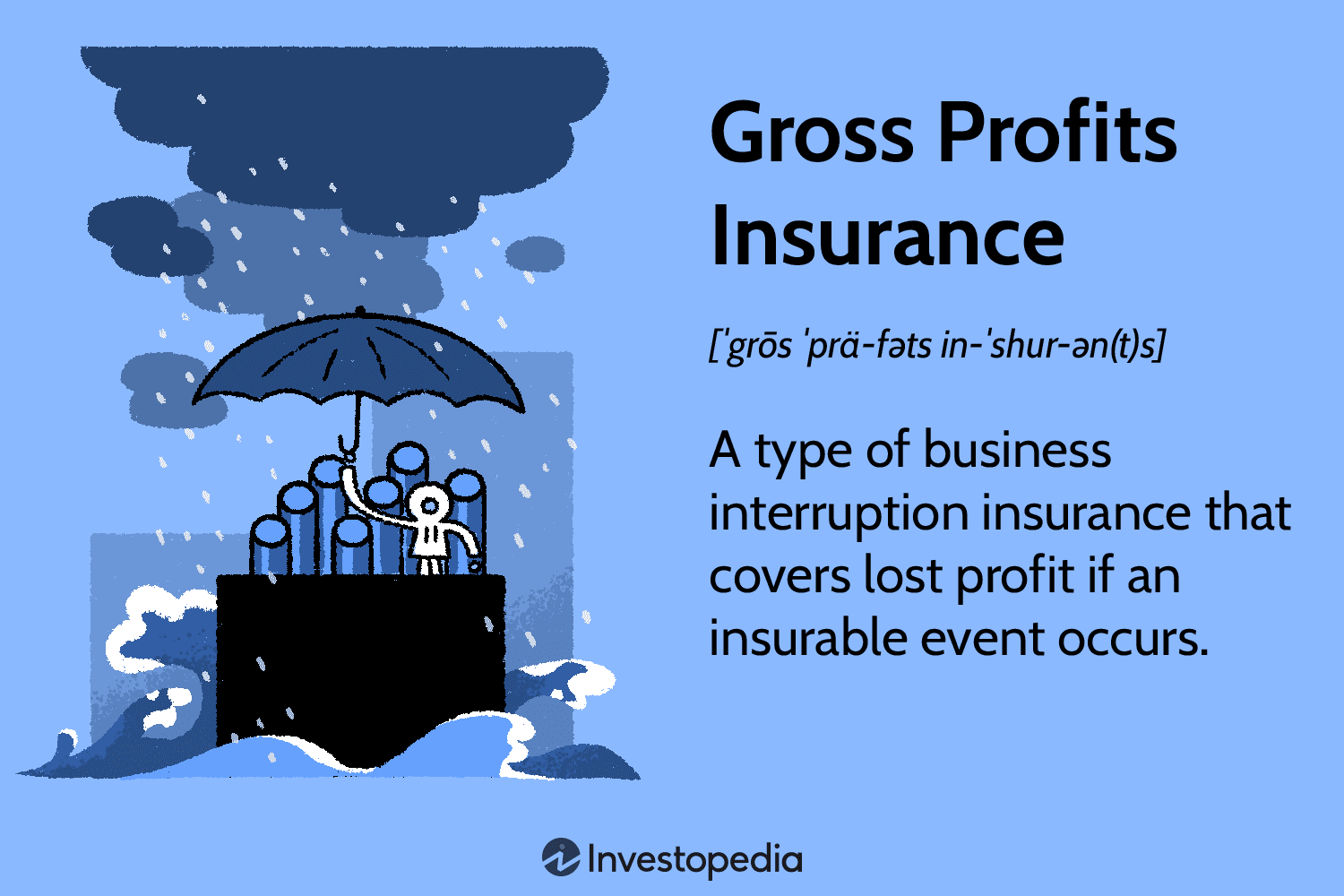
Gross profits insurance covers lost profits when events like property damage disrupt a business, and it’s most common in the U.K. and Canada. Unlike U.S. gross earnings insurance, it covers the entire rebuilding period, often up to three years. Its challenges and differences become clearer when compared with gross earnings coverage.
How Gross Profits Insurance Protects Your Business
Gross profit is calculated as turnover minus purchases and variable costs. The loss formula looks at turnover over a specific period of time—such as 12 months—though extenuating circumstances that affect turnover during the examination period may need to be smoothed out.
As mentioned above, gross profit insurance is commonly used in both Canada and the United Kingdom. It is a type of business interruption insurance—insurance that replaces lost income because of a disaster—designed to bring the insured back to where it would have been financially assuming the insurable event had not occurred. Insurance events include things like fires or natural disasters. The amount of loss a business experiences is calculated based on a pre-defined formula and typically relies on historical rates of turnover to determine the amount a business is losing.
Policy coverage extends through the period of time in which the insured rebuilds or repairs its business property. The policy covers losses that the business experiences while not being able to function as it normally would have, though a pre-defined indemnification period is usually set at a maximum of three years. If the business still rebuilds at this point, any losses fall outside of the indemnification period and thus, are no longer covered.
Important Factors in Gross Profits Insurance Coverage
Gross profit insurance coverage does not apply in all situations. In most cases, proximate cause is used to determine whether or not an event caused the insured party to experience a loss. The policy covers the increased costs of working, which are additional expenses incurred in order to keep sales from falling. The policy also covers the loss of any finished goods that could have been sold had they not been damaged.
Navigating the Complexities of Gross Profit Insurance
One of the primary difficulties in establishing coverage levels for gross profits insurance is defining what constitutes gross profit, as standards can vary among accountants and business people. Turnover, work-in-progress (WIP), and opening and closing stock are easily determined in accordance with normal accountancy methods. Meanwhile, uninsured working expenses refer to costs—sometimes called specified working expenses—which vary in direct proportion to turnover. So, if turnover is reduced by 30%, the costs will also be reduced by 30%. An accountant’s gross profit calculation will subtract any cost that varies in proportion to production—for insurance purposes, they must vary in direct proportion. This is a key distinction and the source of much underinsurance.
Important
Defining what constitutes gross profit can be challenging as standards vary among accountants and business people.
Comparing Gross Profits and Gross Earnings Insurance
Gross earnings insurance, commonly used in the United States, is another form of business interruption insurance coverage. But there are key differences between this kind of coverage and gross profits insurance. Gross earnings are the total amount of sales or revenue, minus the cost of goods sold (COGS). This kind of insurance covers a reduction in the insured party’s gross earnings stemming from direct damage loss.
Unlike gross profits insurance, gross earnings insurance is generally less costly for the insured. Because gross profits insurance has broader coverage, premiums are higher. Premiums for gross earnings insurance, on the other hand, are cheaper because the coverage is less comprehensive.
The Bottom Line
Gross profits insurance covers lost profits during business interruptions in the U.K. and Canada, usually for up to three years or until operations resume.
Payments are based on prior turnover and may include extra working costs and lost finished goods, though defining gross profit can lead to underinsurance. Its broader protection often makes it more expensive than gross earnings insurance.