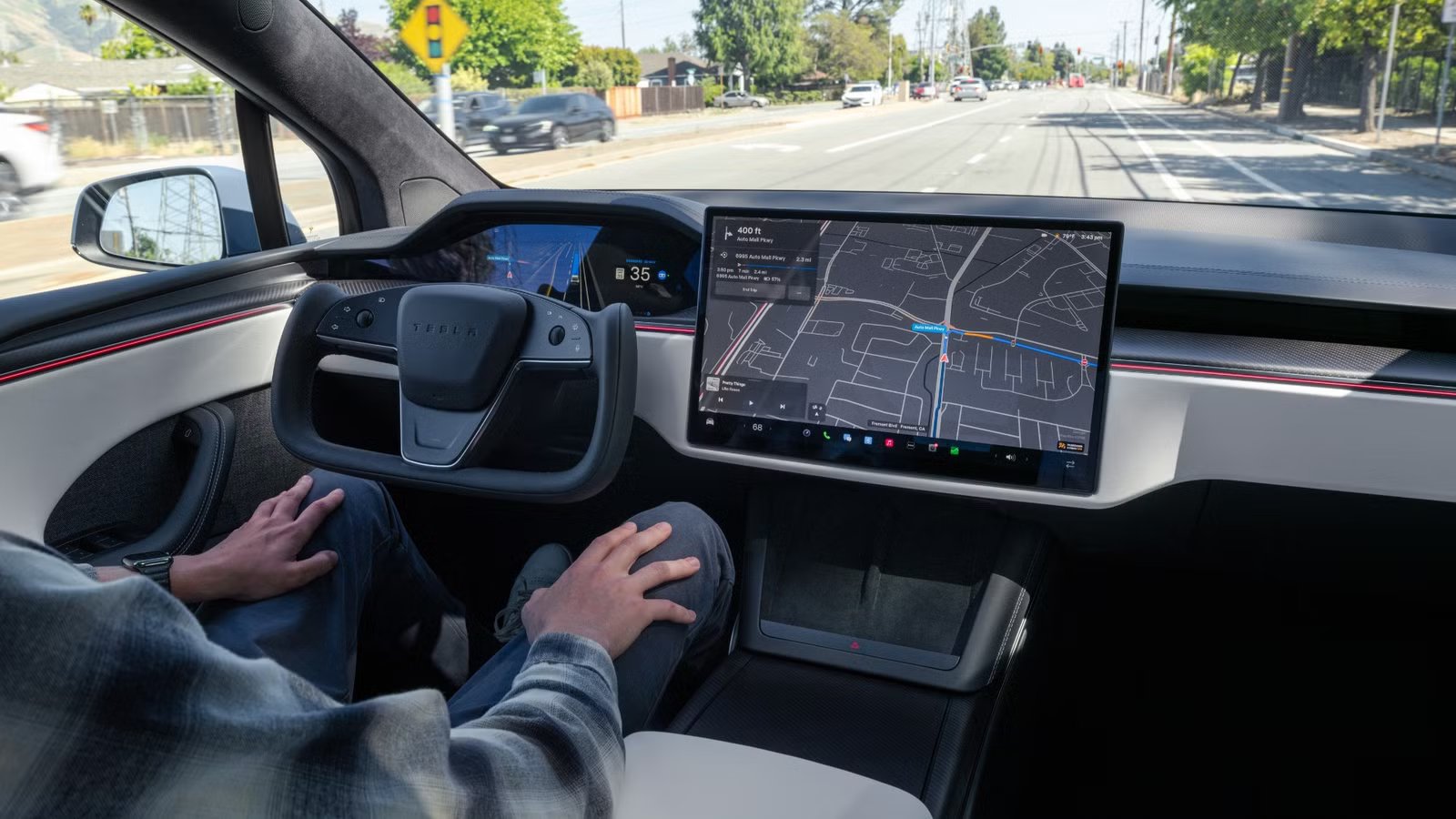
As the new age of autonomous driving arrives, there are still many questions from future consumers going unanswered. The folks who are new to researching autonomous vehicles (AV) still want to know if there’s a steering wheel, which we assure you there are. However, what has us intrigued is how in the world these vehicles will be insured. With providers tweaking metrics used to underwrite policies, to entirely new companies opening for business just to insure AVs, there are many moving parts to the AV insurance machine which we want to know more about.
From shifting the way individual policies are gauged and tracked to what companies are able to provide policies, the next 10 years will see a major shift in both the auto industry as a whole, and the way insurance companies operate. Understanding how these policies will work is a major step in protecting your rights as a consumer, as well as how to shop insurance policies for vehicles with high-level autonomous capabilities.

10 Ways Autonomous Cars Will Change the Commuting Experience
The arrival of autonomous cars will shape the way we live and work, from suburban sprawl to the job market.
Understanding Autonomous Vehicle Ratings

Autonomous Vehicle Levels
- Level 0: Driver is in complete control (i.e. no systems)
- Level 1: Driver has activated some systems (i.e. lane-keep assist)
- Level 2: Vehicle operating under driver’s supervision (i.e. using lane centering & adaptive cruise control in conjunction)
- Level 3: Vehicle is in complete control, might require driver to take control
- Levels 4 & 5: Vehicle is in complete control, no driver input required at all
Developed by the Society of Automotive Engineers, the levels of driving automation and the language used to describe capabilities became the standard jargon used by OEMs. New cars today come equipped with technology that aligns with Levels 0–2. These are features that allow the driver to quickly take full control over the vehicle or disable all systems, allowing the vehicle to operate autonomously. Features including lane-keep assist or radar cruise control require the driver to pay complete attention to the road and can be enabled or disabled by the driver.
Where things get interesting is with anything above Level 2, which defines these vehicles as able to operate completely autonomously with varying levels of driver intervention. A vehicle rated at Level 3 of autonomous driving will drive itself without any inputs required by the driver unless it cannot operate autonomously in certain conditions or areas.
Tesla Autopilot

Probably the most famous of the semi-autonomous technologies available in a new car, Tesla’s Autopilot system is rated at Level 2 of autonomous driving. Original claims by the company made it sound like it could be closer to Level 3, but since the manufacturer was required by California state legislature to refrain from its misleading nomenclature, Tesla changed the autonomous feature’s name to “Full Self-Driving (Supervised).” This feature still requires drivers to monitor the road ahead as the vehicle navigates through traffic using a series of cameras paired with infrastructure and obstruction recognition software.
Insuring an Autonomous Vehicle

Insuring vehicles up to Level 2 is no different than any other, but anything rated from Levels 3–5 requires new information not already used by insurance companies to determine premiums and rates. Underwriting is a practice which gauges a driver’s age, accident history, make and model of vehicle, and intended use of the vehicle to determine the cost of insurance and calculate rates.
When you operate a vehicle with Level 2 systems engaged, you are still considered in control of the vehicle and can be found liable for any damage caused in an accident by the vehicle. This is why the insurance underwriting doesn’t change for vehicles equipped with this technology.
If you’re driving in a vehicle which utilizes Level 3 capabilities, the vehicle is considered in complete control, meaning the driver won’t be held liable for any damage the vehicle causes. This means that Level 3 and up requires new parameters not readily available to an insurance company to determine the overall cost and gauge pricing for policyholders.
The metrics required for underwriting insurance on AVs are owned by the vehicle’s manufacturer. Data including timestamps of vehicle status, specific configurations of software, as well as override thresholds could all determine how the policy coverage works. Drivers would still be required to have some sort of traditional policy for when the vehicle relinquishes control in certain use cases.
Manufacturer—Provided Insurance

Since the information needed to determine fair insurance practices is owned by the manufacturers, some have already established insurance firms or created a separate arm to work with insurance providers for autonomous vehicles. Honda offers insurance through its subsidiary, Honda Insurance Solutions, in all 50 states. General Motors and Tesla currently offer insurance in-house in select states, but other manufacturers offering insurance currently partner with other providers.
Telemetries available to the manufacturers providing insurance directly to the consumer can use a slew of additional factors to calculate rates, including harsh braking or acceleration, driving at night, or driving long distances. Similar to Progressive’ Snapshot, an optional policy tool for drivers to earn discounts based on their driving, which can be plugged into any vehicle’s OBD-II port and track the same data. With manufacturer-provided insurance, it taps into the vehicle’s system automatically under the guise that you are aware of its monitoring.
In the future, it is more likely that manufacturers partnering with a handful of providers will pair down that list or start their own company to protect the proprietary data of their systems if they develop autonomous technology greater than Level 3.
Ride-Sharing Companies

It is worth mentioning that insurance for AVs operated by ride-sharing companies is slightly different than personal vehicles. Waymo, for instance, uses a fleet of modified Jaguar I-Pace crossovers, but since the technology driving the vehicles comes from a separate firm than the manufacturer, that company is responsible for insuring the vehicle. This is different than private cars for many reasons but is mainly due to the technology behind autonomous systems coming from the manufacturers themselves.

Waymo Trying Novel Strategy Of Training Humans To Interact With Driverless Vehicles
First responders can now become certified Waymo wranglers.
The Future of Autonomous Driving

Ford announced that Level 3 autonomous capabilities will be available in its cars in 2028. Stellantis dropped its Level 3 ambitions after dabbling with the technology, but beating out both was Mercedes-Benz in 2023 with its Drive Pilot system, though the system is currently paused for developmental reasons.
No legislation is currently active at the federal level discussing autonomous vehicle usage for both personal and commercial means, but states have individual guidelines and regulations. Currently moving through the US Senate is S. 1798 – Autonomous Vehicles Act of 2025 which was introduced by Republican Senator Cynthia Lummis of Wyoming in May 2025. The act is a framework which provides guidance on how to address changes in the technology powering AVs. The act also explicitly defines an autonomous vehicle as equipped with Level 4 or Level 5 autonomous capabilities.
A Good Number Of Questions Still Remain Unanswered
Between now and when manufacturers offer higher levels of capabilities, a few things will happen on both the insurance and legislative sides of the puzzle. Will companies relinquish vehicle data to outside firms? Will policies become more complicated to understand? Who will be at-fault in accidents? These are questions that are being answered every day as the conversations between automakers, insurance companies, and individual states continue to happen. As consumers, the types of ways insurance premiums will be determined for auto policies will change, stemming from data already communicable to companies (Snapshot), to more advance system telemetries needed to understand how accidents happen.
Sources: Tesla, General Motors, Honda, S&P Global, SAE International