What mark would you like to leave on the world after you’re gone?
It’s a question Dr Frances Rawle faced when deciding which charities to include in her Will.
After a long career in science, she knew the power of medical research to change lives. But she also knew no one can predict which health challenges will most need attention many decades from now.
Her solution? To leave a gift in her Will to the Medical Research Foundation, which adopts a flexible approach by not being restricted to a single medical condition.
Instead, its experts identify issues as they emerge before funding the research that is most likely to tackle them – creating the science that future generations will depend on.
‘By the time my donation reaches the Foundation, it’s impossible to know the biggest health challenges we’ll be facing – but I know it will be focused on areas with the greatest need when the time comes,’ Frances says.

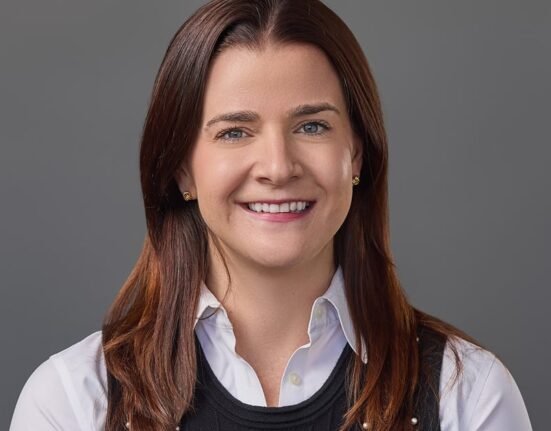
Dr Frances Rawle was Director of Policy, Ethics and Governance, responsible for governance and accountability for the MRC. She left a gift to the Medical Research Foundation in 2018
An independent charity formed by the Medical Research Council (MRC), the Medical Research Foundation focuses solely on funding the most effective medical research – and nothing else.
‘I always knew my children were feeling something’
One area of research funded by the Medical Research Foundation is exploring how babies experience pain – a crucial step towards transforming pain management in neonatal care.
It’s an issue that’s all too familiar for Abbie, who gave birth to identical twin girls prematurely at 27 weeks and five days, with each weighing about a pound.

For the next five months, they were in a neonatal intensive care unit, where they experienced major surgical procedures and a series of medical issues, including episodes of sepsis.
The pain severity scale, developed by Professor Lorenzo Fabrizi from UCL, ranks pain between 0-100, and recommends things parents and clinicians can do to mitigate how painful babies find each procedure.
‘The pain severity scale is incredible because it’s telling me what I already know – with the caveat of what we can do to help the pain,’ Abbie says. ‘Having access to a scale like this would have been empowering.’
Frances spent nearly three decades working at the MRC before retiring in 2021, so the Foundation was already close to her heart.
‘I’ve always been taken by the Foundation’s ability to focus purely on funding research, and especially in areas where there isn’t enough support,’ she says.
‘Rather than focusing on a specific disease or condition, the Foundation has been able to invest in research where it is needed most – whether that be eating disorders and self-harm, antimicrobial resistance, viral and autoimmune hepatitis or even COVID-19.’
The Medical Research Foundation depends on gifts in Wills for around 90 per cent of its spending, and receives no government support.
As well as targeting areas that are neglected and underfunded, the Foundation supports early-career scientists who often struggle to find the funding necessary to continue their important work.
Frances is well aware of how important this support can be.
‘Funding at this time can determine the area of research they end up in, and without it, they can be forced to leave science altogether,’ she says.
‘The Foundation awards funding during this critical period, helping them become leaders in their field, so they can push forward with their research for many years to come.’
One of the biggest challenges we face today is tackling the health impacts of climate change.

The Medical Research Foundation funds scientists such as Professor Lorenzo Fabrizi who are doing the research that future generations will depend on
This is one of the Foundation’s current research priorities, along with addressing neglected areas of mental health and improving the lives of children and young people.
No matter what health crises come next, Frances knows that her contribution – which she pledged in 2018 – will go some way to confronting them.
‘To others who might also be considering a gift in their Will to the Foundation, I would say think about what’s important to you and what you want your legacy to be after you’ve gone,’ she says.
‘If science or medical research has been one of those things, then the Foundation is an excellent home for your donation.’
For Frances, her gift ensures she’s leaving behind a healthier world – whatever challenges the future brings.
Are you ready to leave a legacy of medical research?
With a small bequest from your estate, you can fund research with the greatest potential impact, as chosen by scientific experts.
Including a gift in your Will to the Medical Research Foundation is simple and straightforward – yet it’s the most effective investment you can make in the health of future generations.
And thanks to the Foundation’s partnership with Octopus Legacy, you can write or update your Will for free.
To find out more and request your FREE guide to gifts in Will visit medicalresearchfoundation.org.uk/support-us/wills or call us on 020 4581 2404
![50 years from now, he could save a young life [file image]](https://i.dailymail.co.uk/1s/2025/09/02/12/101756275-15050419-image-a-20_1756811049883.jpg)
50 years from now, he could save a young life [file image]