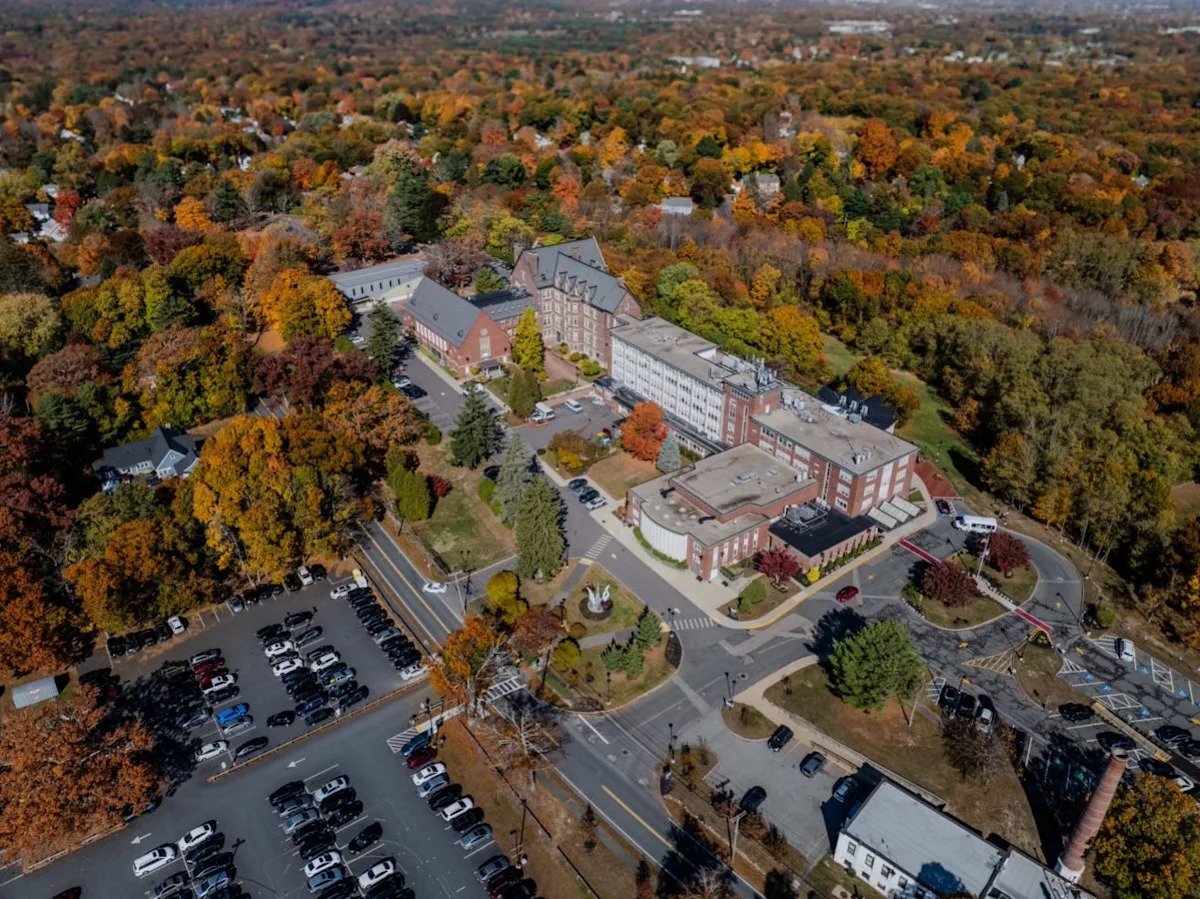
Looking to tackle both a statewide housing crisis and advance cybersecurity education, MassBay Community College and the Division of Capital Asset Management and Maintenance (DCAMM) unveiled an ambitious redevelopment plan on Sept. 16. Presented at a joint meeting of the Planning Board and Select Board, the proposal would transform an underused parking lot into new housing, a move that sparked mixed reactions.
This project is exempt from Wellesley zoning requirements because of provisions under the Affordable Homes Act which allows for state funding to accelerate housing production and utilize surplus property for housing.
MassBay is seeking an estimated $70 million to fund a fitness center and cybersecurity building, which David Podell, the college’s president, said is one of their most successful programs.
“This introduced a new possibility of funding my new building by looking at the housing opportunities and at the same time addressing the state’s urgent need for more housing,” Podell said.

MassBay Community College, 50 Oakland St., Wellesley Hills.
Town officials and residents seek clarity on proposed plan
During the joint meeting, many members of the board and the public were concerned about the vagueness of the plan put forward by MassBay and DCAMM, especially with the number of housing units.
DCAMM manages state owned real estate and oversees transactions of state property. They will not be the developer for the project, Commissioner of DCAMM Adam Baacke said during the meeting. Baacke reassured the Wellesley community that they will be taking into account their feedback before they develop any final plans.
“What I hope is that we’re coming here acknowledging that there are a lot of things that are not clear yet,” Baacke said. “And in fact, that is actually my experience as once having been a municipal official as well, that it is often more valuable and I can have much more constructive input when somebody is coming open to suggestions and open to input and that we are saying to you that we can incorporate what we are hearing into our thinking about how we make the property available to a developer.”
While the final number of housing units has not yet been determined, Baacke said the town would be required to permit at least 180 units. However, many attendees voiced concerns that the final number would be significantly higher.
Affordable Homes Act limits town’s say in development
With the project being part of the Affordable Homes Act, the town of Wellesley would not have significant input on whether or not housing would be built, which many members of the board said they were not accustomed to.
Select Board member Tom Ulfelder expressed unease about the town’s limited control in the process, especially given the size of the potential development.
“I think given the land values and the value of housing development in Wellesley, that we could’ve come up with something far less drastic in its impact that would’ve helped the school with its financial goal and help us in terms of moderating any development over there,” Ulfelder said.
Town officials and residents bring up environmental concerns
The parcel that is being proposed to be redeveloped is currently a parking lot that holds unused school buses as well as a pickleball court. Behind the parking lot is a large piece of undeveloped land, which many voices during the joint meeting emphasized is important to preserve.
Planning Board member Kathleen Woodward was overall optimistic about the project but emphasized the need to balance housing with conservation.
“I believe that Wellesley and the state share a mutual interest that we value very highly which has been pointed out of conservation of undeveloped land. We’ve got a beautiful swath of undeveloped land that is precious and precious to our town,” Woodward said. “But we also really do want to have more affordable housing in Wellesley and we’d like it to be done in the right way in the right place. I see that this could be done properly and could be a win, win, win if we want to bring MassBay into it as well.”
Centennial Forest was also a point of discussion with the further development of the town. Wellesley resident and former Select Board member Ann-Mara Lanza emphasized the need to protect it.
“We have a state law we have to comply with and we need to understand that something is going to get built. But we want that forest, we need that forest,” Lanza said during the meeting.
Other concerns from residents and the boards included increased traffic and capacities of surrounding schools.
Future discussions
MassBay Community College and DCAMM will continue the conversations about this project during community meetings held at the Wellesley campus on Sept. 25 and Oct. 8 at 6 p.m.
This article originally appeared on MetroWest Daily News: MassBay housing plan creates concerns in Wellesley MA