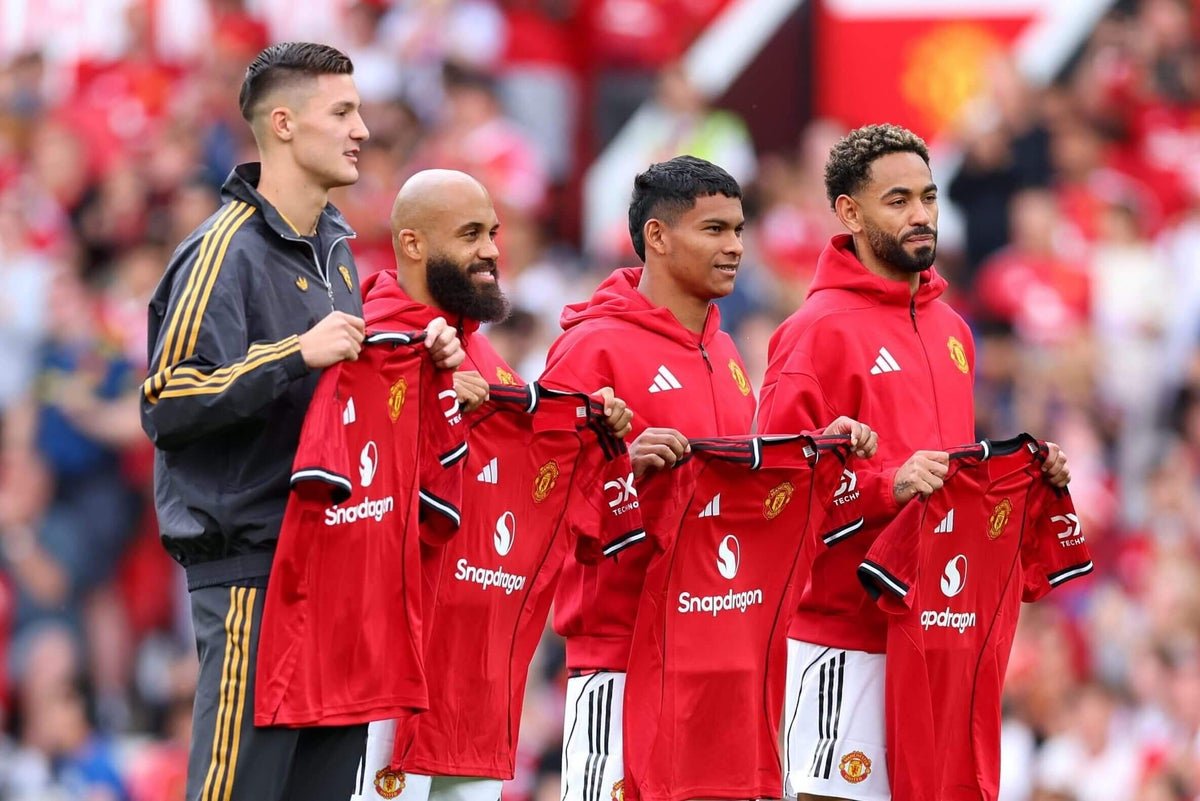
Manchester United borrowed a further £105million ($142.3m) to help fund their transfer spending this summer, having upgraded their revolving credit facilities to a maximum limit of £350m ($474.4m).
The Old Trafford club also extended their credit facilities to expire in December 2029, having previously had until June 2027 to repay the debt.
After signing Matheus Cunha and Bryan Mbeumo for a combined initial total of £127.5m ($172.8m), United were expected to fund further additions to Ruben Amorim’s first team squad through player sales.
But United then pushed ahead with the signing of RB Leipzig striker Benjamin Sesko for a further €76.5m (£66.2m, $89.7m), as well as completing the addition of goalkeeper Senne Lammens in a deal worth €22m (£19.3m, $26.2m) on deadline day.
United also considered a move for midfielder Carlos Baleba, although they ultimately decided against proceeding this summer due to Brighton and Hove Albion’s demands.
United’s overall spend on transfers this summer, inclusive of associated costs such as agent fees and the Premier League’s transfer levy, was £239.2m ($324.2m). The club’s third-quarter results, released in June, detailed £71.3m ($96.6m) in costs between April and June, principally to bring Cunha to Old Trafford. A further £167.8m ($227.5m) was spent between July and September.
Alejandro Garnacho and Antony became United’s first permanent sales late in the window, bringing in £55.4m ($75.1m) in fees after costs. Sell-on clauses from moves for Anthony Elanga, Alvaro Carreras and Maxi Oyedele generated a further £20.3m ($27.5m), but that still left United’s net summer transfer spend at £163.5m ($221.6m).
United’s full annual report, published to the United States’ Securities and Exchange Commission on Thursday evening, reveals that this increased spending power was partly facilitated by the Old Trafford hierarchy borrowing money.
United also made changes to their revolving facilities — which are effectively corporate overdrafts that help day-to-day liquidity — to increase their borrowing capacity.
After making an initial drawdown under their revolving facility on July 7, United consolidated their several facilities into a single fund, increasing the maximum amount they can borrow to £350m ($474.4m) and extending their deadline to pay for a further two-and-a-half years.
Three further drawdowns were made up until September 11, bringing United’s total borrowings under the facility to £265m ($359.2m) of the available £350m ($474.4m).
As United’s drawdowns from and changes to the revolving facilities occurred after June 30, they were not included in the initial 2024-25 earnings report, released on Wednesday.
As of June 30, United’s gross debt stood at £637m ($863.4m) — of which £160m ($216.9m) was attributed to revolving facilities. The four drawdowns since represent a further £105m ($142.3m) in borrowing.
(Photo: Molly Darlington/Getty Images)