
Today, Mars has launched the Mars Impact Fund, a new enterprise-level philanthropic fund.
Mars, Incorporated
Mars is a company many people know through small, familiar moments. A chocolate bar in a desk drawer. A bag of treats by the door. A pet food brand that becomes part of a family’s routine.
Now the family-owned, principle-driven company is applying that same long-term mindset to the communities and systems around it.
Today, the company has launched the Mars Impact Fund, a new enterprise-level philanthropic fund designed to make long-term, targeted cash investments in the communities and systems Mars depends on. The company has committed $85 million between 2025 and 2027, and expects to distribute at least $50 million annually starting in 2028.
Mars is not starting from zero
Mars has spent years trying to bake responsibility into the way it operates, not as a separate department, but as a way of doing business. The company often points to its Five Principles, Quality, Responsibility, Mutuality, Efficiency and Freedom, as the framework behind that approach.
Andy Pharoah, Vice President of Corporate Affairs and Sustainability at Mars, described the new fund as an extension of that operating mindset. Pharoah said Mars has long tried to build impact into the way it runs the company day to day, from how it employs people to how it sources, operates its factories, and shows up in communities. “We’ve believed for a long time that how we grow as a business matters,” he said.
The word “complement” does a lot of work here. The Mars Impact Fund is meant to be additive, sitting alongside existing sustainability investments and the foundations within different parts of the business. What changes is the tool Mars can now use more deliberately, – targeted cash investments that can support long-term partnerships.
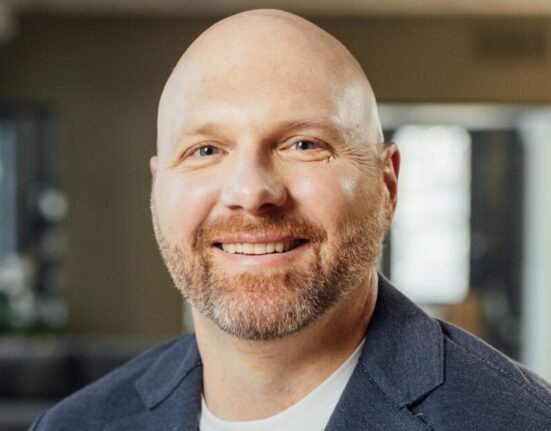
Andy Pharoah, Vice President, Corporate Affairs and Sustainability, Mars, Incorporated
Mars, Incorporated
Why build a dedicated impact fund at the enterprise level?
Corporate philanthropy often swings between two extremes. Either it spreads itself across dozens of causes until it becomes indistinct, or it makes a big splash and then quietly fades when priorities shift.
Mars is positioning this fund as the opposite of both. A few focus areas, chosen with discipline. A time horizon built to match how change actually happens. And a structure that can sustain multi-year commitments without being yanked around by the next quarter.
That long view is not just philosophical. It is operational. Michelle Grogg, Executive Director of the Mars Impact Fund, tied the fund’s design to Mars’s ownership model. “That’s also something special about being part of a privately-owned company, a family-owned company,” she said. “There’s a long-term commitment. We’re not worried about quarter-to-quarter. So we’re able to make those sustained investments.”
A simple filter that forces focus
Mars leaders describe the fund’s strategy with a surprisingly practical set of questions.
Does it make sense for Mars to be in this space, not only internally, but to the world outside the company? Can Mars bring expertise, not just funding? And is it a place where the company can make meaningful change by committing over time, rather than running a one-year experiment that ends just as the learning begins?
Grogg summarized the intent in plain terms. “We didn’t want to do a thousand things,” she said. The fund is designed to go deep in a few areas where Mars believes it can make a distinctive contribution.
Michelle Grogg, Executive Director, Mars Impact Fund, Mars, Incorporated
Mars, Incorporated
Three priorities where Mars believes it has credibility
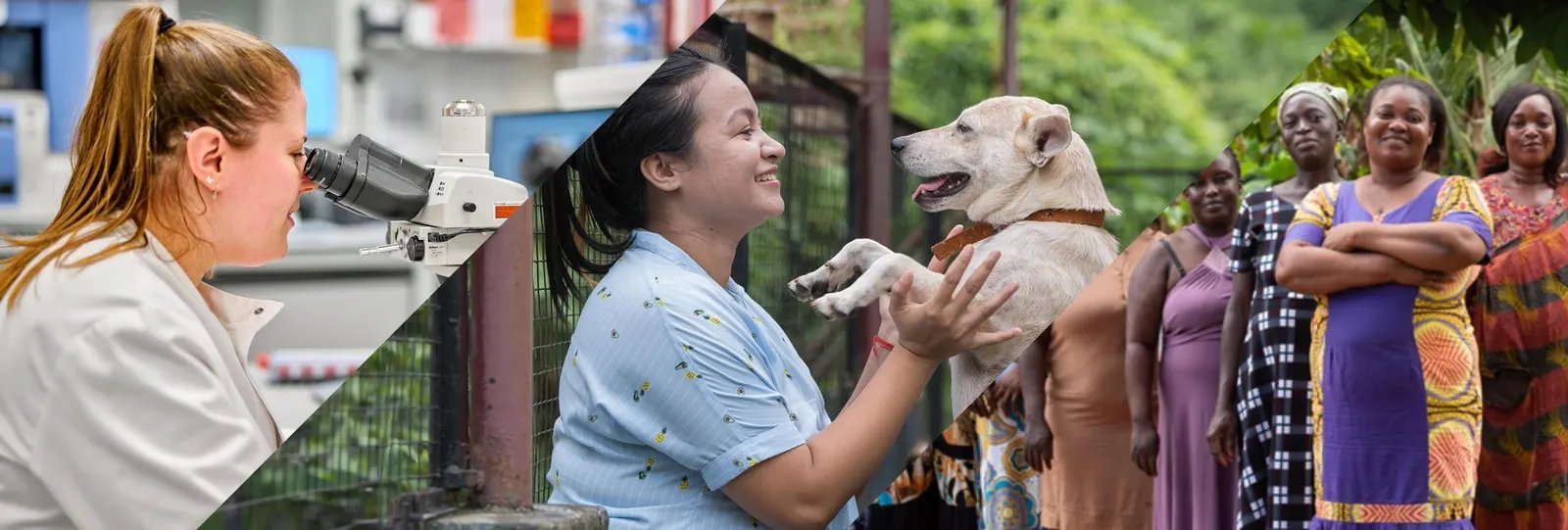
The Mars Impact Fund is built around three priorities aligned with Mars’s business footprint and capabilities.
The first is sourcing community resiliency. Mars sources ingredients across global supply chains, including cocoa and mint. The fund is aimed at strengthening farm families and the broader communities behind those supply chains, with a focus on livelihoods, wellbeing, and resilience. It is not a sentimental argument. It is a systems argument. Strong communities support strong supply chains, and those supply chains support the stability of the business.
The first of Mars Impact Fund priorities is sourcing community resiliency.
Mars, Incorporated
The second is growing and diversifying the pipeline of scientists and veterinary professionals. Mars is essentially treating talent as infrastructure, especially across food, agriculture, and pet care. If the future of these systems depends on people with the right skills, then building that pipeline becomes a form of long-term resilience too.
The second priority focuses on growing and diversifying the pipeline of scientists and veterinary professionals.
Mars, Incorporated
The third is companion animal wellbeing, including increasing access to veterinary care and support for pets in under-resourced homes and communities. This priority sits closest to Mars’s pet care business, where the company has invested deeply in pet nutrition and care research. The fund is leaning into a place where Mars can plausibly bring knowledge and reach in addition to capital.
The third priority is companion animal wellbeing.
Mars, Incorporated
Where the first investments are going
The first grants are a clue to how Mars wants the fund to operate, starting with partners it already knows and trusts.
Mars has selected Save the Children and Humane World for Animals as initial grant recipients. The fund approved a three-year, $3 million grant to Save the Children to expand Village Savings and Loan Associations and strengthen community resilience programs in cocoa-growing areas of Indonesia. It also approved a $726,000 grant to Humane World for Animals to expand access to veterinary care and professional training in select communities in India and Mexico, which Mars describes as the beginning of a multi-year partnership.
The amounts matter, but the structure matters more. Mars is emphasizing multi-year partnerships, not one-off gifts. That is the kind of funding that allows organizations to build teams, invest in capacity, and stick with the work long enough to see durable outcomes.
The fund also has another role that tends to get overlooked in big announcements. Mars says the Mars Impact Fund will lead the company’s response to large-scale disasters affecting its businesses, associates, and communities. It is a practical commitment, and it acknowledges something many companies learn the hard way: crisis response is where good intentions are tested, and where speed and coordination make the difference between help that arrives and help that is promised.
A ramp designed for reality, not optics
Mars is ramping the fund over time, with $85 million committed between 2025 and 2027 and an expectation of at least $50 million annually starting in 2028.
That pacing reflects a reality Mars leaders were blunt about internally. Deploying large sums of money responsibly takes time if the goal is impact, not headlines. Building the right partnerships, choosing the right interventions, and ensuring money is matched with expertise is slower than writing a check. That is a feature, not a flaw.
It is also why the long-term nature of Mars’s ownership matters here. Multi-year investing is easier to announce than to maintain. Mars is claiming it can maintain it because it is built to think long-term as a family-owned business.
Making room for learning
Mars is also framing the fund as flexible enough to learn, not just spend.
Some investments will support approaches where interventions are well established and outcomes are clearer. Others will take place in messier terrain, where experimentation is part of getting to a better model. Pharoah acknowledged the reality directly. “It is clear that not everything we do will work,” he said.
That honesty is important, because it implies a responsibility to measure, adapt, and share what is learned. If the fund becomes a platform for learning as well as giving, it can help move the broader field forward, not only Mars’s own portfolio.
What other business leaders can take from this
There is an argument embedded in the Mars Impact Fund that goes beyond Mars.
It suggests that corporate philanthropy works best when it is focused enough to be credible, long-term enough to be useful, and tied to what a company genuinely understands. Pharoah put that plainly. “You have credibility on issues when you link it back to the core business,” he explained.
Mars is betting that approach can strengthen the communities behind its supply chains, expand opportunity in science and veterinary pathways, and improve access to care for companion animals in places where it is needed most.
If the fund succeeds, it will not be because of a launch moment. It will be because the structure holds. Because the commitments last. And because a company known for everyday products proves it can bring the same clarity and consistency to the systems that shape everyday life for the better.