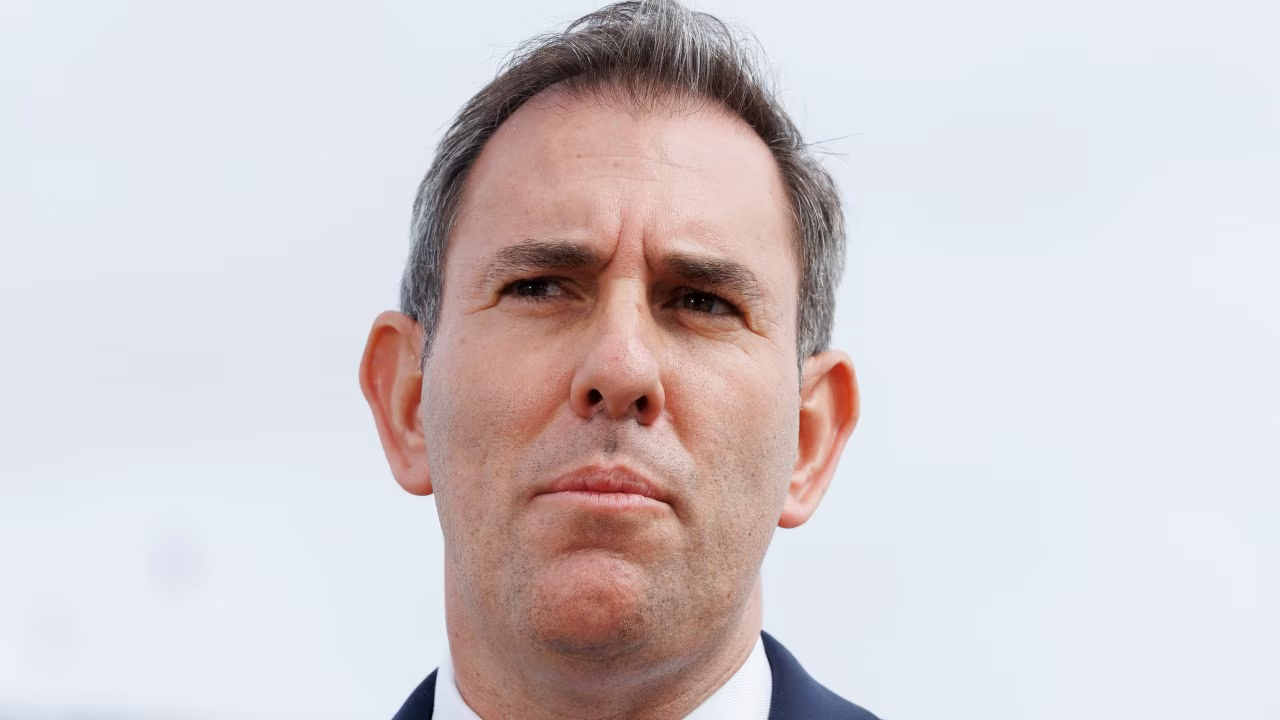
The International Monetary Fund has dealt a raw reality check to Treasurer Jim Chalmers, arguing he will need to cut spending, rethink GST and pursue wider tax reform to raise Australians’ standards of living.
The financial institution released its annual review of the state of Australia’s economy, outlining it was concerned with state and territory level debt and wider structural spending pressures.
The IMF took aim at state spending, suggesting the Commonwealth should take greater interest and offer more oversight through the Parliamentary Budget Office or Federal Treasury.
“Rising state and territory debt, driven by increased infrastructure, health and social protection spending, and exacerbated by uneven commodity revenues, has caused missed sub-national fiscal targets and widening disparities,” it said.
“Fiscal co-ordination across the federation is crucial to ensure equitable burden-sharing and efficient spending especially in areas like climate governance and tax reform.”
Australia’s total state and territory government debt is expected to exceed $900 billion by late 2028-29.
Australian national debt is tipped to sit around $10.2 trillion at the end of the financial year.
Net debt is forecast to rise to $1.2 trillion, or 36.8 per cent of the national GDP in 2028-29.
In September, the Australian Bureau of Statistics revealed the nation’s trade account was running in a deficit of about $13 billion in the June quarter, marginally decreased from a $14.1 billion deficit in the previous quarter.
That was due to domestic investors earning more from their overseas equities, while strong imports of non-monetary gold and travel services led to a fall in the goods and services surplus.
Canberra could raise further funds from the Goods and Services Tax (GST) and a reintroduction of the Rudd-Gillard-era mining tax, the Washington-based institution also advised.
Additional funds raised through such measures could support reductions in taxes on wages and business to boost investment and work incentives.
“Comprehensive tax reform and greater spending efficiency can maintain fiscal sustainability, enhance economic resilience, and boost productivity,” economists suggested.
“For example, an increase in indirect taxation [GST], the reintroduction of a resource revenue tax, and removing income tax exemptions could offset lower corporate and labour taxes, thereby lowering the cost of capital and increasing incentives for investment and work.”
It also warned the government needed to deal with structural barriers to increasing housing supply, and suggested the government’s five-per-cent house deposit policy “may contribute to price pressures in the near-term by accelerating demand”.
A divergence from state stamp duties in favour of land taxes would promote better use of the nation’s land and current housing stock, the fund suggested.
Tax arrangements affecting investment – like capital gains tax and negative gearing – should be reviewed, the economists recommended.
The Article IV report – as it is known – suggested the Australian economy was gaining momentum, inflation had “declined significantly” and the jobs market remained strong.
The country’s GDP could rise to 2.6 per cent in 2026 from its present level at 1.8 per cent.
The report noted Australia achieved a ‘soft landing’ amid an otherwise uncertain global outlook.
It also praised the net zero transition as an opportunity for investment and productivity.
“The green transition, including the authorities’ recently announced 2035 commitments, offers opportunities for enhancing investment, productivity, and diversification while contributing to Australia’s climate goals,” the report read.
However, it followed calls from former Reserve Bank governor Philip Lowe in recommending tighter budgeting rules to address the forecast decade of deficits to come.
“The Commonwealth’s fiscal strategy has been effective over the post-pandemic period, but if structural spending pressures intensify in the future, clearer fiscal anchors could help to safeguard fiscal sustainability,” the fund said.
Canberra was also urged to forge on with amending the National Disability Insurance Scheme to make the $52 billion system more sustainable.
The fund said general reforms to expenditure “should continue to target efficiency savings in growing cost areas (such as NDIS and aged care), and protect productive infrastructure investment”.
Health Minister Mark Butler has indicated his goals included cost reductions of around five to six per cent each year.
Jim Chalmers welcomed some of the findings, while admitting his government had work to do to improve living standards.
“We’ve made substantial progress on productivity reform since our Roundtable in August, across housing, environmental approvals, better regulation, artificial intelligence, and simplifying trade, with more underway,” he said.
“We know the job is far from over because people are still under pressure. That’s why our economic plan is all about helping with the cost of living at the same time as we modernise Australia’s economy to boost living standards.
“The best defence against global volatility and the best way to lift wages and living standards over the long term is with a more productive and resilient economy and a stronger budget, and that’s our focus.”