Unlock the Editor’s Digest for free
Roula Khalaf, Editor of the FT, selects her favourite stories in this weekly newsletter.
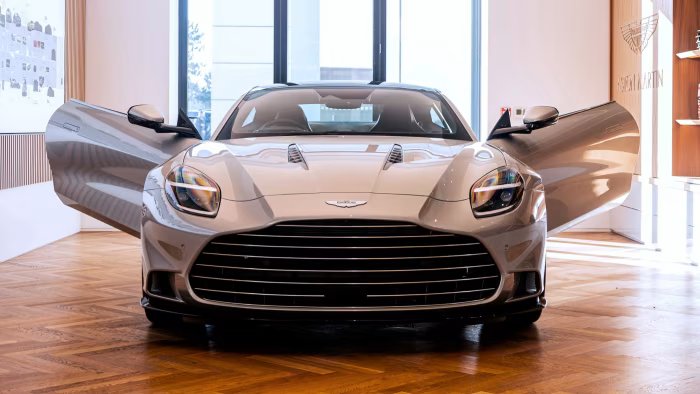
Aston Martin chair Lawrence Stroll has explored a deal with Saudi Arabia’s sovereign wealth fund to take the UK luxury-car maker private, as the struggling group seeks to raise additional funding amid expanding losses.
The discussions between the Canadian billionaire and the Public Investment Fund, which is already Aston Martin’s second-largest shareholder with a 17 per cent stake, were in the early stages, according to three people with knowledge of the discussions.
Stroll led a £540mn rescue package in 2020, promising to restore Aston Martin’s place as “one of the pre-eminent luxury car brands in the world”. Despite repeated fundraising and multiple changes of leadership, the company continues to be saddled with high debt and has issued two profit warnings this year as sales declined.
Shares in Aston Martin are down 99 per cent since its disastrous initial public offering in London in 2018.
In a statement to the Financial Times, Aston Martin said the company was “not in talks with PIF about being taken private”.
Earlier this year, Aston Martin raised £52.5mn by selling 75mn new shares to Stroll’s consortium, which increased its stake in the group to 33 per cent from 28 per cent. China’s Geely and Germany’s Mercedes-Benz also own stakes in the carmaker.

Stroll last year brought in Adrian Hallmark as chief executive in the hope that he would replicate the turnaround he engineered at Bentley when he ran the Volkswagen-owned luxury car brand.
Since then, the company has come under pressure from the global trade war unleashed by US President Donald Trump. It issued its second profit warning for the year in early October, also blaming a slower than expected rollout of its hybrid Valhalla supercar model and sluggish demand in China following Beijing’s tax crackdown on the super-rich.
For the July to September quarter, Aston Martin’s operating loss doubled from a year earlier to £56.1mn while its net debt increased 14 per cent to £1.4bn, as the group was hit by US tariffs and weak demand in China. It had a free cash outflow of £415mn for the first nine months of the year.

In an interview in March, Stroll said his additional investment in Aston Martin earlier this year was a demonstration of his “unwavering support” but analysts had questioned whether he was seeking to reduce his exposure owing to the group’s failure to generate steady cash and profits.
PIF has struggled with its other automotive investments. It spent $1bn in US electric-car maker Lucid in 2018 but has been forced to pour in billions more into the start-up as it made heavy losses and burnt cash in developing its vehicles.
Lucid also has a deal to supply its electric vehicle power train and battery systems to Aston Martin, although the launch of the UK carmaker’s first electric car has been pushed back until the early 2030s.
The PIF is seeking to build an EV manufacturing hub in Saudi Arabia as part of the kingdom’s wider plans to diversify its economy away from dependence on oil revenues.
The fund has also signed a deal with China’s Foxconn to launch its own local EV brand called Ceer, and launched a joint venture with Korea’s Hyundai Motor to build cars in the same location at King Abdullah Economic City on the Red Sea coast.
The PIF declined to comment. Stroll did not immediately respond to a request for comment.