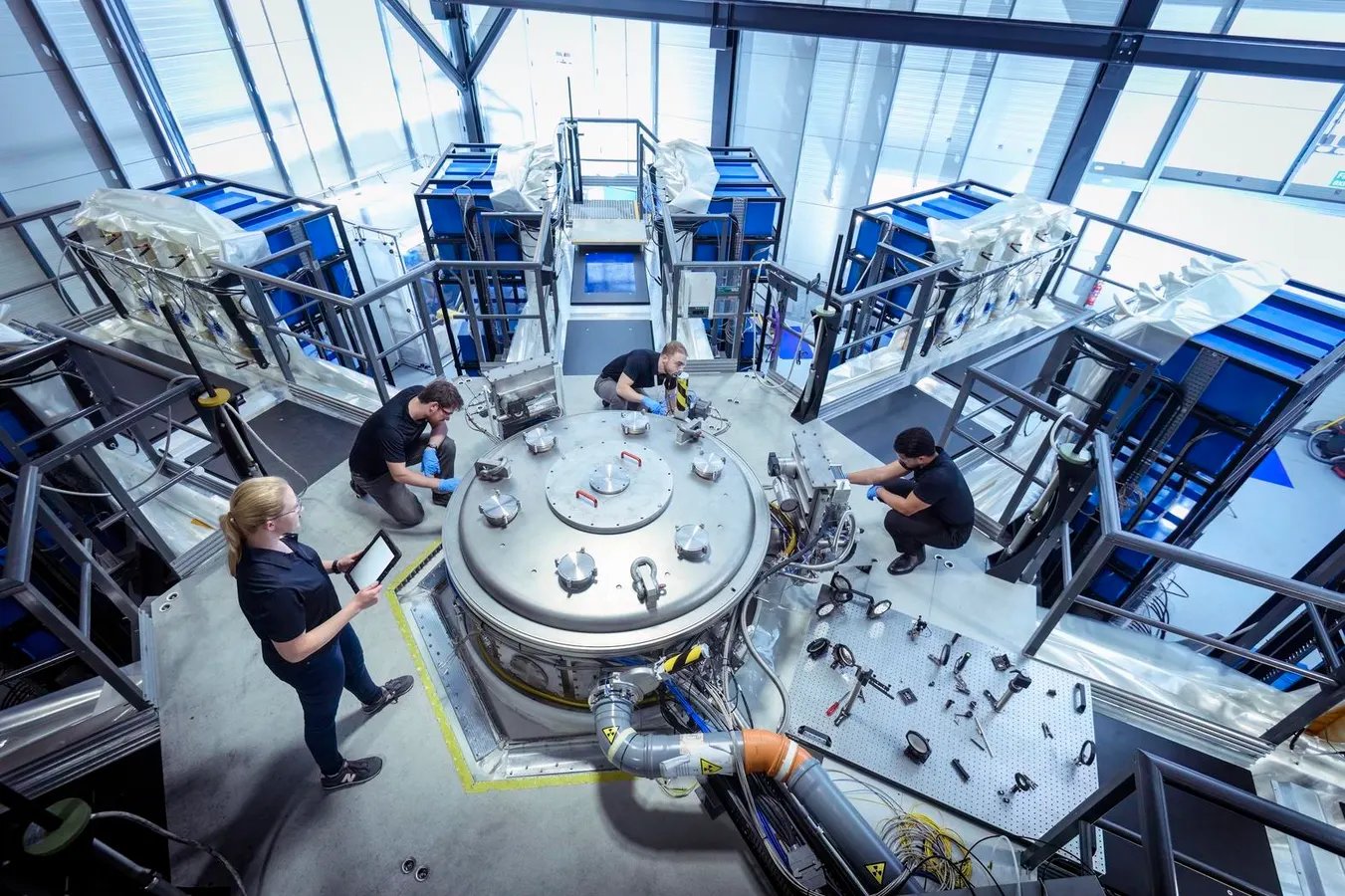
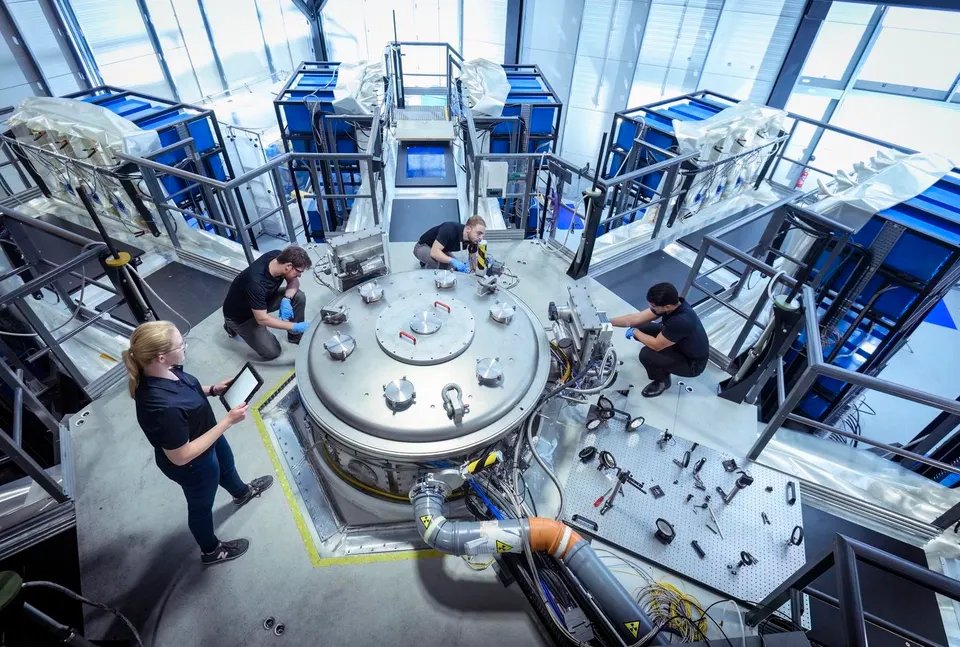
Scientists checking a large pulsed power machine that creates nuclear fusion in a nuclear fusion research facility.
getty
The U.S. government has launched the process to develop a regulatory framework to develop fusion machines as emerging nuclear technologies.
This step to advance fusion machines was announced Feb. 26 by the U.S. Nuclear Regulatory Commission in launching a proposed rule on regulatory requirements and guidance.
“Fusion energy relies on the process of combining atomic nuclei to release energy safely and the proposed rule provides a pathway for its commercial use,” the NRC noted.
Called the “Regulatory Framework for Fusion Machines,” the 23-page proposed rule has been published by the NRC in the Federal Register as Document No. 2026-03865. It has a 90-day window for public comments that ends May 27.
The draft regulation includes regulatory requirements for having, using and manufacturing radioactive material byproducts as a consequence of operating near-term fusion machines.
“The technology-inclusive and risk-informed focus of this rulemaking will ensure applicability for the wide variety of anticipated fusion machine designs while also accounting for the differing quantities of radioactive material that may be used and produced by these machines,” the proposed rule stated.
A Look at Fusion Energy
Traditional nuclear power uses fission reactors to split atoms. Nuclear fusion will likely be generated in machines designed to replicate the high-temperature and high-pressure conditions found in the Sun.
“These machines, such as tokamaks and stellarators, use powerful magnetic fields or lasers to heat and confine hydrogen isotopes until they fuse, releasing energy,” according to the NRC.
Fusion energy science: A supercomputer simulation of plasma turbulence in a spherical tokamak (which is a donut-shaped, nuclear fusion reactor).
DOE/Walter Guttenfelder, Princeton Plasma Physics Laboratory/Filippo Scotti, Lawrence Livermore National Laboratory
“Fusion reactions power the Sun and other stars. In fusion, two light nuclei merge to form a single heavier nucleus. The process releases energy because the total mass of the resulting single nucleus is less than the mass of the two original nuclei. The leftover mass becomes energy,” according to the U.S. Department of Energy.
Last year, DOE released the “Fusion Science and Technology Roadmap” outlining specific roles needed for the private sector, science and technology stakeholders to take to turn fusion energy into a commercial reality.
DOE researchers have been exploring fusion energy power generation and applications. One possibility is using deuterium and tritium as fuels in future power plants (deuterium-tritium fusion).
Depiction of a deuterium and tritium fusion reaction that produces a helium nucleus and high-energy neutron.
U.S. Department of Energy
“Deuterium is common: about 1 out of every 6,500 hydrogen atoms in seawater is in the form of deuterium. This means our oceans contain many tons of this hydrogen isotope. The fusion energy released from just 1 gram of deuterium-tritium fuel equals the energy from about 2,400 gallons of oil,” DOE says. “Tritium is not common. It is a radioactive isotope that decays relatively quickly, with a 12-year half-life. It is rare in nature and not immediately available for use in potential power plants. However, there is a process to produce tritium.”
New NRC Rule to Be Technology Neutral
The NRC stressed in its proposed rulemaking that it plans to advance a regulatory framework to commercial fusion energy that doesn’t favor any particular technology.
Instead the commission is proposing technology-inclusive requirements “to accommodate the wide variety of anticipated fusion machine designs across the National Materials Program.”