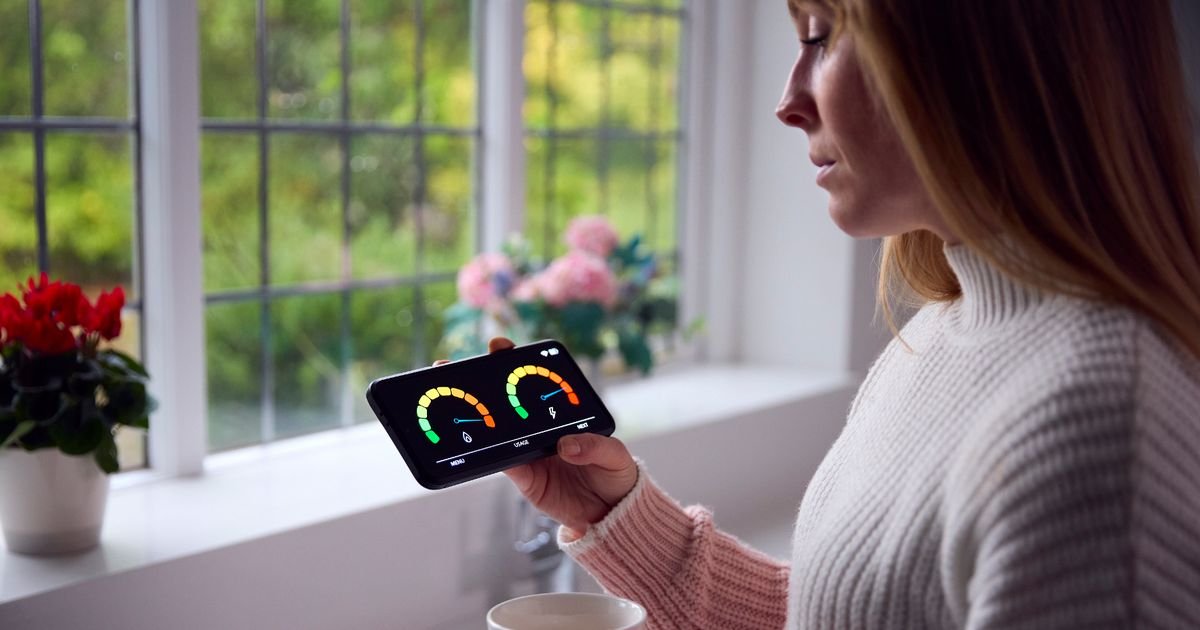
The new Ofgem energy price cap starts on January 1.

7 things you should do before turning the heating on
Scottish households are being urged to submit meter readings to their energy supplier ahead of the new Ofgem price cap coming into force later this week. Advice Direct Scotland, which runs the national energy advice service energyadvice.scot, is reminding people to act before midnight on Hogmanay.
Accurate meter readings will prevent suppliers from estimating usage and applying new, higher prices to energy consumed when they were lower.
The regulator, Ofgem, resets its cap on the amount suppliers can charge every three months. The latest change, from £1,755 to £1,758 on New Year’s Day, represents a 0.2 per cent increase on the current level.
READ MORE: Full list of one-off payments due to land in banks accounts before New Year’s DayREAD MORE: Octopus Energy customers can now get their credit back in as little as one day
People who cannot submit readings before December 31 should do so as close to the date as possible.
Those with smart meters should ensure the device is working. Taking a photo of the meter reading can also help to resolve any disputes that may arise.
Advice Direct Scotland is also urging households to check if better tariffs are available. However, many of the best-value deals are targeted at more affluent customers or those with a smart meter installed.
The next price cap update will be announced by Ofgem in February, with the most recent forecasts suggesting it will fall slightly in April.
Households will continue to be charged hundreds of pounds per year more than they were before the energy crisis hit in the autumn of 2021.
Jillian Edmund, energy project lead at Advice Direct Scotland, said: “The rise in the price cap on New Year’s Day might be small, but with many households stretching their budgets to the limit in the build up to Christmas, it is still unwelcome.
“Thousands of people across the country are still struggling with the cost of their energy bills, which remain far higher than they were when the crisis began. With energy prices not expected to fall significantly any time soon, it is crucial to stay on top of your bills and check if cheaper deals are available with other suppliers.
“It is also important to submit meter readings before the new price cap comes into force, to prevent any overcharging. For extra peace of mind, take a dated photo of your meter, and if you have a smart meter, make sure it’s working.”
Advice Direct Scotland is warning that many people are still struggling with record levels of debt, and is encouraging anyone worried about bills to contact its experts for free impartial advice.
Advisers can be contacted at www.energyadvice.scot or on freephone 0808 196 8660.
Seven things to check before switching energy supplier
Advice Direct Scotland has identified seven key considerations for anyone planning to switch. Whether switching suppliers will save someone money depends on their individual circumstances.
Below are some key things to think about before making a decision.
Understand your current plan
Customers should review their annual energy consumption in kilowatt hours (kWh), as this helps with comparing tariffs. They should also establish what kind of tariff they are on.
Tariffs can vary and include options such as fixed rate, variable, and economy 7 or 10, which have different energy rates at peak and off-peak times. Households should ensure that their current set up and meter is compatible with their new supplier.
Research new suppliers and tariffs
When you’re ready to look for a new deal, it’s important to use an Ofgem-accredited price comparison tool. There is a list on the Ofgem website, available here.
When considering different suppliers, look for reviews or star ratings for customer service and reliability as well as price. You should also consider what matters most to you – is it price, renewable energy options, or fixed-rate stability?
Customers should also compare daily standing charges as well as unit rates, as these can vary depending on the supplier and the type of tariff.
Check eligibility and benefits
Make sure your new supplier is part of any government schemes you rely on, like the Warm Home Discount.
If you have a smart meter, check it will work with the new supplier. If it doesn’t, you might end up with inaccurate readings and estimated bills.
If you owe money to your current supplier, you can still switch if the debt is less than 28 days old. The amount owed will be added to your final bill. But if you’ve been in debt for more than 28 days, you’ll need to clear it before switching. The exception is for prepayment meter customers, who can switch even if they owe up to £500 for gas and £500 for electricity.
Understand the switching process
Switching usually takes 21 days, including the cooling-off period, so any change will not be immediate. You have 14 days to cancel a switch after signing up if you change your mind.
If your new supplier is signed up to the Energy Switch Guarantee, which aims to make the process as fast and simple as possible, you should be moved onto your new deal within five working days.
Don’t forget early exit fees
Customers should check if their supplier charges an exit fee for switching before the end of the contract. In some cases, this cost might outweigh the benefits of moving to a new deal.
If you can switch penalty-free, you should also ensure that your old supplier provides a final bill and refunds any credit you might be owed.
Be aware of scams
As more people consider switching suppliers, there is inevitably an opportunity for scammers to take advantage. Always steer clear of unsolicited offers made over the phone or at your door.
You should use trusted channels for switching and be cautious of deals that seem unrealistically cheap. If it sounds too good to be true, it probably is.
Consider your future energy needs
Be aware that your energy use – and potentially your income level – might change in the future and you might not always use the same amount from year to year.
Ideally, you should choose a plan that aligns with what you can comfortably afford and does not lock you in for too long before you can switch again without a penalty.
Energyadvice.scot provides free, impartial, and practical advice on energy bills to anyone in Scotland. Advisers can be contacted at www.energyadvice.scot and on 0808 196 8660, Monday to Friday, 9am to 5pm.