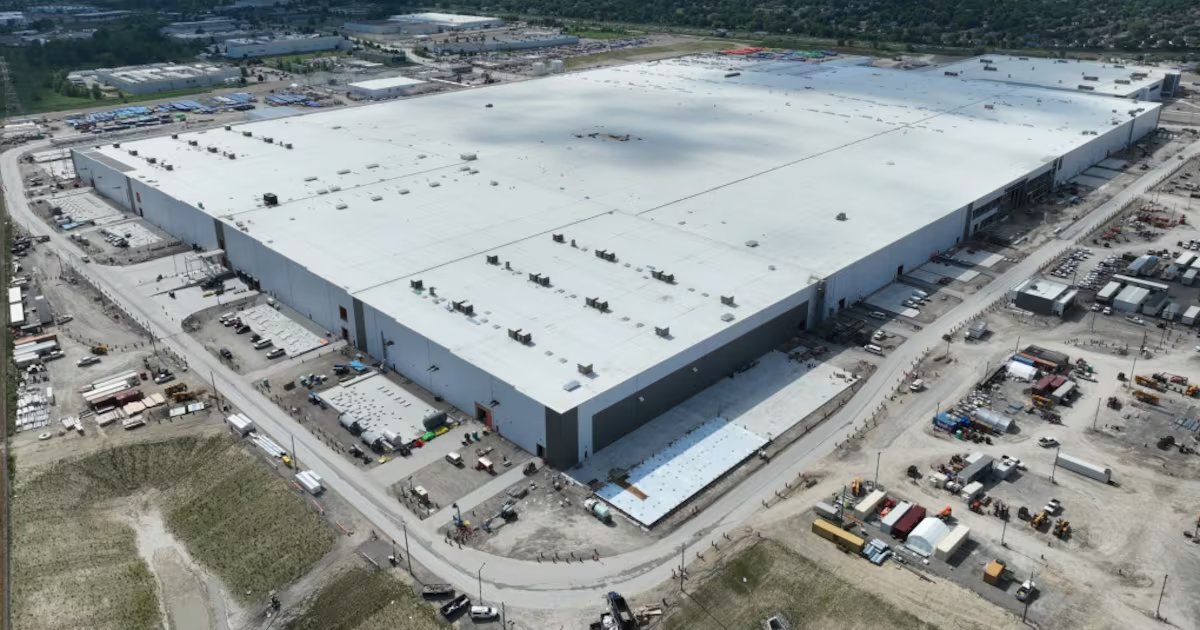
NextStar Energy’s Windsor battery plant is entering its next phase of operations, expanding beyond electric-vehicle components to produce energy-storage system (ESS) batteries that can store electricity for use during peak demand.
The company, a joint venture between Stellantis and LG Energy Solution, began producing battery modules in October 2024 — marking the first large-scale battery manufacturing milestone in Canada.
But company officials say the next step will involve making ESS batteries to meet growing demand from customers across North America.
ESS batteries are designed to store power generated from renewable sources such as solar and wind, then release that energy back to the grid when consumption is high — helping stabilize electricity supply during peak hours.
“The energy storage system has always been on our radar here at NextStar Energy,” said Brett Hillock, the company’s chief operating officer.
“When we originally came up with the business model, EV was to take up 100 per cent of the capacity — but ESS was always the secondary that could be ready to load this place if needed.”
Hillock said full-scale production of ESS batteries will begin by the end of November.
While the plant continues building modules with imported battery cells, as it has since Oct. 2024, local manufacturing of the energy-storage units will represent the next operational milestone at the $5 billion facility.
“We’re currently launching with ESS based on the demand from our customer,” Hillock said.
“The process is not different between ESS and EV. We can either simultaneously build both products, or do one at a time.”
Hillock said rising electricity needs — driven by artificial-intelligence data centres and renewable energy projects — have accelerated demand for large-scale battery storage.

“With the AI data boom, these data centres are needed all over globally,” he said.
“The grid’s not ready to be able to support all this new infrastructure. By supplementing the grid with these ESS systems, we’re able to launch these data centres within a year or so versus waiting years for that grid to be capable.”
The announcement comes amid a cooling North American electric-vehicle market. Automotive News Canada editor Greg Layson said EV demand has dropped for most of 2025.
“The demand for EVs has diminished every single month this year when compared to the same month a year ago, and that is 90 per cent to do with the fact that there is no more EV incentive,” Layson said.
“That $5,000 rebate from the federal government is gone. Sales are gone. Demand is down.”
Layson added that U.S. policy changes — including Donald Trump’s rollback of EV incentives and relaxed fuel-efficiency rules — have also shifted consumer demand back toward gas-powered vehicles.
Still, he said, NextStar’s decision to focus on ESS batteries shows foresight rather than retreat.
“If you believe what they’re saying, and just anecdotally look around and see the proliferation of AI in everyday life, this is probably a good pivot for NextStar and Stellantis in the short term,” Layson said.
“They’re flexible enough to build multiple types of batteries and adjust as the market changes.”
NextStar currently employs about 1,050 people and continues to hire 50 to 100 workers per month. Hillock said the company is still aiming for a workforce of 2,500 once the plant reaches full capacity.
“We’ve been training now for over two years for this critical milestone,” he said.
About 800 contractors remain on site finishing construction work in non-production areas that will open early next year for additional capacity, Hillock added.
“We’re always ahead of the curve, looking at market trends and working with all of our customers before making those decisions — but still allowing the flexibility if needed.”